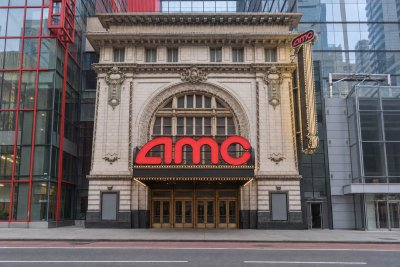
AMC Entertainment Holdings (NYSE: AMC) saw its shares jump in Friday's premarket session, fueled by a dispute over Robinhood's AMC-linked stock tokens. However, the early gains were cut in half as trading progressed.
By 5:56 a.m. EDT, AMC was trading at $2.7905, up 9.86% from Thursday's close of $2.54, on volume of 4.68 million shares. Earlier, at 4:13 a.m., the stock had reached a high of $3.06, a 20.5% surge, before retreating. The premarket volatility underscores the thin liquidity typical of early trading hours.
Robinhood Token Controversy
The price movement was triggered by a public spat between AMC CEO Adam Aron and Robinhood CEO Vlad Tenev over Robinhood's AMC stock tokens. Aron criticized the product on X, questioning its legality and stating AMC had no involvement. Tenev responded, "What's the concern?"
Robinhood's tokens are debt securities issued by Robinhood Assets (Jersey) Limited, providing economic exposure to AMC shares but no direct ownership rights. They are not available to U.S. persons and are backed one-for-one by underlying shares held by a U.S. custodian. This structure means token creation does not increase AMC's outstanding share count.
Despite the controversy, the tokens have no direct impact on AMC's balance sheet. They neither generate revenue nor reduce debt. The potential benefit to AMC lies in a higher stock price, which would make future equity offerings less dilutive to existing shareholders.
AMC's Dilution Concerns
AMC's share count has grown significantly, rising from 512.9 million shares on Dec. 31, 2025, to 892.6 million by June 30, 2026, a 74% increase. The company has utilized at-the-market offerings, registered direct offerings, and debt-for-equity exchanges to raise capital.
At the premarket price, AMC's market capitalization stands at approximately $2.49 billion, up from $2.27 billion at Thursday's close. However, this increase is on paper only and does not add to AMC's cash reserves. If the stock price remains elevated, AMC could issue fewer shares to raise the same amount of funds, reducing dilution.
Financial Position
AMC's second-quarter results showed improvement, with revenue up 14.2% to $1.597 billion and adjusted EBITDA rising to $321.4 million from $189.5 million a year earlier. However, the company still reported a net loss of $11.4 million and $115.9 million in interest expense. As of June 30, AMC held $778.4 million in cash against $3.914 billion in debt principal, and reported a working-capital deficit of $901.0 million.
The company's filings indicate that additional liquidity will be needed if attendance and revenue do not stabilize. A sustained higher stock price could provide a more favorable environment for future capital raises.
Market Implications
The dispute over Robinhood's tokens highlights the growing intersection of traditional finance and digital assets. While the tokens offer a way for non-U.S. investors to gain exposure to AMC, they also introduce issuer and custody risks that differ from holding actual shares.
Investors will be watching whether AMC can maintain its gains during regular trading hours, when liquidity is deeper. A filing or legal opinion from AMC's outside counsel could turn the dispute into a regulatory matter. For now, the investment case for AMC remains tied to box-office performance, interest costs, and the company's ongoing share issuance strategy.