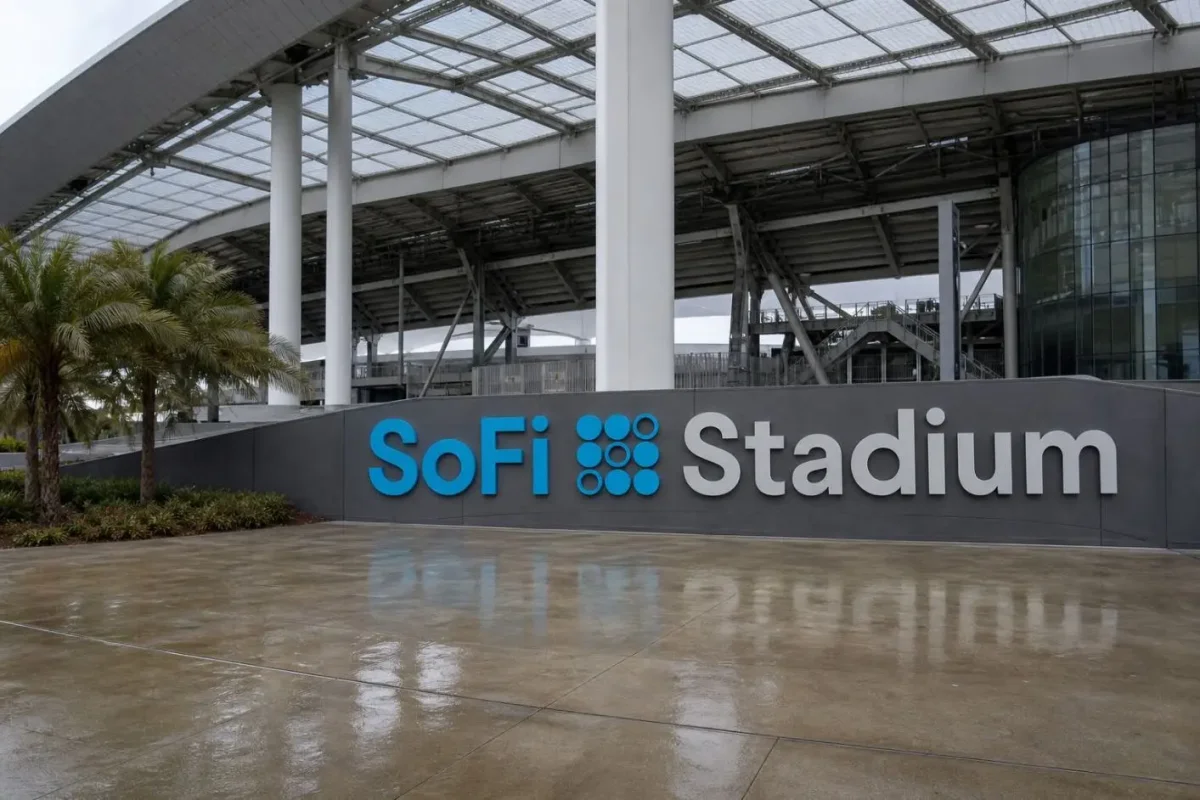
SoFi Technologies (SOFI) experienced a notable decline on Tuesday, with shares falling 4.2% to $17.129 by 12:35 PM EDT. The drop reflects growing investor unease over the fintech company's rich valuation, which stands at approximately 28.5 times management's projected adjusted earnings per share for 2026. This multiple, while justified by robust growth metrics, is now being tested as loan expansion shows signs of slowing.
The broader financial sector, as represented by the Financial Select Sector SPDR Fund (XLF), only slipped 0.7%, highlighting the magnitude of SoFi's underperformance. The decline also outpaced losses in consumer finance peers, with Upstart Holdings (UPST) down 3.7% and Robinhood Markets (HOOD) nearly flat. Trading volume reached 22.3 million shares, well above average, indicating active selling pressure.
Valuation Concerns Take Center Stage
Investors are increasingly focusing on the sustainability of SoFi's premium valuation. At 28.5 times projected 2026 adjusted EPS of $0.60, the stock demands rapid loan growth to justify its price. The company's second-quarter results, released in late July, showed revenue climbing 43% year-over-year to $1.219 billion, with net income surging 61% to $156.6 million, or $0.12 per diluted share. CEO Anthony Noto hailed the quarter as a "clear inflection point."
However, the deceleration in loan growth is raising red flags. While total loan originations jumped 69% to $14.8 billion, the pace is expected to moderate as the company focuses on credit quality and deposit funding. Student loan originations led the surge, up 170% to $2.69 billion, while personal loans—still the largest segment—grew to $10.72 billion from $6.97 billion a year earlier.
Deposit Advantage Provides Support
One of the most bullish aspects of SoFi's story is its deposit funding advantage. Deposits increased by $5.3 billion in the quarter to reach $45.5 billion, with an average rate 156 basis points below the cost of warehouse funding. This translates to annualized interest savings of approximately $712.6 million, a significant buffer against rising credit costs.
Management reported an all-in personal loan net charge-off rate of 3.7%, down 70 basis points from the previous quarter, while student loan annualized charge-offs fell to 0.61%. These improving credit metrics suggest that SoFi's underwriting remains disciplined, even as it expands its loan book.
Balance Sheet Strength and Risks
As of June 30, loans measured at fair value reached $46.6 billion, with personal loans comprising $27.5 billion. The company's technology platform revenue, however, dropped 23% in the second quarter, a potential headwind that investors are monitoring. Additionally, if unemployment deteriorates, consumer losses could increase, and declining interest rates might compress asset yields faster than deposit costs.
Outlook and Key Metrics to Watch
Management raised its 2026 adjusted revenue forecast to a range of $4.75 billion to $4.85 billion, implying growth of 32% to 35%, while maintaining its adjusted EBITDA target of $1.6 billion. The upcoming earnings report will be crucial in determining whether the 29-times multiple is justified.
Investors will closely scrutinize loan sales, charge-off trends, and the sustainability of deposit growth. If SoFi can demonstrate that its deposit advantage is a secure source of funding and that credit quality remains stable, the stock may recover. Conversely, any signs of deterioration could lead to further multiple compression.
As of Tuesday's close, SoFi's intraday price fluctuated between $17.10 and $17.65, with the latest quote at $17.129. The market's reaction underscores the delicate balance between growth and valuation in the current environment.