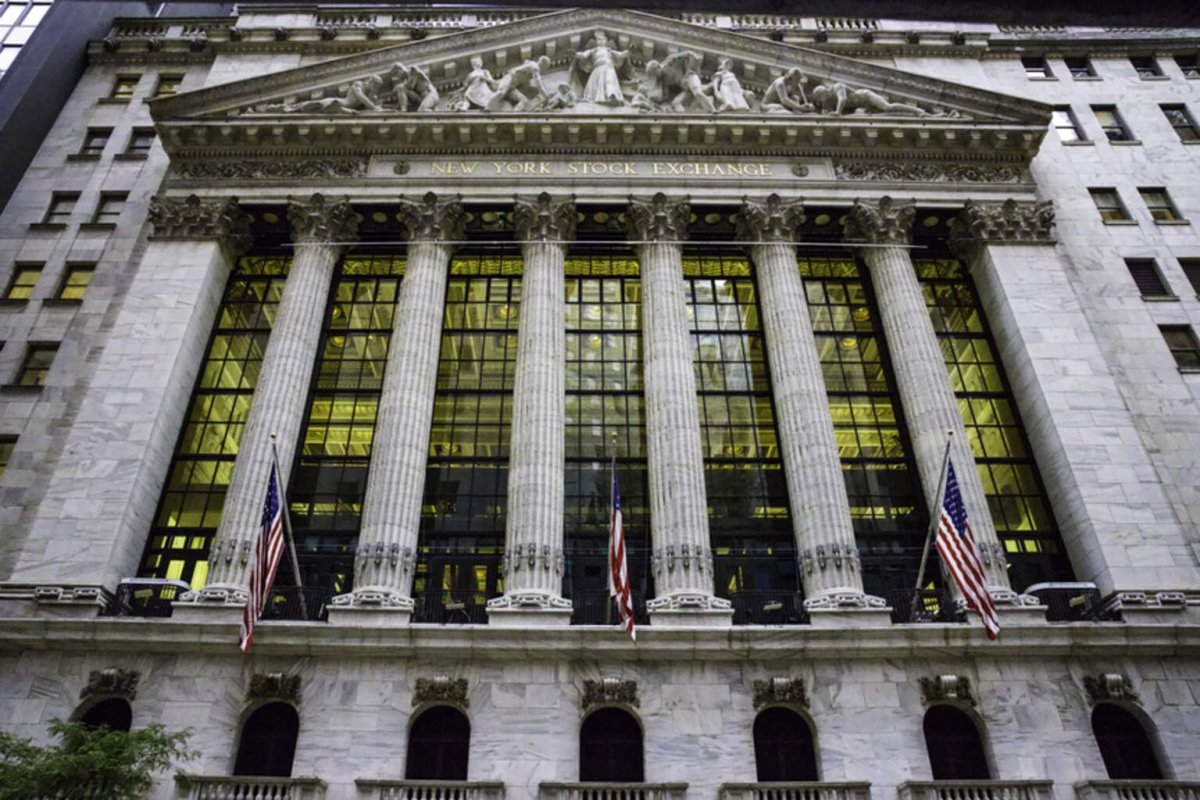
Wall Street staged a notable turnaround on Thursday, with the S&P 500 erasing its opening decline by midday as a drop in Treasury yields and a sharp rally in healthcare shares offset continued weakness in technology. By 12:15 p.m. ET, the benchmark index was up roughly 0.1%, while the Dow Jones Industrial Average climbed 406 points, signaling broad-based buying beyond the mega-cap names that have dominated recent sessions.
The recovery was widespread, with a liquid small-cap proxy rising 0.7% and seven out of ten S&P 500 members trading higher, according to data from the Associated Press. The turnaround was particularly pronounced in the SPDR S&P 500 ETF (SPY), which opened 0.47% below Wednesday's close but had recovered 0.52% by 12:46 p.m., effectively reversing the early slide.
Healthcare Leads Sector Rotation
Sector rotation favored defensive and cyclical areas, with healthcare leading the charge. The Health Care Select Sector SPDR Fund (XLV) jumped 2.58%, while materials (XLB) gained 1.50%, consumer discretionary (XLY) rose 1.33%, staples (XLP) added 1.21%, and financials (XLF) climbed 1.12%. In contrast, technology (XLK) fell 1.34%, and energy (XLE) dropped 1.62%.
Within healthcare, UnitedHealth Group (UNH) surged 4.0%, while Johnson & Johnson (JNJ) added 0.9%. Insurance and advisory firm Marsh (MRSH) jumped 5.8% after reporting summer-quarter profit and revenue that beat analyst expectations.
Tech Weakness Persists
Despite the overall market rebound, technology shares remained under pressure. Nvidia (NVDA) fell 2.0%, while CoreWeave (CRWV) lost 1.1% after recovering from a 9.5% morning drop. The weakness in AI-related stocks continued to weigh on the Nasdaq Composite, which was down 0.47% at 26,567.94, though it had recovered 0.85% from its opening level.
Analyst calls remained mixed. Deutsche Bank reiterated a Buy rating on CoreWeave with a $150 target, citing long-term take-or-pay contracts in its backlog, but the stock still declined. Raymond James reaffirmed an Outperform on UnitedHealth, and Wells Fargo maintained an Overweight on Johnson & Johnson with a $275 target.
Rates Fall Despite Inflation Shock
The bond market provided a key tailwind, with the 10-year Treasury yield falling 10 basis points to 5.09%. This move came despite a hotter-than-expected producer price index (PPI), which rose 1.3% in September and 6.3% annually. Core PPI, excluding food and energy, increased 0.7% versus the 0.3% expected. Retail sales also came in strong, up 0.8% monthly to $745.0 billion.
Schwab strategist Cooper Howard noted the risk of higher diesel and energy prices bleeding into other categories. The bond rally appeared defensive rather than disinflationary, as it eased valuation pressure on long-duration assets without eliminating the risk of a Federal Reserve rate move at its October 27-28 meeting.
Other market indicators showed the dollar index slipping 0.51% to 102.03, while oil (USO) gained 2.61% and gold (GLD) rose 1.12%, reflecting a risk-on tone in commodities.
Outlook
Investors now look ahead to Friday's industrial production data at 9:15 a.m. ET, which could influence the Fed's policy path. A late yield rebound could reverse the broadening rally, while renewed AI-credit stress could pull the S&P 500 back below Wednesday's close. The market's resilience will be tested as it navigates inflation pressures, rate expectations, and sector rotation.