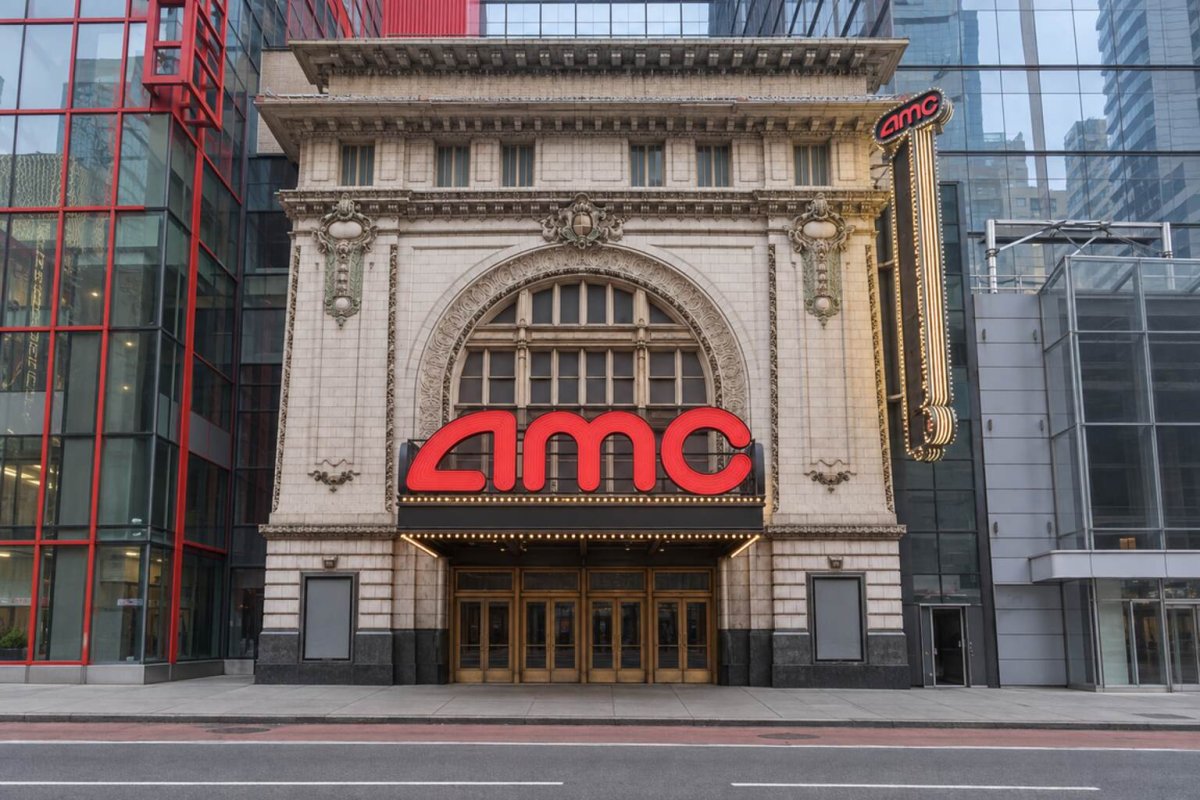
AMC Entertainment Holdings (NYSE: AMC) saw its shares surge 7.04% to close at $2.89 on Monday, September 21, 2026, following the announcement of a comprehensive $3.97 billion refinancing package. The move, revealed earlier in the day, is designed to push key debt maturities beyond 2029, providing the cinema chain with much-needed breathing room.
Refinancing Structure
The proposed refinancing consists of three main components: $2 billion in first-lien notes due 2031, an $850 million first-lien term facility with a five-year term, and a $1.12 billion second-lien term facility carrying a fixed interest rate of 11.25% over seven years. The first-lien instruments have not yet disclosed their interest rates, but the second-lien tranche stands out as particularly expensive.
This refinancing is essentially a like-for-like replacement of existing debt rather than new borrowing. As of June 30, AMC reported principal borrowings of $3.914 billion, nearly matching the $3.97 billion refinancing total. The proceeds will be used to retire several existing facilities and the 2029 notes, with a tender offer for approximately $360 million of 7.5% AMC notes expiring on September 30 and settlement expected by October 5.
Market Reaction and Trading Activity
Trading volume was exceptionally heavy, with 54.59 million shares changing hands—more than double the 20-session average of 24.53 million shares. The intraday range spanned $2.67 to $3.00, and the close was 9.12% below the 52-week high of $3.18. The surge reflects investor optimism about the extended maturity profile, though the high cost of the second-lien facility tempers some enthusiasm.
Financial Implications
The 11.25% fixed coupon on the $1.12 billion second-lien facility translates to approximately $126 million in annual interest expenses, according to TS2 calculations. This figure excludes fees and potential savings from retiring existing debt. While the refinancing provides near-term relief, the elevated interest costs could weigh on future cash flows.
Operational Improvements
Investors have a second reason to look past the cost: recent operating performance has been strong. AMC reported preliminary revenue of $1.335 billion for July and August, a 42.4% increase compared to the same period last year. Attendance surged 35.9% to 58.2 million patrons, while total revenue per patron rose 4.8% to $22.93, driven by higher admissions and food and beverage spending.
Balance Sheet and Cash Position
Despite the positive operational trends, the balance sheet remains under pressure. AMC reported $778.4 million in cash and $3.914 billion in principal borrowings at the end of June. The company generated $190.1 million in free cash flow during the second quarter, which provides some cushion but may not be enough to offset the high financing costs.
Analyst Perspectives
Wall Street analysts are divided on AMC's outlook. Roth MKM maintains a Hold rating, while B. Riley also has a Hold with a $2.50 price target, implying a 13.5% downside. Citi is more bearish with a Sell rating and $1.80 target, a 37.7% discount. On the bullish side, Wedbush rates the stock Outperform with a $4.00 target, representing 38.4% upside.
The wide range of views highlights the central dispute: whether the extended maturity schedule and operational recovery will outweigh the leverage and financing costs. The $4 target rewards AMC's improved liquidity, while lower targets focus on the persistent debt burden.
Risks and Next Steps
Key risks include undisclosed first-lien pricing, the conditional nature of the refinancing, and the possibility that sustained box-office weakness could make servicing the extended debt more difficult. The market will get a clearer picture on September 30, when the note tender expires. Completion of the tender and the final pricing of the first-lien instruments will determine how much time AMC has actually bought with this deal.