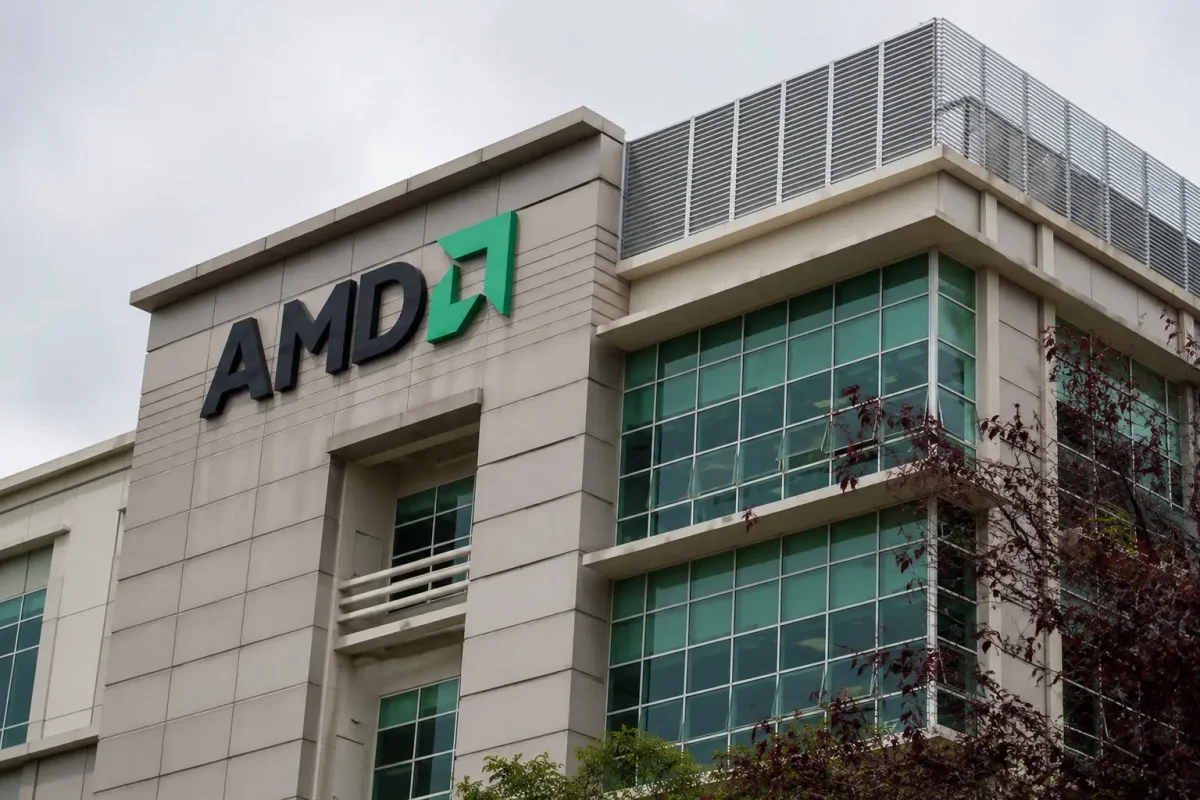
Advanced Micro Devices (AMD) closed Friday at $467.51, up 3.99%, after reaching a fresh 52-week high of $481.41 during intraday trading. The surge capped a volatile but strong week for the chipmaker, with shares gaining approximately 10.2% from the prior week's close of $424.10.
Supply Constraints and Production Ramp-Up
Speaking in Taipei on Friday, AMD CEO Lisa Su revealed that the company is ramping up production with Taiwanese partners to address stronger-than-expected demand for central processing units (CPUs). "The overall CPU market has had significantly higher demand than any of us predicted a year ago," Su said. "The CPU market is tight." This signals that AMD is not only benefiting from AI server demand but also from a broader compute cycle where CPUs are in short supply.
AI Infrastructure and Data Center Growth
AMD's data center revenue surged 57% year-over-year to $5.8 billion in the first quarter, contributing to total revenue of $10.3 billion, a 38% increase. The company expects second-quarter sales to be around $11.2 billion, plus or minus $300 million. Investors are increasingly viewing AMD as a "broader compute opportunity," as noted by Hargreaves Lansdown analyst Matt Britzman, rather than merely a challenger to Nvidia in the GPU market.
AMD also announced plans to invest over $10 billion in Taiwan's AI ecosystem, including advanced packaging technologies that link chips together for improved data transfer and power efficiency. The company confirmed that its Helios rack-scale platform, built on Instinct MI450X GPUs and next-generation EPYC CPUs, remains on track for rollout in the second half of 2026.
Market Context and Holiday Break
U.S. equity markets were closed Friday evening and will remain shut through Monday for Memorial Day, with trading resuming Tuesday. The S&P 500 closed up 0.4% on Friday, notching its eighth consecutive weekly gain, while the Nasdaq Composite edged up 0.2% for the session and 0.5% for the week, according to AP market data.
The broader market rally, fueled by AI optimism and resilient economic data, has lifted AMD along with other semiconductor stocks. However, analysts caution that the trade may be getting crowded. JonesTrading chief market strategist Michael O'Rourke noted, "Success invites competition," highlighting the pressure on AMD to prove it can capture a larger share of AI server spending.
Risks and Headwinds
Despite the positive momentum, AMD faces several risks. The company has flagged export controls, tariffs, supply chain pressures, yields, and competition as potential headwinds. CEO Lisa Su confirmed that China remains about 20% of revenue, but AMD must comply with U.S. export rules. Any slowdown in AI demand, capacity issues, or tighter China regulations could trigger profit-taking.
Nvidia remains the dominant player in AI chips, with its quarterly revenue forecast of $91 billion (plus or minus 2%) well above estimates. AMD must demonstrate it can capture incremental AI server spending rather than merely following Nvidia's lead.
Outlook
With markets closed Monday, attention turns to Tuesday's open. Bulls will need to decide whether Friday's high represents a breakout or a selling opportunity. For AMD, the next leg may depend on investors' willingness to bet on the company's ability to leverage tight CPU supply and Taiwan capacity investments to drive data-center growth, rather than simply riding the broader chip rally.