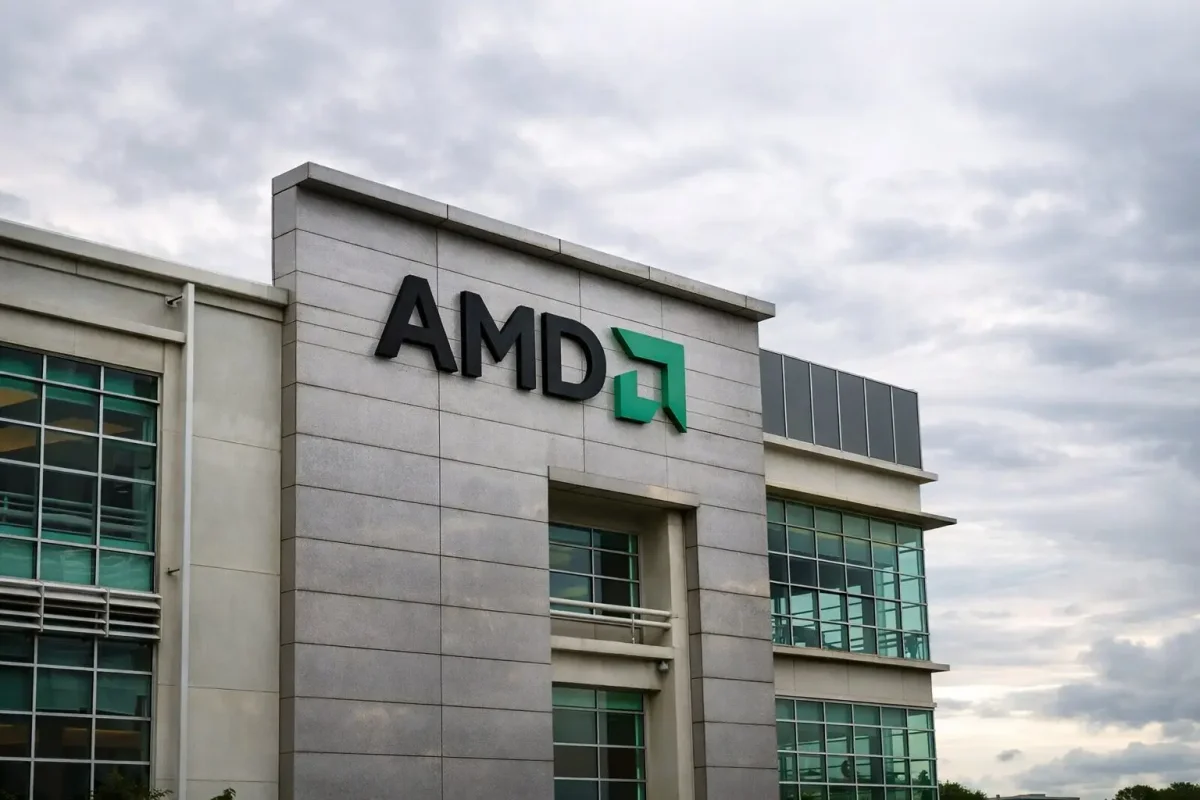
Advanced Micro Devices has established a strategic partnership with the University of Toronto to launch a new artificial intelligence and computing research laboratory, the companies announced on Wednesday, March 5, 2026. The collaboration aims to accelerate innovation in next-generation technologies as the global race for AI chip dominance intensifies.
Strategic Academic Alliance
The AMD–University of Toronto Research Lab will focus on several critical areas, including energy-efficient AI systems, enterprise data intelligence, and decentralized training methodologies for large-scale AI models. According to the joint announcement, the facility plans to support approximately 100 research initiatives over a three-year period. To bolster computational capabilities, the lab will be equipped with new, high-performance AI servers.
Chris Smith, corporate vice-president and head of AMD’s Toronto Markham Design Centre, emphasized the university's prestigious reputation in AI innovation. "By embedding U of T’s brightest minds within our research teams, cutting-edge ideas move swiftly from the lab to global-scale applications," Smith stated. Professor Arvind Gupta of the university's computer science department described the venture as the natural evolution of an eight-year relationship, noting that more than 30 applied research projects have already been completed between the two entities, with many participating students joining AMD after graduation.
Market Reaction and Broader Context
Investors responded positively to the news, with AMD's stock climbing roughly 5.9% to $202.07 in premarket trading. In comparison, rival Nvidia saw a modest 0.6% increase, while Intel gained about 0.4%. This movement occurs against a backdrop of massive tech investment, with industry analysts projecting Big Tech firms will pour over $600 billion into AI infrastructure this year alone, creating intense competition for chip supply and specialized talent.
The new Toronto lab joins AMD's existing research and development network, which includes prestigious institutions like the Massachusetts Institute of Technology and the University of California, Berkeley. This expansion is part of AMD's broader strategy to capture a larger share of the lucrative AI accelerator market, currently led by Nvidia. The company is keen to translate industry spending into sustained demand for its graphics processing units, which are essential for training and running advanced AI models.
Executive Stock Transactions
Separate regulatory filings revealed recent share sales by several AMD executives. Chief Financial Officer Jean Hu had 51,920 shares withheld at $200.21 each, valued at approximately $10.4 million, to cover tax obligations related to vested performance-based restricted stock units. Chief Commercial Officer Philip Guido reported a similar transaction involving 16,964 shares, worth about $3.4 million. Additionally, Chief Technology Officer Mark Papermaster filed a plan to sell 3,034 shares, valued at roughly $606,800, pursuant to a Rule 10b5-1 trading plan established in November 2025.
Industry Challenges and Outlook
The AI chip sector faces several headwinds beyond competitive dynamics. Analysts note that prolonged geopolitical tensions, particularly in the Middle East, could disrupt the supply of crucial materials for semiconductor manufacturing and potentially hinder data center expansion. Rising energy prices also present a challenge for tech valuations. "The Federal Reserve’s policy outlook is becoming more complicated," remarked Daniela Hathorn, a senior market analyst at Capital.com, highlighting another layer of macroeconomic uncertainty.
Michael James, an equity sales trader at Rosenblatt Securities, observed that technology shares, especially semiconductors, have been central to recent market movements, with investors rapidly alternating between risk-seeking and safety-seeking behavior. AMD's latest research investment underscores its belief that a robust pipeline of innovation and access to top-tier engineering talent are as vital to long-term success as any specific product roadmap. As the battle for AI supremacy heats up, such partnerships are increasingly viewed as critical for winning and retaining major enterprise contracts.