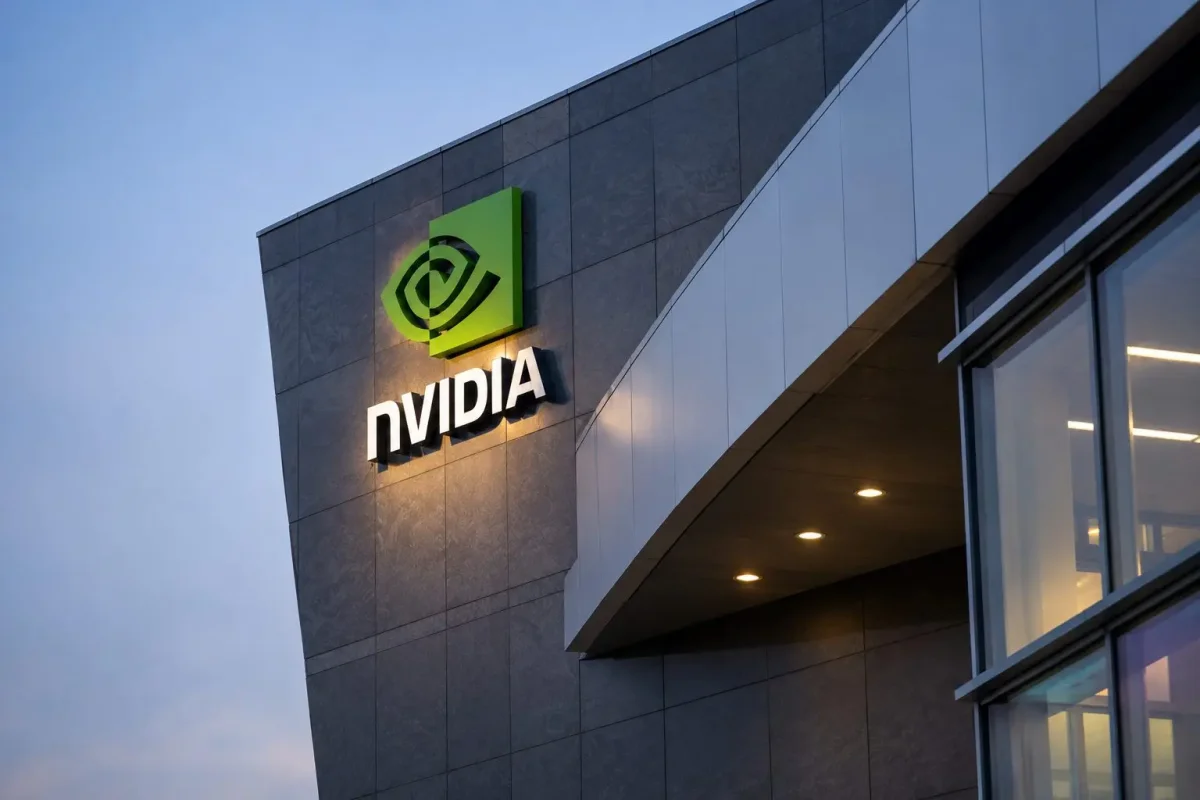
Nvidia shares closed 3.6% lower at $214.75 on Wednesday, pulling back from a rally tied to the Computex trade show, as investors locked in gains amid a broader market decline. The drop trimmed the stock's market capitalization to approximately $5.24 trillion, underscoring the volatility that continues to surround the AI bellwether.
Market Context and Profit-Taking
The decline followed a 6.26% jump on Monday after Nvidia's Computex announcements, with shares slipping 0.69% on Tuesday before Wednesday's steeper fall. The broader market added to the pressure: the Nasdaq Composite fell 0.89%, the S&P 500 slipped 0.74%, and the Dow Jones Industrial Average dropped 1.21%. According to Reuters, rising oil prices and renewed Middle East tensions prompted investors to reduce risk exposure. However, chip stocks as a group rose 1.4%, with Intel and Qualcomm bucking the trend. "The AI names are trading on their own completely separate world," noted Ross Mayfield, investment strategy analyst at Baird.
Supply Constraints and CEO Comments
Nvidia CEO Jensen Huang, speaking in Taipei this week, sought to reassure investors about supply. Huang stated that the company has "secured supply for very robust growth" in both CPUs and GPUs, with CPUs handling general tasks and GPUs powering parallel math for AI. Despite this, he acknowledged ongoing constraints: "We have supply for very, very robust growth, but we're still supply constrained." The balance between robust demand and limited supply remains a key challenge for Nvidia as it works to convert AI enthusiasm into sustained revenue growth and margin expansion.
New AI PC Chip: RTX Spark
Nvidia's next major product push is RTX Spark, a chip designed for laptops and desktops that enables local AI processing, reducing reliance on cloud offloading. Developed in collaboration with MediaTek, RTX Spark will appear in PCs from Dell, HP, Lenovo, ASUS, Microsoft Surface, and MSI this fall. Neil Shah, co-founder of Counterpoint Research, described RTX Spark as having the potential to transform the "traditional app-centric PC" into an agentic AI computer that handles tasks with fewer user prompts. Nvidia and Microsoft are positioning the release as a move to embed AI agents at the core of Windows PCs, with the platform featuring a Blackwell RTX GPU and a 20-core Grace CPU, capable of running local AI models, creative applications, and games.
Ecosystem Developments
Despite the product news, Nvidia's shares still declined. The company announced that TSMC is now leveraging Nvidia's accelerated computing and AI in chip design and manufacturing, including lithography, process simulation, factory scheduling, and defect inspection. TSMC CEO C.C. Wei noted that this collaboration enhances the foundry's manufacturing and technology position, but the market's focus remained on near-term headwinds.
Investor Concerns and Outlook
Investors are weighing several risks. Supply constraints could persist, and AI PC sales may remain uneven. Even if Nvidia continues to post strong growth, a broader market pullback could drag valuations lower. Bill Northey, senior investment director at U.S. Bank Wealth Management, described a "tug of war" in markets, with strong U.S. economic data on one side and worries over the duration of Middle East conflict and energy costs on the other.
The key question for Nvidia is no longer whether AI demand exists, but how much of that demand the company can convert into shipments, margins, and business expansion beyond the data center. Wednesday's slide tests whether the recent rally was a healthy pause or a sign that the stock's momentum has outpaced fundamentals.