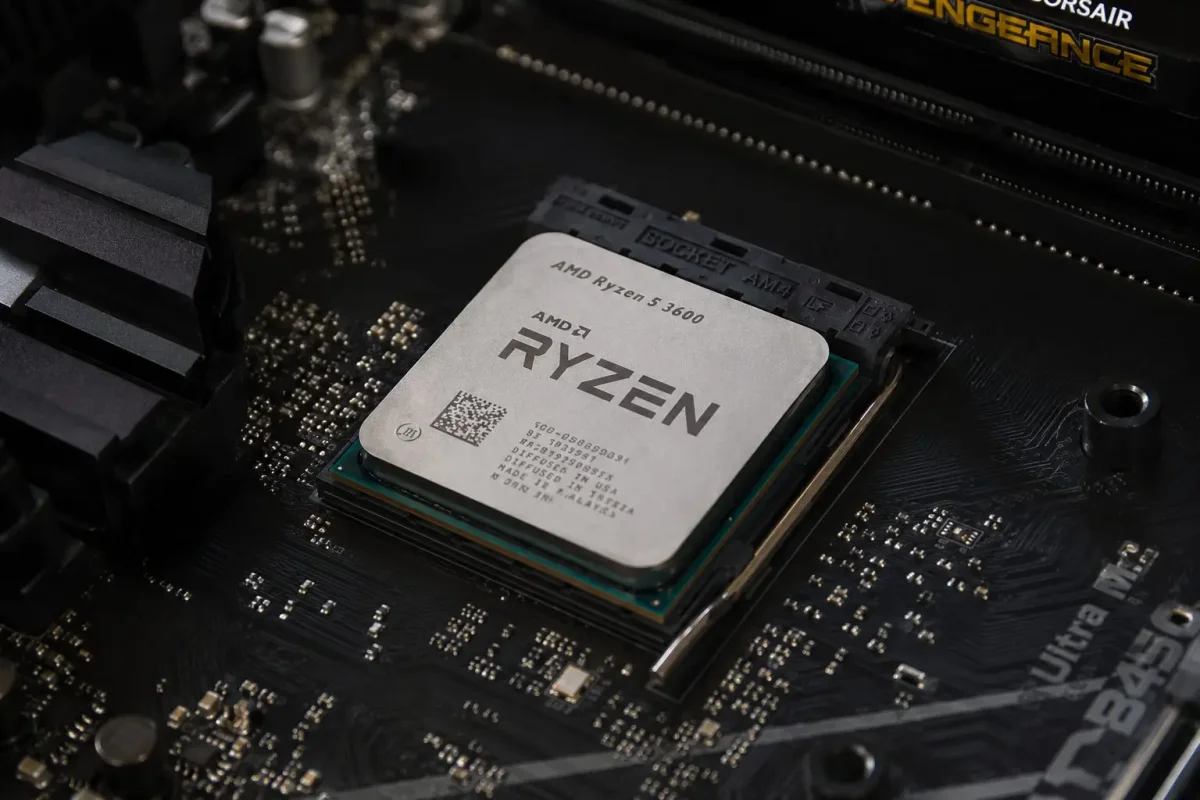
Advanced Micro Devices (AMD) quietly accumulated a small position in Marvell Technology (MRVL), according to a regulatory filing that sent Marvell shares up nearly 10% on Wednesday. The 13F filing, covering the quarter ended March 31, shows AMD held 65,516 Marvell shares, worth $6.49 million at that time. At Marvell's recent price of $180.76, the stake would be worth approximately $11.8 million—though AMD may have adjusted its holdings since then.
The disclosure comes as semiconductor stocks continue to drive market gains. The Philadelphia SE Semiconductor Index has surged 64% since late March, far outpacing the S&P 500's 17% rise. Morgan Stanley Wealth Management's Steve Edwards described the sector's performance as a “perfect mix” of technical momentum and fundamentals. BakerAvenue's King Lip added that AI infrastructure is kicking off a “multi-year capex cycle.”
Marvell is a key supplier for AI data-center hardware, producing custom chips and high-speed interconnects known as application-specific integrated circuits (ASICs). These chips are tailored for specific clients or workloads, unlike general-purpose processors. In March, Marvell forecast fiscal 2028 revenue close to $15 billion, exceeding Wall Street expectations, with President and COO Chris Koopmans noting that hyperscaler customers are “still growing massively.”
Analysts have responded with upgraded price targets. BofA's Vivek Arya raised his Marvell target to $200 from $125, maintaining a Buy rating, after boosting his 2030 AI data-center systems forecast to roughly $1.7 trillion. B. Riley's Craig Ellis increased his target to $205 from $156, also reiterating Buy, citing faster AI spending from hyperscalers and cloud providers.
The filing also underscores competitive dynamics in the AI chip market. Marvell and Broadcom are both working with cloud providers to create custom processors that reduce reliance on Nvidia's versatile AI chips. In April, Reuters reported that Alphabet's Google was discussing two AI chip projects with Marvell, potentially diversifying away from Broadcom.
AMD itself has been riding the AI wave, with its stock touching an all-time high last week on a bullish forecast. Analysts increasingly view AMD as a serious contender to Nvidia in the AI chip space. “Success invites competition,” said JonesTrading's Michael O'Rourke. Matt Britzman of Hargreaves Lansdown called AMD's story a “broader compute opportunity.”
However, the 13F filing has limitations. It is required from managers overseeing $100 million or more in securities and is filed 45 days after a quarter ends, so it does not confirm AMD's current holdings or explain its rationale. Marvell also faces typical risks for AI stocks: high valuations, competition in custom silicon and optics, and the possibility that top cloud clients may bring chip design in-house.
Marvell has been expanding into optical data centers. In April, it acquired Polariton Technologies, a firm specializing in high-speed, low-power silicon photonics devices. Sandeep Bharathi, head of Marvell's data-center group, said the deal adds “differentiated modulation technology” to Marvell's optical roadmap, pushing interconnects to 3.2 terabits and beyond.
Investors will get a clearer picture later this month when Marvell reports its first-quarter fiscal 2027 results after the close on May 27, with a conference call at 1:45 p.m. Pacific. The focus will be on whether Marvell can convert hype around custom silicon and optical links into tangible revenue, rather than on AMD's minor stake.