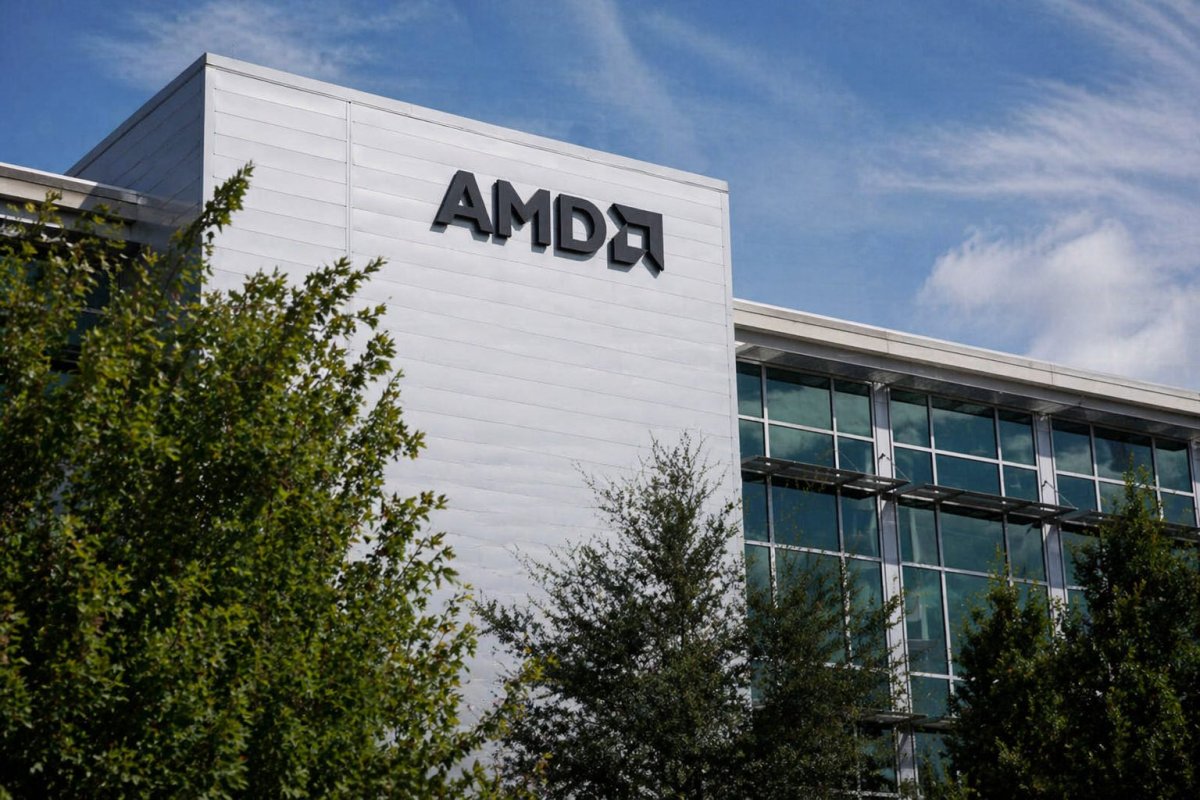
Advanced Micro Devices (AMD) shares briefly touched $319.71 on Thursday, coming within striking distance of Stifel's revised $320 price target, before pulling back to close at $305.33, up 0.6% for the session. The move left the chipmaker's market capitalization near $501 billion, as investors brace for the company's first-quarter earnings report due on May 5.
AI Demand Drives Optimism
Stifel analyst Ruben Roy raised his price target on AMD from $280 to $320, maintaining a Buy rating. Roy cited "above expectations" demand for AI compute across both accelerated and general-purpose systems. The firm highlighted commitments from Meta Platforms (META) and OpenAI, an unusual surge in CPU demand during a typically slower period, and anticipation for AMD's upcoming MI450 AI chips and Helios rack systems. However, Stifel also noted that supply conditions are tightening.
Key Customer Deals in Focus
Much of the optimism surrounding AMD centers on its recent customer wins. In February, Reuters reported that AMD struck a deal to provide Meta with as much as $60 billion in AI chips over five years, including custom CPUs and six gigawatts of capacity. That agreement adds another top-tier hyperscaler to AMD's roster as cloud companies scramble to secure compute resources. A prior deal with OpenAI, reported in October, is expected to span hundreds of thousands of AI chips over multiple years, starting in the second half of 2026, with potential annual revenue reaching tens of billions. DA Davidson's Gil Luria called the Meta arrangement "significant validation" for AMD's GPU technology.
Earnings Expectations
AMD heads into its May 5 report with a business on firmer ground than last year. In February, the company posted record fourth-quarter revenue of $10.3 billion, with data-center sales jumping 39% to $5.4 billion. Looking ahead, AMD projected first-quarter revenue of around $9.8 billion. Chief Executive Lisa Su said AMD was entering 2026 with "strong momentum" in EPYC and Ryzen processors, as well as its data-center AI line.
Competitive Landscape
Nvidia (NVDA) remains the dominant AI chip supplier, but buyers are increasingly diversifying. Intel (INTC) drove that point home on Thursday, projecting second-quarter revenue above Wall Street's view and citing surging appetite for AI server processors as a key growth driver. "The CPU is having a renaissance here," Intel CFO Dave Zinsner told Reuters. For AMD, that trend represents an opportunity to expand beyond AI accelerators and capture more of the general-purpose server chip market powering AI workloads.
Supply and Structural Concerns
Stifel flagged mounting supply pressures, while AMD's deals with Meta and OpenAI both included warrants that could allow those clients to acquire up to 10% of AMD. That unusual structure has raised questions about whether AMD can drive demand without handing out equity. "Delivering solutions at this scale is a new test for the chipmaker," Matt Britzman of Hargreaves Lansdown commented in February.
Broader Market Context
ASML (ASML) and TSMC (TSM) each lifted their outlooks this month, underscoring continued heavy investment in AI infrastructure by hyperscalers. The positive tone has boosted AMD, Nvidia, and other semiconductor stocks. However, with AMD trading above $300 and closing in on a $320 target flagged by one analyst, the company's May 5 update could outweigh any new target price in determining the stock's near-term direction.