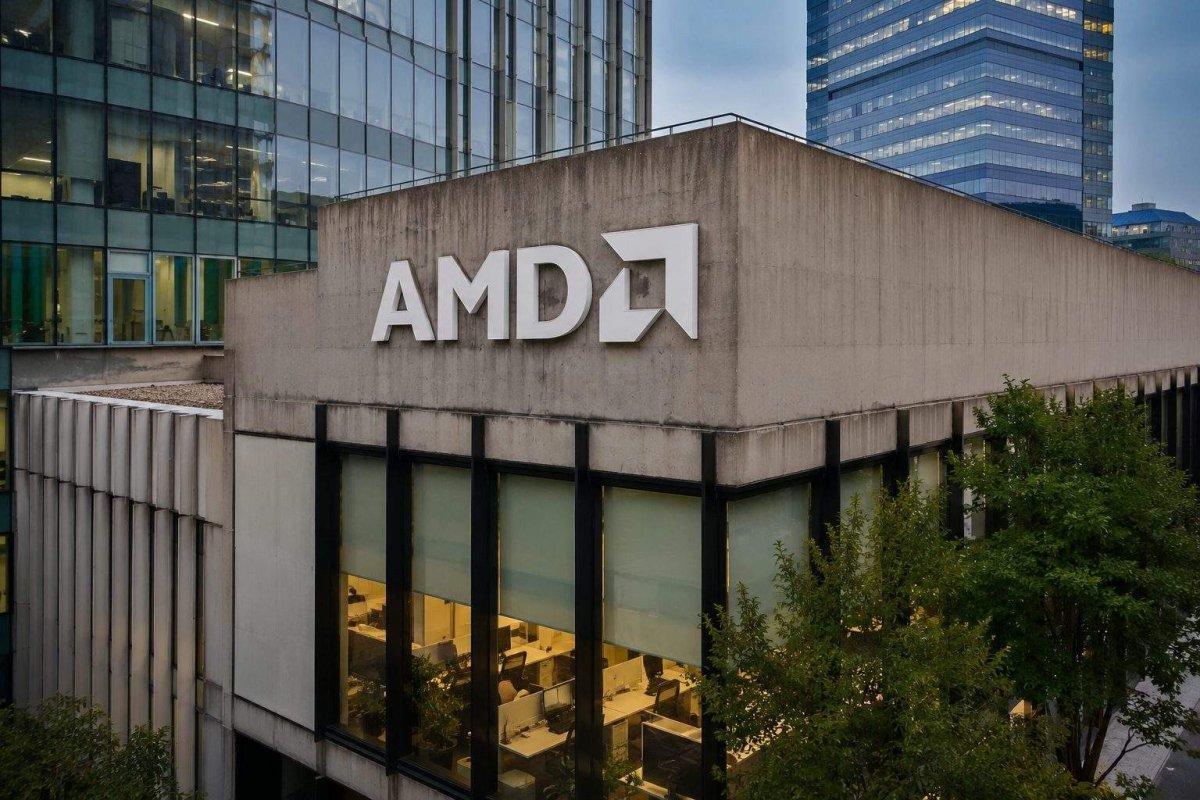
Advanced Micro Devices (NASDAQ: AMD) experienced a sharp decline on Thursday, with shares sliding 5.3% to close at $500.94. The drop erased approximately $46 billion in market capitalization, underscoring persistent valuation concerns that have weighed on the stock even as demand for chips remains robust. The decline outpaced the broader semiconductor sector, as the PHLX Semiconductor Index fell 4.3% during the same session.
The steep sell-off in AMD shares contrasts with the more modest 2.4% decline seen in rival Nvidia (NASDAQ: NVDA). Notably, AMD did not issue any demand warning, and the company's fundamental outlook remains intact. The sell-off appears driven by valuation anxiety rather than any deterioration in business conditions.
Valuation Disparity Highlights Market Concerns
A key factor behind the market's unease is the wide gap in valuation multiples. AMD currently trades at a trailing price-to-earnings (P/E) ratio of 164.4, a figure that stands in stark contrast to Nvidia's 31.8x and Taiwan Semiconductor Manufacturing Co's (NYSE: TSM) 34.9x. This means AMD's multiple is more than five times higher than Nvidia's and nearly five times that of TSMC.
Gene Goldman, chief investment officer at Cetera, described the AI trade as “being priced on perfection.” He added that Thursday’s move was “the market catching its breath, not changing its mind.” This sentiment suggests that while the long-term thesis for AI remains intact, current valuations leave little room for error.
Broader Market Context
The sell-off in AMD was part of a broader pullback in semiconductor stocks, with Broadcom (NASDAQ: AVGO) also dropping 5.03% and TSMC's U.S. shares slipping 2.3%. The weakness came despite a strong earnings report from TSMC, which posted a 77% surge in quarterly profit, with net income reaching T$706.6 billion, exceeding the T$632.6 billion SmartEstimate. However, the positive news failed to lift sentiment, as investors focused on valuation and positioning rather than underlying demand.
Hedge fund activity also signaled caution. Goldman Sachs (NYSE: GS) reported Wednesday that total hedge-fund holdings in its broad AI basket had fallen to their lowest level of 2026, a basket that includes both AMD and Nvidia. This reduction in exposure suggests that institutional investors are trimming positions in high-flying AI names.
Analyst Sentiment and Price Targets
Despite the recent pullback, analysts remain largely bullish on AMD. The consensus analyst price target stands at $538.19, which is just 7.4% above Thursday's closing price. Of the analysts covering the stock, 28 rate it as a buy, eight as a hold, and none as a sell. This limited upside buffer and lack of sell ratings indicate that much of the good news is already priced in.
AMD shares had climbed 7.7% in the prior trading week but have since given back those gains, falling 10.2% since last Friday. The stock is now trading 13.8% below its June 30 close, highlighting the volatility that has characterized the AI chip sector.
Upcoming Catalyst: Advancing AI Event
Investors are now looking ahead to AMD's next major catalyst, the Advancing AI event scheduled for July 23 in San Francisco. CEO Lisa Su is expected to host the event, where the company will likely showcase its latest AI products and deployment strategies. Market participants will be watching for concrete evidence of real-world adoption and customer wins that could justify the stock's premium valuation.
In the meantime, the chip sector continues to benefit from robust demand, particularly from data center and AI applications. However, the high valuations leave little margin for disappointment. For AMD, the challenge now is to translate its current valuation into tangible earnings growth. If the company can deliver on its AI promises, the recent pullback may prove to be a temporary setback. But if execution falters, the stock could face further pressure.
Risks to the outlook include the possibility that trailing P/E comparisons may be misleading due to differences in business mixes between AMD and its peers. Additionally, a swift rebound in the chip sector could quickly close Thursday's relative valuation gap, offering a potential opportunity for patient investors.