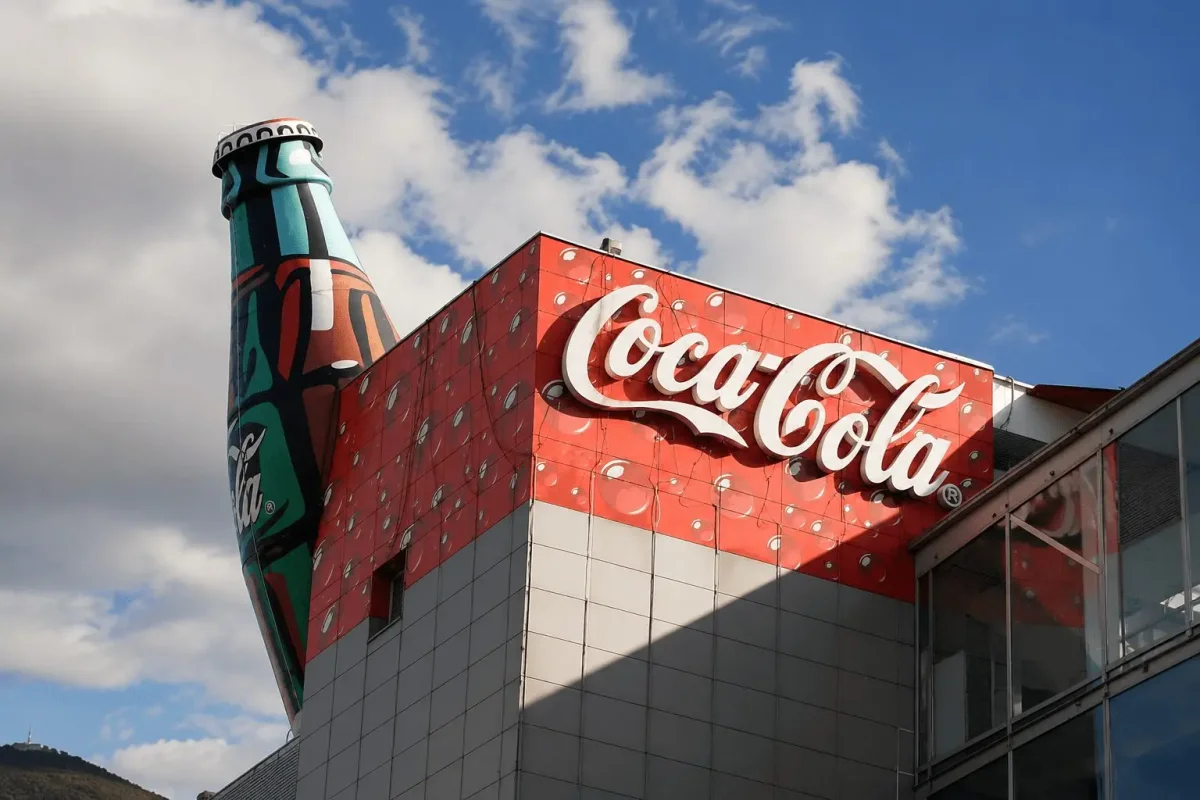
The Coca-Cola Company (NYSE: KO) advanced 2.6% to $84.63 in Thursday afternoon trading, coming within 1.2% of its July 7 peak. The gain came as the broader market showed signs of defensive rotation, with the Consumer Staples Select Sector SPDR Fund (NYSEARCA: XLP) also rising 2.6% while the SPDR S&P 500 ETF Trust (NYSEARCA: SPY) declined 0.7%.
This performance underscores a shift toward defensive positioning rather than company-specific momentum. The tech-heavy Invesco QQQ Trust (NASDAQ: QQQ) fell 1.8%, weighed down by weakness in semiconductor stocks. Consumer staples were on track for their strongest session since April 2025, according to market data.
“If you look at the rest of the market, it’s doing fine,” said Paul Nolte, strategist at Murphy & Sylvest, in comments to Reuters. The comment highlights the relative strength of staples amid a mixed tape.
Dividend Yield vs. Treasury Income
Coca-Cola’s quarterly dividend of 53 cents per share equates to an annual payout of $2.12, giving the stock a yield of 2.5% at the current price. With the 10-year Treasury yield hovering near 4.59%, the income gap of roughly 2.1 percentage points illustrates that investors are not simply chasing yield. Instead, they are paying a premium for the stability and predictability that Coca-Cola offers.
This stability trade comes at a cost. Coca-Cola’s trailing price-to-earnings (P/E) ratio of 26.6x is 46% higher than PepsiCo’s (NASDAQ: PEP) 18.2x and 14% above Keurig Dr Pepper’s (NASDAQ: KDP) 23.3x. Yet both rivals posted even larger gains on Thursday, with PepsiCo rising 2.8% and Keurig Dr Pepper advancing 4.0%.
Earnings Preview and Valuation Concerns
The next major catalyst for Coca-Cola is its second-quarter earnings report, scheduled for July 28 at 8:30 a.m. EDT. The company enters the report after a strong first quarter, during which global volume grew 3% and price/mix improved 2%. Management subsequently raised its 2026 adjusted EPS growth outlook to a range of 8% to 9%.
However, risks remain. Chief Financial Officer John Murphy has cautioned that consumer resilience is not uniform, noting growing financial pressure on households with incomes between $50,000 and $60,000. Meanwhile, oil prices remain above $80 per barrel and the 10-year Treasury yield is approaching 4.59%, which could raise input and borrowing costs, potentially pressuring demand and valuation.
Should the upcoming volume report disappoint, the stock’s premium could quickly come into focus. For now, Coca-Cola is being treated more as a defensive holding than as an income alternative. The July 28 report will be the key test of whether that premium is justified by operational performance.