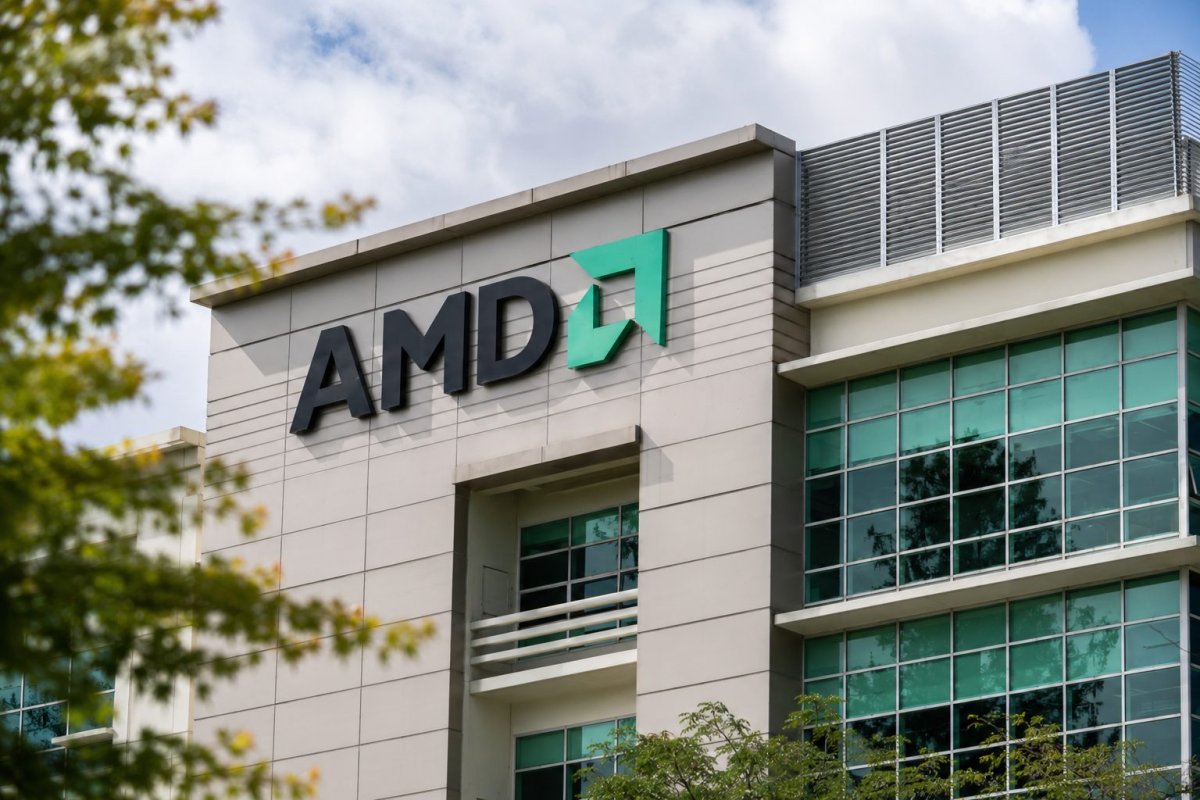
Advanced Micro Devices (AMD) shares experienced a significant jump on Wednesday, climbing 7.3% to $444.24 in New York trading. The stock rebounded sharply alongside other chipmakers as investor sentiment shifted away from Tuesday's pullback and refocused on the robust demand for AI server infrastructure.
The rally came as the Philadelphia SE Semiconductor index gained 2.9%, with Nvidia shares also rising about 2% ahead of its highly anticipated quarterly results after the bell. Intel saw an even more dramatic increase, jumping over 6% earlier in the day. Trading volume for AMD reached 23.5 million shares, well above average, reflecting heightened investor interest.
Analyst upgrades played a key role in boosting AMD's momentum. Evercore ISI raised its price target on the stock to $579 from $358 on May 19, while Citi increased its target to $460 from $358. Melius Research also lifted its target to $540 from $500. Evercore's Mark Lipacis described the current environment as a “CPU Renaissance,” citing growing demand for server chips that handle the bulk of computing workloads.
Beyond graphics processing units (GPUs), analysts are now seeing gains in central processing units (CPUs), networking, and memory as AI inference—running trained AI models for users—drives demand. “Server CPU demand continues to outpace supply,” noted RBC Capital’s Srini Pajjuri.
AMD’s first-quarter results, reported earlier this month, were strong. Revenue surged 38% year-over-year to $10.3 billion, with adjusted diluted EPS rising to $1.37. Data center sales climbed 57% to $5.8 billion, now the company’s primary growth engine, fueled by demand for EPYC server chips and Instinct AI GPUs. CEO Lisa Su attributed the performance to “accelerating demand for AI infrastructure.” The company guided second-quarter revenue around $11.2 billion, plus or minus $300 million, with adjusted gross margin expected at about 56%.
However, risks remain. Intel’s improved production capabilities could pressure AMD in the CPU market, and AMD’s reliance on external manufacturers like Taiwan Semiconductor Manufacturing Co. for chip supply adds vulnerability. High-bandwidth memory shortages are also driving up costs and potentially dampening demand for consumer electronics, including PCs. Daniel Newman, CEO of Futurum Group, noted that AMD may need “precious additional capacity” to meet demand.
Despite these challenges, AMD shares found support on Wednesday as traders positioned for Nvidia’s earnings. The sustainability of this rally will likely depend on Nvidia’s outlook, which could either provide fresh fuel for the chip sector or lead to renewed crowding in the AI trade.