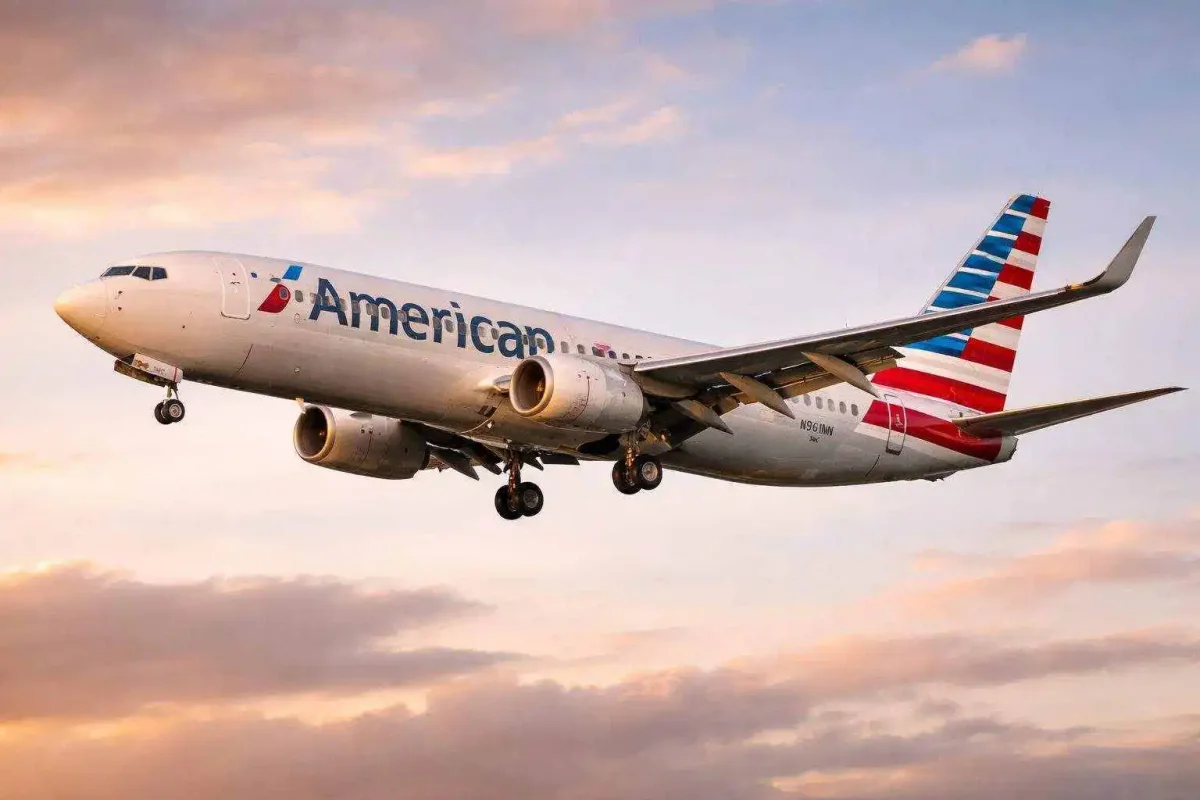
American Airlines Group Inc. has secured a significant enhancement to its financial liquidity, increasing its available revolving credit commitments to $3.11 billion and pushing their maturity date to March 5, 2031. The amendment, detailed in a recent Securities and Exchange Commission filing, extends the maturity from a previous date of June 4, 2029. This strategic financial maneuver is designed to bolster the carrier's balance sheet flexibility at a critical juncture.
Navigating a Hefty Debt Load
The timing of this credit extension is particularly noteworthy given American's substantial debt burden. As of the close of 2025, the company reported total debt of $36.5 billion, a figure that places it near the top among major U.S. airlines. Management has communicated an accelerated goal to investors, aiming to reduce total debt below $35 billion during 2026, which is one year ahead of its original target. This effort is part of a broader corporate turnaround strategy pitched for the current year.
Fuel Price Spike Squeezes Margins
A primary catalyst for securing additional financial runway is the recent sharp increase in jet fuel expenses. Spot prices for jet fuel on the U.S. Gulf Coast recently reached their highest level since June 2022. Most major U.S. carriers, including American, have largely abandoned fuel hedging strategies—contracts that lock in prices—leaving them fully exposed to market volatility. Analysts note that for American, a one-cent increase per gallon in jet fuel costs adds approximately $50 million to its annual expenses.
Market observers, such as Morgan Stanley analyst Ravi Shanker, anticipate that airlines will continue to forgo hedging, instead attempting to pass increased costs through to consumers via higher fares. However, this strategy faces limits in a competitive market. TD Cowen analyst Tom Fitzgerald offered a blunt assessment, suggesting that without a meaningful decline in energy prices, it will be "hard to envision margin expansion this year" for the carrier.
The Competitive Landscape and Profit Gap
American's financial maneuvers occur against a backdrop of intense competition and a significant profitability gap with its closest rivals. For 2025, American reported an adjusted pre-tax profit of $352 million. In stark contrast, Delta Air Lines posted roughly $5 billion, while United Airlines reported $4.6 billion. American's business model, which includes a heavier reliance on price-sensitive leisure travelers and a large network of short-haul routes, is seen as less resilient to cost pressures compared to Delta, which benefits from a partial natural hedge through its ownership of a refinery.
American's management remains publicly committed to its 2026 turnaround plan, which projects adjusted earnings per share between $1.70 and $2.70 and anticipates free cash flow exceeding $2 billion. The company is banking on growth in premium seat sales, a recovery in corporate travel bookings, and increased revenue from its AAdvantage loyalty program to drive this improvement.
Market Reaction and Upcoming Catalyst
Investors reacted cautiously to the news. American's share price declined approximately 1.4% in Tuesday afternoon trading. Peers also saw pressure, with Delta shares easing about 0.6% and United falling close to 2%. The broader market attention will now turn to the J.P. Morgan Industrials Conference scheduled for March 17, where American is set to present. Industry analysts expect most major U.S. airlines to update their financial guidance ahead of this key industry event.
While the expanded credit facility provides a crucial liquidity buffer, it does not eliminate the fundamental operational challenges. The company's success in 2026 hinges on its ability to execute its strategic plan, manage its massive debt, and navigate an uncertain cost environment, all while competing in a market where its two main competitors currently generate far greater profits.