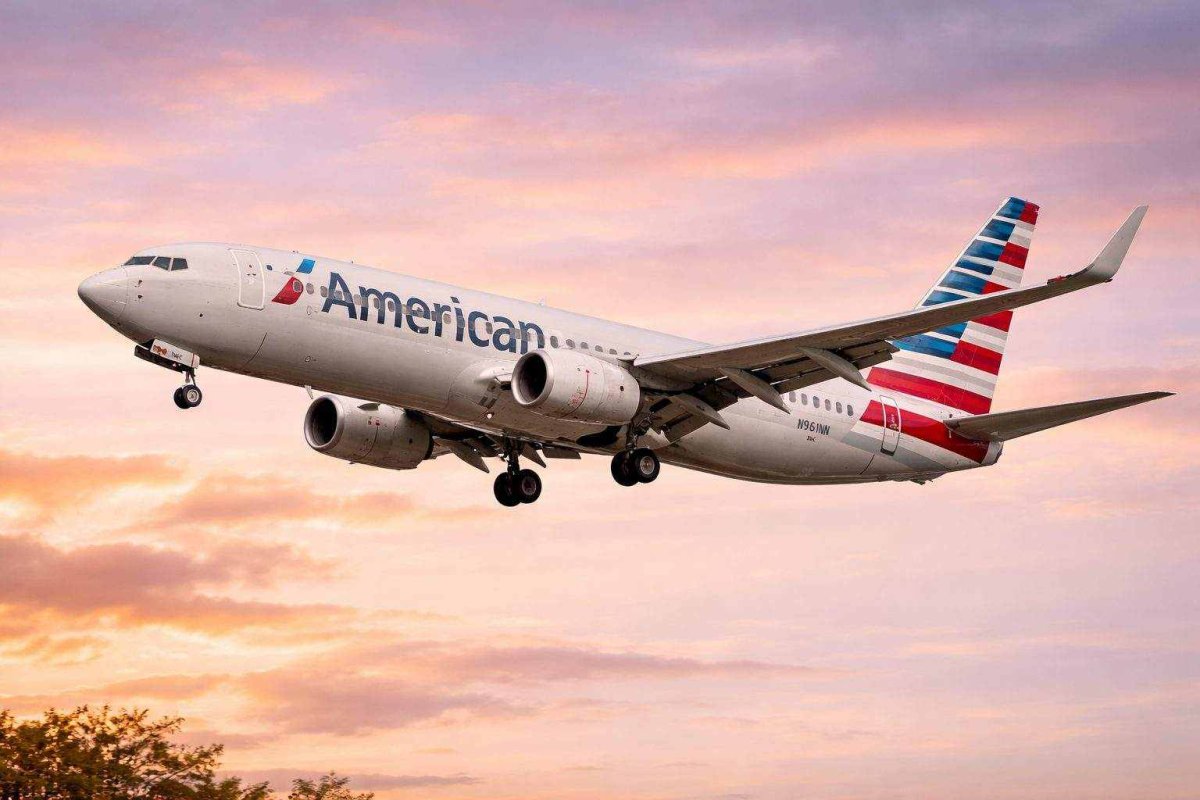
Shares of American Airlines Group Inc. (AAL) exhibited minimal movement during Friday's premarket session, stabilizing around the $14.05 level following a notable decline in the prior trading day. The stock's consolidation comes amid escalating tensions between the airline's management and its major labor unions, casting a shadow over the company's operational stability and strategic direction.
Labor Unrest Intensifies with No-Confidence Vote
The Association of Professional Flight Attendants (APFA) has formally declared a vote of no confidence in Chief Executive Officer Robert Isom. The union has also announced plans to stage a protest outside the company's corporate headquarters in Fort Worth, Texas. Concurrently, the Allied Pilots Association is applying direct pressure on the carrier's board of directors for intervention. APFA President Julie Hedrick articulated the workforce's frustration, stating to Reuters that the management team has, in the union's view, failed in its duties. In recent remarks, CEO Isom acknowledged the need for substantive change, emphasizing that "2026 can't just feel different. It has to be different."
Financial Performance Gap and Strategic Challenges
The labor dispute redirects investor attention to American Airlines' financial performance relative to its primary competitors. For the 2025 fiscal year, American reported an adjusted pre-tax profit of $352 million. This figure stands in stark contrast to the approximately $5 billion posted by Delta Air Lines (DAL) and the $4.6 billion achieved by United Airlines (UAL). Management has outlined a turnaround strategy focused on premium cabin upgrades, recapturing corporate travel market share, and improving operational reliability. However, the resurgence of labor tensions introduces a significant risk of management distraction and potential reputational damage for a customer-facing business, particularly as key travel periods approach.
American's shares concluded Thursday's session at $14.05, reflecting a single-day decline of 2.09%. Trading volume was substantial at roughly 54.3 million shares, with the stock oscillating between $13.66 and $14.66 throughout the day. The broader airline sector faced headwinds, with United (UAL) falling 4.07% and Delta (DAL) dropping 2.69% on Thursday, as market sentiment turned cautious.
Broader Market Context and Key Data
Market participants on Friday were primarily focused on the scheduled release of the January Consumer Price Index (CPI) report at 8:30 a.m. Eastern Time. This inflation data point is a critical input for Federal Reserve policy expectations and has the potential to swiftly influence bond yields and equity valuations. Sectors like airlines, which are sensitive to shifts in both input costs and consumer demand, are particularly vulnerable to fluctuations in interest rate outlooks. U.S. stock index futures were relatively stable ahead of the report, but the potential for volatility remained high.
In a recent operational update, American Airlines reported reducing its total debt by $2.1 billion during 2025 and projected free cash flow to exceed $2 billion in the following year. Addressing investors, CEO Isom expressed confidence, stating the airline was "positioned for significant upside in 2026 and beyond." The company is scheduled to release its next quarterly earnings report around April 23.
The immediate outlook for American remains fluid. A protracted labor dispute threatens to disrupt operations and service quality. Any degradation in on-time performance could simultaneously increase costs and depress revenue, creating a dual challenge during crucial revenue-generating periods. Traders and analysts are monitoring two key developments: the market's reaction to the CPI data and any formal response from American's board or executive team regarding the unions' demands. The resolution of these intersecting issues—macroeconomic pressures and internal labor relations—will likely dictate the stock's trajectory in the near term.