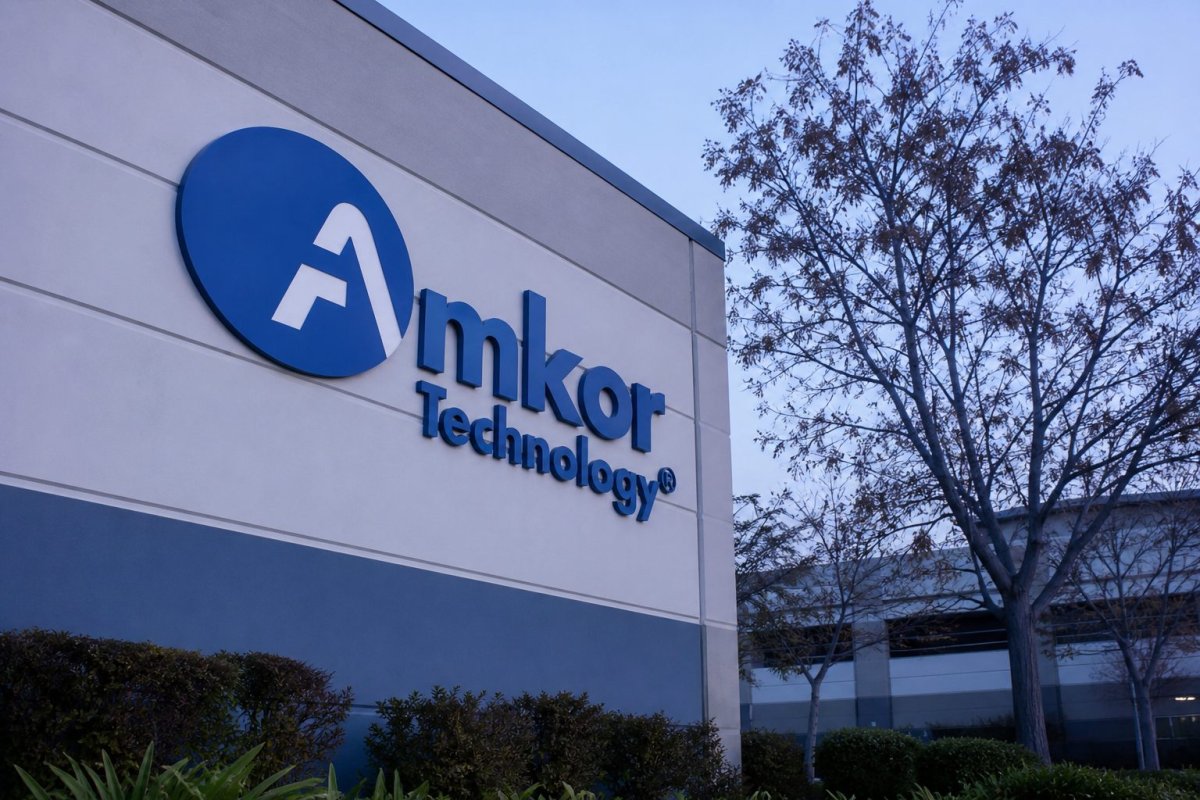
Amkor Technology (AMKR) has priced $1 billion in zero-coupon convertible senior notes due 2031, a move that will provide the chip packaging company with fresh capital to accelerate its investments in advanced packaging for artificial intelligence, smartphones, and data-center chips. The offering, which carries no interest and no principal accretion, is set to settle on May 5, according to a company filing.
The notes will mature on July 15, 2031, unless earlier repurchased, redeemed, or converted. The initial conversion price is approximately $106.37 per share, representing a 52.5% premium over Amkor's closing price of $69.75 on April 30. Amkor is also granting the initial purchasers an option to buy up to an additional $150 million in notes.
Proceeds from the offering are expected to total around $981.7 million, or roughly $1.129 billion if the underwriters exercise their full option. Of that amount, $49 million will be used for capped-call transactions, a hedging strategy designed to offset potential dilution if the notes are converted. The capped-call threshold is set at $139.50 per share. The remainder will be allocated to general corporate purposes, including capital expenditures, with a particular focus on the company's advanced packaging facility in Arizona.
Amkor shares closed at $71.09 on Friday, up 1.9%, after reaching an intraday high of $71.65. At that level, the company's market capitalization stood at approximately $17.7 billion. The stock has been trading near recent highs, providing a favorable window for the company to raise capital.
Capital Expenditure Plans
The new financing comes as Amkor plans significant capital spending for 2026, with the company forecasting capital expenditures between $2.5 billion and $3.0 billion. This represents a substantial increase from the $224.6 million spent in the first quarter of 2026, which itself was up sharply from $79.9 million a year earlier. The bulk of the spending is earmarked for advanced packaging equipment, test infrastructure, and the construction of the Arizona facility, which is a key component of the company's strategy to meet growing demand for U.S.-based chip packaging capacity.
Strong First-Quarter Results
The capital raise follows a solid first-quarter performance. Amkor reported net sales of $1.685 billion for the first quarter of 2026, up from $1.322 billion in the same period last year. Diluted earnings per share came in at $0.33. CEO Kevin Engel described the quarter as a "strong start to 2026," citing broad-based demand and progress in advanced packaging initiatives. For the second quarter, the company projects sales between $1.75 billion and $1.85 billion, with gross margins expected in the range of 14.5% to 15.5%.
Industry Context and Competition
Advanced packaging, which involves linking, stacking, and testing chips after production, has become a critical bottleneck for high-performance computing, particularly for AI applications. Amkor is racing to expand its footprint as customers increasingly demand U.S.-focused supply chains. However, competition is intense. Taiwan's ASE Technology, the world's largest chip packaging and testing firm, recently projected that its advanced packaging segment would generate over $3.5 billion in 2026, a 10% increase driven by AI chip demand. ASE's Siliconware Precision Industries is a key supplier for Nvidia's packaging needs.
Nvidia has already signaled its intention to work with both Amkor and Siliconware Precision Industries to expand its U.S. manufacturing presence over a four-year period, as noted by CFO Colette Kress in November.
Analyst Outlook and Risks
Needham analyst Charles Shi raised his price target on Amkor to $90 from $65, maintaining a Buy rating following the earnings report. He noted that revenue and gross margins exceeded consensus expectations, and he expects computing revenue to grow more than 20% in 2026, with AI and data-center demand offsetting a sluggish PC market.
Despite the positive outlook, there are risks. The offering is subject to closing conditions, and the capped-call transactions do not fully shield noteholders from dilution or additional cash payments if Amkor shares rise above the cap. Moreover, the company's practice of incurring capital expenditures in anticipation of future revenue, often before securing firm orders, could pressure margins and cash flow if demand falls short of expectations.
Ultimately, Amkor's ability to bring new capacity online as planned, fill it with customer orders, and generate margins that justify the expansion will be key to the success of this capital-intensive strategy.