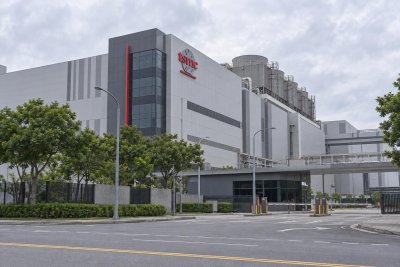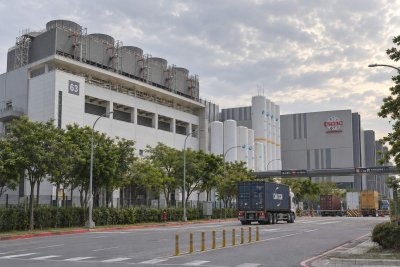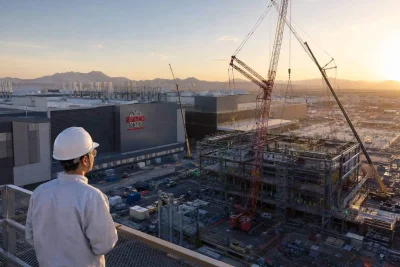
The suspended expansion of the Longtan Science Park in Taiwan has been brought back to life, offering Taiwan Semiconductor Manufacturing Co. (TSMC) a potential site for its next-generation chip fabrication plants, according to a report from Economic Daily News. The revived project could attract investment between NT$500 billion and NT$600 billion and may house so-called 'angstrom-level' wafer fabs, representing chip manufacturing processes beyond current nanometer technology.
The development comes at a critical time for TSMC, the world's leading contract chipmaker, which is racing to expand its advanced-node capacity to meet surging demand from artificial intelligence applications. The company reported robust first-quarter results last month, with revenue climbing 35.1% year-over-year to NT$1.13 trillion and net income surging 58.3% to NT$572.48 billion, driven largely by AI chip orders.
Project Details and Timeline
The proposed third-phase expansion at Longtan Science Park covers approximately 104 hectares, as reported by Economic Daily News. Hsinchu Science Park Bureau chief Hu Shih-min confirmed that a public hearing on the project was held in April. A feasibility study cleared the National Science and Technology Council in mid-March, with a more detailed submission expected in May. However, the project still faces significant hurdles, including land acquisition, final approval from the Executive Yuan, and a comprehensive environmental assessment.
This is not the first time TSMC has eyed the Longtan site. In 2023, the company scrapped plans for a proposed 1.4-nanometre fab at the same location following local opposition. The Hsinchu Science Park Bureau had previously stated it would review expansion plans to balance industry growth with community concerns, a tension that remains unresolved.
Market and Economic Context
The potential expansion aligns with broader economic trends in Taiwan. The country's statistics bureau reported a preliminary 13.69% year-on-year increase in first-quarter real GDP, fueled significantly by exports of AI hardware and other technology products. TSMC's CFO Wendell Huang noted in the company's April earnings release that the first-quarter performance was supported by strong demand for leading-edge process technologies.
CEO C.C. Wei described AI-driven demand as 'extremely robust' during an April analyst call, while also acknowledging macro uncertainty. Quilter Cheviot's tech research head Ben Barringer commented that TSMC's fabs are operating at very high utilization rates, underscoring the capacity squeeze the company is navigating.
Competition remains fierce in the contract chip manufacturing space. Samsung Electronics, a rival to both TSMC and Intel, told investors on April 30 that it is pursuing more advanced 2-nanometre contracts and considering a second fab in Taylor, Texas, after client discussions.
Outlook and Challenges
TSMC's involvement in the Longtan project remains contingent on official approvals and community acceptance. The company's ADR closed at $397.67 in New York on Friday, and it is scheduled to report April sales on May 8. The Taipei market was closed at the time of publication.
If the Longtan expansion receives the green light, TSMC could secure additional advanced manufacturing capacity at home, complementing its ongoing expansions in the U.S. and Japan. However, if the project falters, the company will continue to face capacity constraints that could limit its ability to meet the relentless demand from AI chip customers.