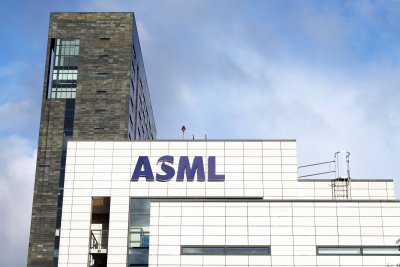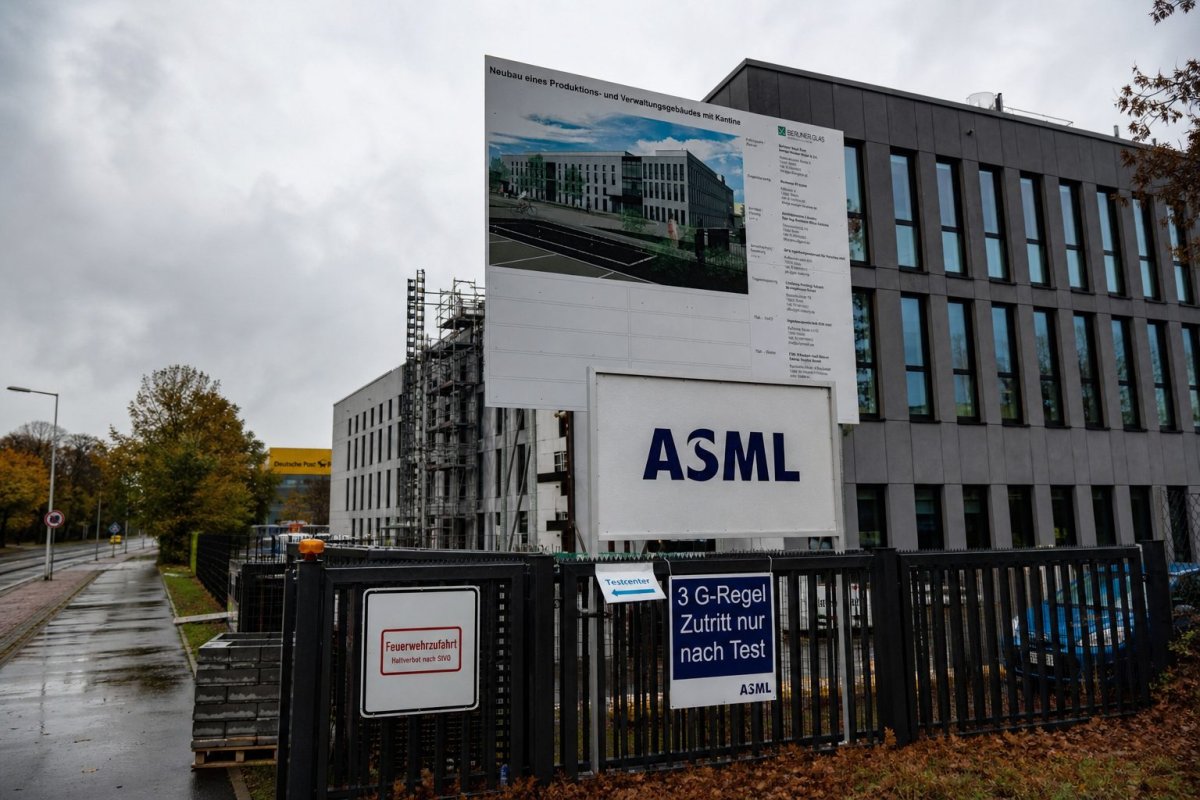
ASML Holding N.V. saw its U.S.-listed shares decline by 0.83% on Friday, settling at $1,427.02, as market participants balanced an upbeat long-term sales forecast against geopolitical risks tied to export restrictions on China. Trading activity was confined to the company's American Depositary Receipts (ADRs) on the Nasdaq, as its primary listing in Amsterdam remained closed for Labour Day.
AI-Driven Demand and Supply Constraints
The Dutch semiconductor equipment giant continues to occupy a central position in the artificial intelligence hardware supply chain. ASML is the exclusive manufacturer of extreme ultraviolet (EUV) lithography systems, which are essential for producing the most advanced microchips used in AI applications. Its tools serve key clients including Taiwan Semiconductor Manufacturing Company, Samsung Electronics, SK Hynix, and Micron Technology.
CEO Christophe Fouquet highlighted that chip demand is currently outpacing supply, with customers accelerating their expansion plans into 2026 and beyond. The company's latest financial report for the first quarter showed net sales of €8.8 billion and net income of €2.8 billion.
2026 Outlook and Guidance
During its April 15 investor update, ASML projected 2026 net sales in the range of €36 billion to €40 billion, with an anticipated gross margin between 51% and 53%. This revised forecast, which includes a full-year 2026 sales target of €34 billion to €39 billion, reflects stronger-than-expected demand driven by AI-related investments. Analysts polled by LSEG had been looking for €37.7 billion. For the current quarter, management guided second-quarter sales between €8.4 billion and €9.0 billion.
China Exposure and Regulatory Risks
The primary source of uncertainty for ASML remains its exposure to the Chinese market. U.S. lawmakers are advancing the MATCH Act, legislation specifically targeting sales and support of chipmaking equipment to China. Although ASML continues to sell older deep ultraviolet (DUV) lithography systems to Chinese customers, the company's share of revenue from China is expected to decline from 33% last year to approximately 20% in the current year.
Analyst estimates on the potential impact vary. Michael Roeg of Degroof Petercam anticipates a sales reduction in the single-digit percentage range. Conversely, JPMorgan's Sandeep Deshpande warned that if the Netherlands enforces stricter export controls, ASML's earnings per share could fall by as much as 10%.
Competitive Landscape and Strategic Shifts
While ASML enjoys a monopoly in EUV technology, it faces competition in the DUV segment from Japan's Nikon and China's SMEE. Bernstein analyst David Dai noted that demand pressure is particularly acute for DUV systems. In a strategic move to reduce volatility, ASML has discontinued its practice of reporting new bookings each quarter, a change that shifts investor focus toward sales outlooks, shipment details, and customer capacity updates.
Dividend and Share Buyback
At its annual general meeting, shareholders approved a final dividend of €2.70 per ordinary share, bringing the total 2025 payout to €7.50. The board also received authorization to repurchase up to 10% of issued share capital by October 22, 2027, subject to supervisory board approval.
With the Amsterdam listing closed, the ADR performance serves as an early indicator for European markets ahead of the next trading session. ASML finished at €1,222.40 in Amsterdam on April 30, its last close before the holiday.