Oil prices experienced a modest retreat on Friday as Iran floated a new diplomatic proposal for talks with the United States, channeled through Pakistani mediators, offering a potential 'off-ramp' to the ongoing conflict, according to Phil Flynn of Price Futures Group. However, the reprieve was limited: Brent crude settled at $108.17 a barrel, down 2.02%, while West Texas Intermediate (WTI) ended at $101.94. Both benchmarks closed the week higher, with Brent having surged to $126.41 earlier in the week—the highest level since March 2022.
Strait of Hormuz Disruptions
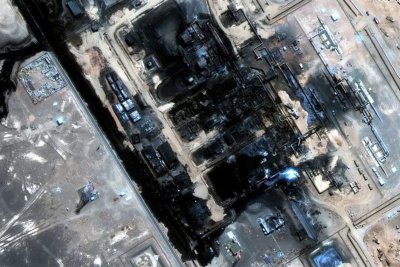
The core of the crisis remains the Strait of Hormuz, where shipments of crude, oil products, and liquefied natural gas continue to face severe disruptions. The International Energy Agency (IEA) reported that global oil supply fell by a record 10.1 million barrels per day in March, citing tanker bottlenecks through the strait and attacks on Middle Eastern energy infrastructure. Stockpiles outside the Gulf region have plunged as shipments stall. Approximately 20 million barrels of crude and oil products move through the strait daily—about 25% of global seaborne oil trade. While Saudi Arabia and the UAE have limited alternative routes, Iran, Iraq, Kuwait, Qatar, and Bahrain remain heavily dependent on the waterway. Nearly all LNG from Qatar and the UAE also transits these waters.
Physical Market Disconnect
A notable disconnect has emerged between futures and physical markets. Reuters reported that certain physical crude grades are trading near $130 a barrel, far above Brent futures hovering around $110. Tamas Varga of PVM Oil Associates noted, 'Physical markets are the true reflection,' emphasizing the real-time impact of the Hormuz disruptions. The Economist highlighted this gap, suggesting oil prices have 'further to go.' Prediction markets on Kalshi and Coinbase are pricing a year-end WTI contract above $125.01 at 60 cents, above $130.01 at 59 cents, and above $135.01 at 50 cents, reflecting strong odds of further spikes.
Analyst Views and Forecasts
Analysts see limited downside without a clear reopening of the strait. Vandana Hari of Vanda Insights told CNN that oil has 'nowhere to go but up' absent a lasting resolution. Janiv Shah at Rystad Energy warned that further attacks on energy infrastructure could ignite benchmarks. A Reuters survey of 32 economists and analysts now projects Brent averaging $86.38 a barrel in 2026 and WTI at $80.07, both above previous estimates. Anushree Ganeriwala of the Economist Intelligence Unit called the timing of a Hormuz reopening the 'key variable,' while Bridget Payne at Oxford Economics warned that if the strait stays closed for months, record futures prices are 'definitively a possibility.'
OPEC+ Response and Challenges
OPEC+ has signaled readiness to boost supply, but the move appears largely symbolic. Seven members—Saudi Arabia, Iraq, Kuwait, Algeria, Kazakhstan, Russia, and Oman—have agreed in principle to raise June output targets by about 188,000 barrels per day. However, Saudi Arabia, Iraq, and Kuwait are still grappling with export slowdowns due to the Hormuz situation. The UAE's departure from OPEC+ further complicates production calculations.
Consumer Impact
The price surge is hitting consumers hard. The national average gasoline price in the U.S. reached $4.39 on Friday, a near four-year high, while Californians are paying $6.06 per gallon, according to AAA. This adds to affordability pressures and raises concerns that the oil shock could fuel broader inflation, complicating central bank policy decisions.
Outlook and Risks
Should a diplomatic breakthrough occur or alternative routes begin moving more crude, some risk premium could dissipate—especially if OPEC+ barrels actually materialize. However, oil executives and traders caution that even after the strait clears, it could take weeks or months for flows to normalize. The immediate focus is on whether futures are finally pricing in the stalled barrels, a scenario far more challenging for refiners, airlines, central banks, and drivers than a single session of selling might suggest.