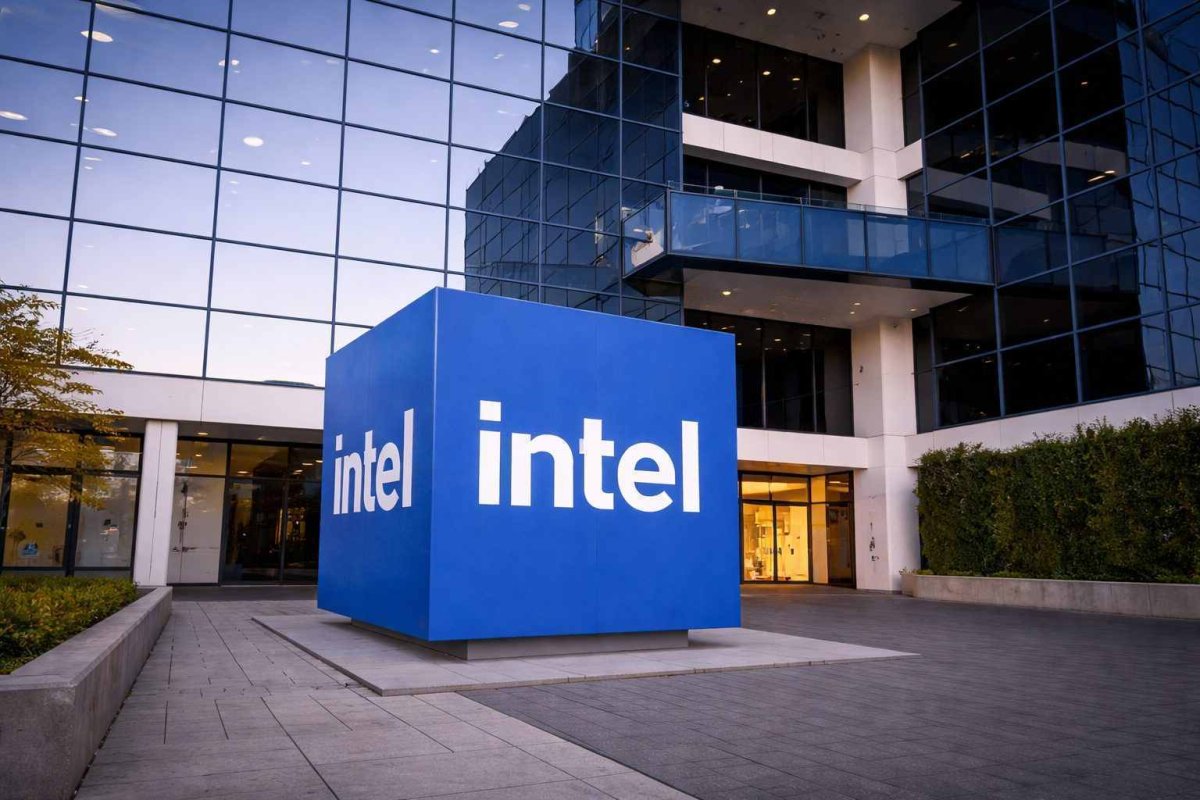
Intel Corporation (INTC) shares surged approximately 10% on Wednesday, reaching a new all-time high after reports emerged that Alphabet's Google is considering using Intel's advanced chip-packaging technology for an upcoming AI processor. The stock hit an intraday peak of $94.03 before settling at $93.23, according to market data.
Foundry Turnaround in Focus
The rally comes amid growing optimism about Intel's foundry business, which has been a key part of CEO Lip-Bu Tan's turnaround strategy. A potential packaging contract with Google would provide Intel with much-needed validation as it seeks to compete with Taiwan Semiconductor Manufacturing Co. (TSM) in advanced AI chip manufacturing.
According to TrendForce, citing Taiwan's Commercial Times, Google's TPU v8e may be built using Intel's EMIB (Embedded Multi-die Interconnect Bridge) technology, which connects multiple chiplets into a single package. Google's TPUs are custom processors designed to accelerate machine-learning workloads.
Strong Q1 Results
The news comes just days after Intel reported first-quarter revenue of $13.6 billion, up 7% year over year. The company also provided second-quarter guidance of $13.8 billion to $14.8 billion in revenue, with non-GAAP earnings of 29 cents per share, a marked improvement from the same period last year.
CFO David Zinsner noted that some of the first-quarter gains came from selling previously shelved chips, though he was uncertain whether that tailwind would continue into the second quarter. The company is seeing increased demand as the AI market shifts from training to inference, which involves AI models handling real-time user queries.
Strategic Partnerships and Competition
Intel and Google recently announced a multiyear deal in April, tying Xeon processors with custom infrastructure processing units (IPUs) designed to offload networking, storage, and security tasks from main CPUs. “Intel’s Xeon roadmap gives us confidence,” said Google’s Amin Vahdat in the announcement.
While Nvidia (NVDA) maintains its lead in AI training with its graphics processors, and Advanced Micro Devices (AMD) is increasing pressure in server CPUs and AI accelerators, Intel is positioning itself as a provider of balanced AI infrastructure that goes beyond just GPUs.
Foundry Challenges and Outlook
Intel's Products division generated $12.8 billion in first-quarter sales, while the Foundry segment brought in $5.4 billion, though the bulk of that still comes from internal demand rather than external clients. Bob O’Donnell of TECHnalysis Research told Reuters that if the foundry business starts generating significant external revenue by 2027, it would signal that Intel’s “turnaround is complete.”
However, the Google EMIB reports are not backed by a confirmed order, and Intel’s foundry ambitions come with a hefty price tag. The company reported a GAAP net loss of $3.7 billion for the first quarter, weighed down by over $4 billion in restructuring and related charges. Michael Schulman of Cerity Partners described the long-term outlook as a “high-stakes gamble” on Intel’s chances of becoming a legitimate foundry rival by 2030.