Nasdaq 100 futures advanced 98.75 points to 27,267.50 by 6:50 a.m. EDT on Wednesday, outpacing other major indexes as market participants braced for quarterly results from four of the largest technology companies and a Federal Reserve interest rate decision. S&P 500 mini futures edged up 6.00 points to 7,177.00, while Dow Jones Industrial Average mini futures posted a modest gain of 20.00 points, reaching 49,317.00.
The premarket moves come at a pivotal moment for equity markets, with two critical catalysts converging: the earnings reports from Amazon (AMZN), Meta Platforms (META), Microsoft (MSFT), and Alphabet (GOOGL), and the Fed's policy announcement. Traders are widely anticipating that the central bank will maintain its current interest rate stance, with many viewing this as potentially Federal Reserve Chair Jerome Powell's final meeting in that role.
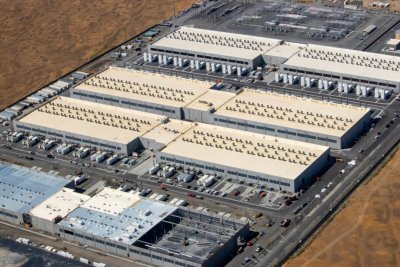
These four hyperscalers, which collectively operate vast cloud computing networks, represent a combined market capitalization exceeding $10 trillion and account for approximately 17% of the S&P 500's total weight, according to Reuters. Their combined capital expenditures for 2024 are forecast to surpass $600 billion, with a significant portion allocated to data center infrastructure and artificial intelligence development.
Chuck Carlson, chief executive at Horizon Investment Services, characterized these companies as “the straw that stirs the drinks” for major index funds. However, Noah Weisberger, chief U.S. equity strategist at BCA Research, cautioned that investors are increasingly expecting this capital spending to translate into tangible revenue growth within the next few quarters, rather than simply representing continued outlays.
The cautious sentiment follows Tuesday's decline in technology stocks, driven by reports that OpenAI had missed its internal user and revenue targets, which reignited concerns about valuations and returns in the AI sector. Kyle Rodda from Capital.com noted that the steep run-up in U.S. tech shares has left them vulnerable to such disappointments.
In premarket trading, Robinhood Markets (HOOD) fell 10% after missing both profit and revenue expectations, with its cryptocurrency revenue declining 47% year-over-year. Analysts at Raymond James attributed the weakness to rougher trading flows and apparent fatigue among retail traders, while increased competition from crypto-first platforms and established players like Charles Schwab (SCHW) and Morgan Stanley's E*TRADE added pressure.
On the positive side, Visa (V) climbed 5% after reporting stronger-than-expected fiscal second-quarter profit and raising its full-year earnings outlook. Cross-border transaction volume increased 12% on a constant-currency basis, and Chief Financial Officer Chris Suh highlighted a new $20 billion share buyback program as evidence of a balanced capital allocation approach. Starbucks (SBUX) shares also rose 5% after the company raised its annual outlook, citing increased customer visits and the turnaround strategy led by Chief Executive Brian Niccol. Stifel analysts described the rebound as broad-based across income segments.
Chip stocks also saw notable activity. NXP Semiconductors (NXPI) surged 16.1% after projecting second-quarter revenue and profit above Wall Street estimates, providing a clearer signal on demand outside the major AI players. However, Walter Todd, chief investment officer at Greenwood Capital, warned that if the hyperscalers were to pull back on their spending, it could trigger a “very negative reaction” in AI-linked stocks, including chipmakers and data-center suppliers.
The Federal Reserve's decision remains a key focus. According to Reuters, most economists expect policymakers to leave interest rates unchanged, with lingering inflation, particularly from rising energy costs, preventing any loosening of monetary policy. Francesco Pesole at ING Economics noted that Powell's remarks at the press conference will be closely scrutinized, especially given the possibility that this could be his final such appearance. The primary concern, Pesole added, is that Powell “errs on the hawkish side,” signaling a bias for tighter policy to curb inflation.
As the trading session approaches, premarket activity suggests a cautious but positive open, with gains concentrated in select names. The direction of the broader market may ultimately depend less on futures action and more on the Fed's statement and the after-hours earnings reports from the tech giants.