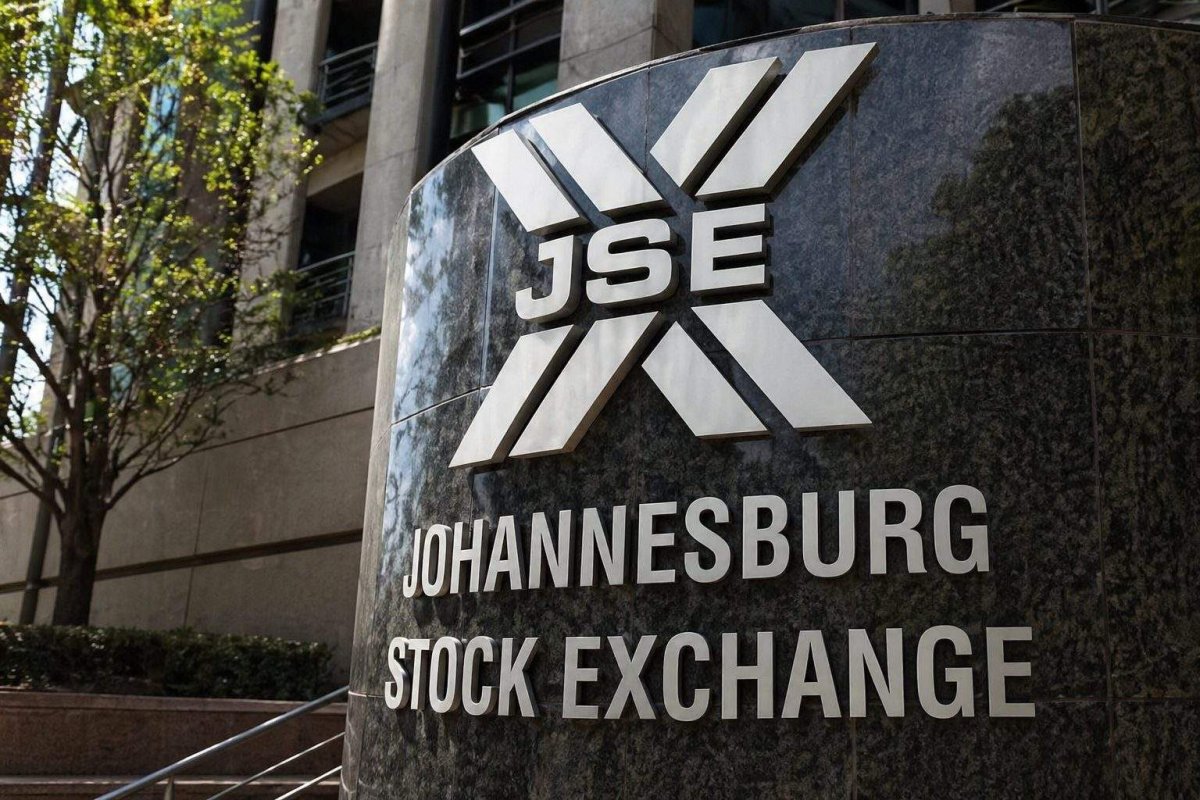
South African equities edged lower on Wednesday, with the JSE All Share and Top 40 indices declining as market participants reduced exposure ahead of the U.S. Federal Reserve's monetary policy decision. By late morning, the All Share had fallen 0.28% to 114,081, while the Top 40 dropped 0.36% to 106,199, according to JSE data.
The rand came under pressure in early trading, weakening to 16.5550 against the dollar, down about 0.2% from its previous close, as traders braced for the Fed's rate call. Elevated oil prices, with Brent crude holding above $111 per barrel, and ongoing geopolitical uncertainty from the Iran conflict added to the currency's headwinds.
Market Movers and Sector Rotation
Among the JSE's major cross-border listings, Richemont slipped 2.58%, Gold Fields fell 1.42%, and AngloGold Ashanti dropped 1.29%. In contrast, banking stocks provided some support, with Standard Bank and FirstRand posting modest gains. Naspers also edged higher. The divergence between resource and luxury shares versus financials reflected a pattern typical when the dollar strengthens and investor appetite for emerging-market risk wanes.
Canal+ Confirms Johannesburg Listing
In corporate news, French media group Canal+ confirmed plans to list on the JSE on June 3, marking the bourse's debut for a foreign firm following its acquisition of South Africa's MultiChoice Group last year. Canal+ shares rose 7.5% in early trading after the company reported a "solid start" to 2026 and maintained its outlook.
Policy Reforms and Exchange Control Changes
South Africa's National Treasury unveiled proposals to overhaul the country's exchange-control framework, including relaxed capital-flow rules, higher offshore investment limits for individuals, and the introduction of crypto asset regulations. The JSE estimates these reforms could eventually attract at least 10 trillion rand in fresh investment. National Treasury's Vukile Davidson described the previous regime as a "blunt instrument," while Desiree Reddy of Deneys called the new plan one of the most significant shifts in South Africa's capital-flow rules.
Global and Domestic Headwinds
European shares declined, with the STOXX 600 falling 0.3% and London's FTSE 100 slipping 0.5%, offering little support to the JSE. State Street's Marija Veitmane highlighted Europe as one of the biggest losers from the Iran war due to higher oil prices. Meanwhile, Asian markets were flat, and U.S. futures edged higher as traders awaited earnings from Microsoft, Alphabet, Amazon, and Meta, which could test risk appetite for tech stocks.
The rand's weakness remains a key driver for South African equities. While a weaker currency benefits exporters and rand-hedge shares, it also raises the cost of imported fuel and goods, adding to domestic inflation pressures. South Africa's central bank has already warned about rising price pressures from higher fuel costs, with market pricing suggesting room for roughly two 25-basis-point rate hikes before year-end.