Amkor Technology (AMKR) shares ended the shortened trading week at $90.46, up 4.7% on Thursday, after the company announced a 10-year agreement with Taiwan Semiconductor Manufacturing Company (TSM) to provide advanced chip packaging and testing services at TSMC's Arizona facility. The Nasdaq closed Friday for Juneteenth, with trading set to resume Monday.
The deal underscores a strategic push to strengthen the U.S. semiconductor supply chain, particularly in advanced packaging—the critical stage after chip fabrication where components are assembled and tested. As artificial intelligence chips become increasingly complex, the packaging process has drawn greater attention from investors and policymakers alike.
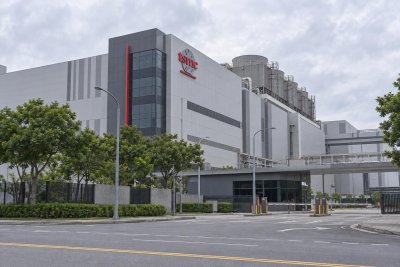
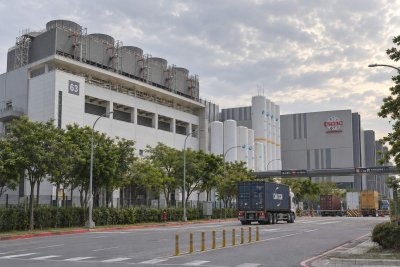
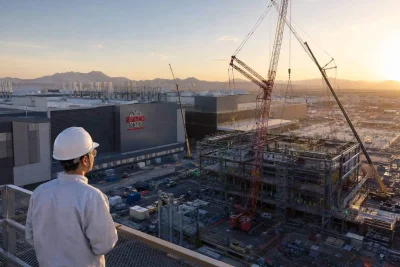
Under the agreement, TSMC will procure advanced packaging and testing services from Amkor's Arizona campus. Kevin Zhang, TSMC's senior vice president, said the collaboration aims to “jointly serve our customers.” Amkor CEO Kevin Engel hailed the pact as a step toward a “full U.S. supply chain.”
The news triggered a rally in chip stocks. The Philadelphia Semiconductor Index (SOX) surged 6.4% on Thursday, while the Nasdaq Composite added 1.91%. For the week ending Friday, the S&P 500 rose 0.93% and the Nasdaq gained 2.43%, according to Reuters. Amkor shares have climbed roughly 9.3% since June 12, from $82.78 to $90.46, amid volatile trading.
Amkor competes in the outsourced semiconductor assembly and test (OSAT) space alongside ASE Technology, Powertech Technology, and JCET. Its proximity to TSMC's Arizona fabs gives it a distinct advantage in serving U.S. customers.
The company posted record first-quarter sales of $1.68 billion, a 27% increase year-over-year, with diluted earnings of 33 cents per share. For the second quarter, Amkor forecasts net sales between $1.75 billion and $1.85 billion, and it maintained its full-year capital spending range of approximately $2.5 billion to $3.0 billion. Engel characterized the quarter as seeing “broad-based end market demand.”
Investors are now eyeing Micron Technology's earnings report on June 24 as a key gauge of AI-driven chip demand. Andy Pratt, director of investment strategy at Burney Company, noted “a lot of momentum,” while Steve Kolano of Integrated Partners described the AI trade as a “classic positive feedback loop.”
However, risks remain. Amkor cautioned that there is no guarantee the Arizona campus will meet its projected schedule, costs, or benefits. The company's filings also highlight exposure to the cyclical nature of the chip market, high fixed costs, customer concentration, and short customer commitments.
Amkor's valuation now hinges on its U.S. packaging link to TSMC's Arizona project. While the narrative supports the stock, every update on timing, costs, or orders carries increased weight for investors.