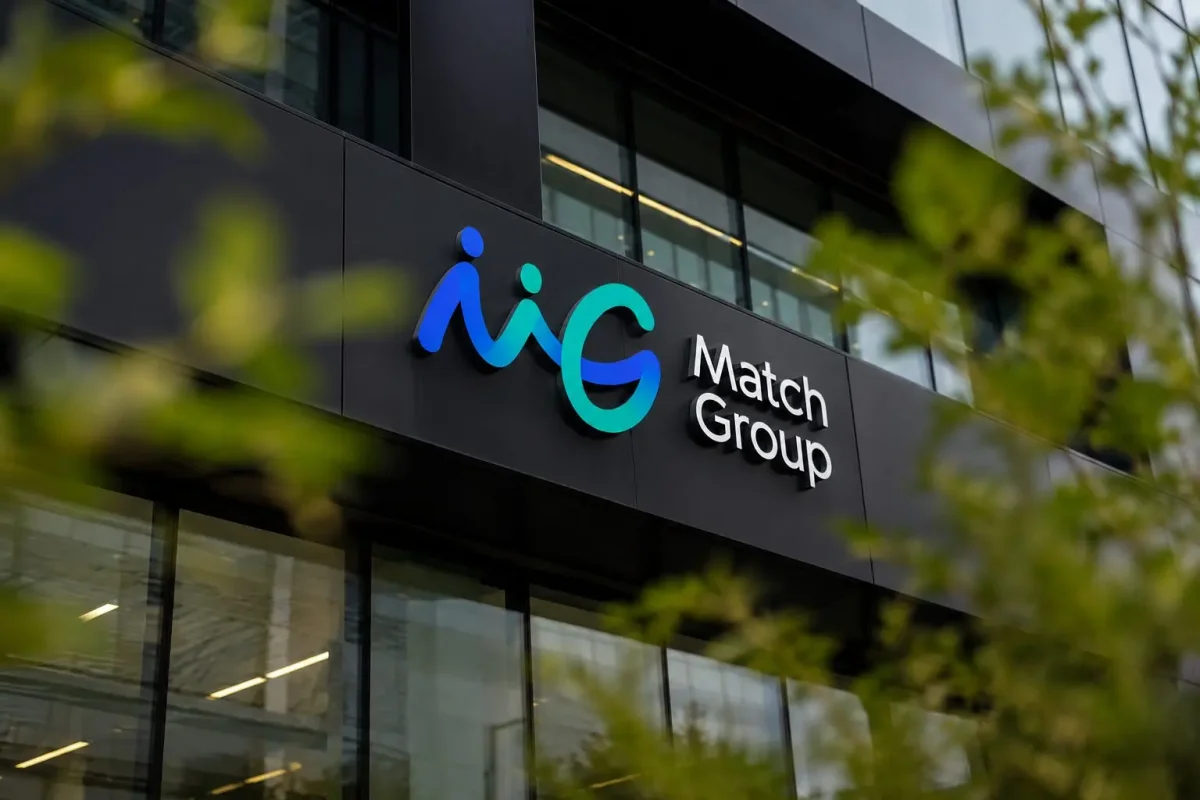
Match Group (NASDAQ: MTCH) saw its shares decline by 9% in after-hours trading on Tuesday after the company's third-quarter revenue guidance came in slightly below Wall Street expectations. The disappointing forecast overshadowed stronger-than-expected earnings and signs of improvement at its flagship Tinder app.
Q2 Results Show Mixed Picture
For the second quarter of 2026, Match Group reported total revenue of $853.1 million, down 1.2% from $863.7 million in the same period last year. The figure missed the consensus estimate of $856.8 million by $3.7 million. However, diluted earnings per share surged 43% to $0.70, up from $0.49 a year ago, while adjusted EBITDA rose 14% to $331 million, with margins expanding to 39% from 34%.
Paying users fell 6% to 13.25 million, but revenue per payer increased 6% to $21.13, reflecting the company's ability to offset subscriber losses with higher pricing.
Weakness Beyond Tinder and Hinge
The primary concern for investors lies outside the company's two biggest brands. While Tinder's direct revenue dipped only slightly by $3.5 million to $457.5 million, and Hinge posted a strong $35.5 million gain to $203.5 million, the category labeled "other direct revenue"—which includes brands like Azar, Pairs, and legacy platforms—plummeted by $37 million to approximately $179 million.
This divergence highlights a growing concentration risk. Tinder and Hinge now account for roughly 78.7% of direct revenue, up from 74.4% a year earlier. CFO Steve Bailey attributed the soft outlook to the Everyone Everywhere segment, which encompasses Azar, Pairs, and OkCupid. Match now expects revenue from that unit to decline by a mid-teens percentage, a steeper drop than the low double-digit decrease previously guided in February.
Cost Cuts Drive Profit Growth
The earnings beat was largely driven by aggressive cost management rather than top-line growth. Operating expenses fell by $62 million, or 9%, to $607.7 million, even as revenue declined by roughly $11 million. Cost of revenue dropped 16%, and general and administrative expenses were cut by 22%. Net income rose 36% to $170.5 million.
Marketing spend, however, increased 7% to $158.3 million as the company invested in expanding Hinge's reach and promoting Tinder Events.
Tinder Shows Signs of Life
CEO Spencer Rascoff expressed optimism about Tinder's trajectory, noting that the app "finally looks and feels like the app young daters want to use." The daily-active-user decline narrowed to just 4%, the best performance in ten quarters. Hinge also delivered strong results, with revenue up 22% and global monthly active users rising 13%. Revenue in its European expansion markets surged 86%, and the company maintains its target of $1 billion in revenue for Hinge by 2027.
Forward Guidance Disappoints
Match Group's third-quarter revenue forecast of $885 million to $895 million sits slightly below the $891.5 million consensus, with the midpoint about $1.5 million short. The company expects revenue growth to decline by 2% to 3%, an acceleration from the 1% drop seen in Q2. Adjusted EBITDA is projected at $330 million to $335 million, implying roughly 10% year-over-year growth, but the EBITDA margin is expected to fall to 37%, down from 39% in Q2.
The softer outlook for Everyone Everywhere is a key factor, as the company now expects a mid-teens percentage decline in that segment's revenue, worse than the low double-digit drop previously anticipated.
Structural Challenges Remain
Analysts point to the persistent decline in paying users as a structural issue. The 6% drop in payers nearly offset the 6% gain in revenue per payer, underscoring that pricing power alone cannot sustain growth without a stabilizing user base.
Match Group generated $527 million in free cash flow through June, using 81% of it for share repurchases, dividends, and equity-settled cash payments. Diluted shares outstanding fell 5% year-over-year, providing some support to earnings per share.
Investors will closely watch Wednesday's trading session to see if the improved Tinder engagement in July can restore confidence. However, the data suggests that the more immediate challenges may lie outside the company's two flagship brands, as the decline in legacy platforms and the slower-than-expected recovery in other markets weigh on the overall outlook.