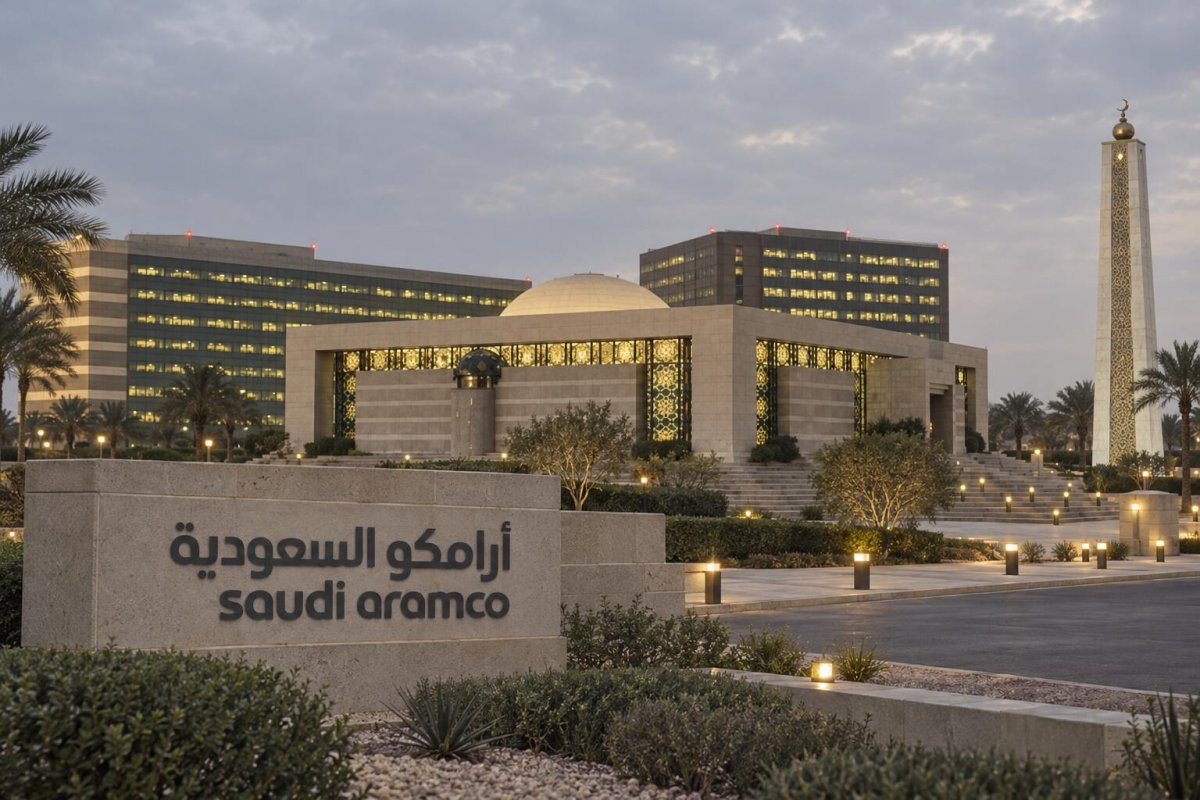
Saudi Arabian Oil Company (TADAWUL:2222), commonly known as Saudi Aramco, staged a dramatic intraday reversal on Sunday, closing at SAR 25.90, up 1.33% from the previous session. The stock had traded as low as SAR 25.36 earlier in the day, down 0.78%, before rebounding sharply. The turnaround came after Saudi air defenses intercepted a ballistic missile aimed at Riyadh and thwarted attempted strikes near Yanbu, Taif, Baysh, and Farasan, according to the Saudi-led coalition.
The closing price represented a 2.13% recovery from the session low, and Aramco outperformed the Saudi benchmark Tadawul All Share Index (TASI), which fell 0.26% to 10,749.51. Aramco's relative outperformance was 1.59 percentage points. However, trading volume was notably light, with 5.55 million shares changing hands, just 0.70 times the three-month average of 7.91 million shares. This suggests that the rally was not driven by a decisive shift in investor sentiment but rather by an assessment that immediate outage risks were lower than initially feared.
Yanbu Claims Remain Unverified
Houthi forces separately claimed to have launched successful strikes on Aramco facilities in Yanbu, causing major fires. These claims remain unverified, and the Associated Press reported no casualties or damage. Aramco has not commented on the alleged incidents. The uncertainty surrounding Yanbu is significant because the East-West Pipeline, which Aramco expanded to a capacity of seven million barrels per day in the first quarter, runs through the region. This pipeline provides an alternative export route that bypasses the Strait of Hormuz, a critical chokepoint for global oil shipments.
“Despite the unprecedented supply disruption through the Strait of Hormuz, we continued to demonstrate our ability to maintain business continuity,” Aramco Chief Executive Amin Nasser said in August.
Financial Cushion Under Pressure
Aramco's latest quarterly results, released on August 4, showed robust revenue growth but a notable decline in free cash flow. Sales and revenue surged 18.99% year-over-year to SAR 450.77 billion, while operating profit climbed 29.36% to SAR 216.15 billion. Net profit attributable to shareholders rose 41.90% to SAR 121.51 billion. However, free cash flow fell 19.1% to $12.3 billion from $15.2 billion in the year-ago period, partly due to a $13.6 billion working-capital build. The company declared a base dividend of $21.9 billion, which exceeded quarterly free cash flow by $9.6 billion, highlighting a reliance on cash reserves or external financing to cover distributions.
The gap between dividends and cash flow makes the security of export routes a key valuation driver. Any confirmed disruption at Yanbu or along the East-West Pipeline could force Aramco to reroute exports through the Strait of Hormuz, potentially reducing capacity and increasing costs. This would not only impact revenue but also strain the dividend payout ratio.
Analyst Outlook
Despite the near-term risks, analysts remain broadly positive on Aramco. The consensus rating among 18 analysts is “Outperform,” with an average price target of SAR 30.23, implying about 16.7% upside from Sunday’s close. Targets range from SAR 26.80 to SAR 35.00. Notable recent actions include Goldman Sachs raising its target on September 10, HSBC lowering its target on August 5, and Morgan Stanley trimming its target on July 10. Bank of America maintained a “Buy” rating on August 4, following the second-quarter results.
However, the low end of the target range offers only 3.5% upside, leaving limited protection if physical disruptions escalate. The market will be watching closely when the Saudi exchange reopens on Monday, September 21, at 10:00 AST. Investors will look for whether Aramco can hold above SAR 25.90 on stronger volume and whether the company issues any operational update regarding the Yanbu claims.
Risks Ahead
The key risks to Aramco’s stock include a confirmed outage at Yanbu, renewed pipeline damage, or delays in cargo shipments. Any of these events could reverse Sunday’s gains and widen the dividend’s cash-flow gap. The below-average volume on Sunday also suggests that the market has not fully priced in the geopolitical risks, and a more definitive catalyst could trigger a sharper move.
In the broader context, global oil markets remain sensitive to supply disruptions in the Middle East. The Strait of Hormuz is a vital artery for about 20% of global oil consumption, and any threat to its security has outsized impact on prices and energy stocks. Aramco’s ability to maintain exports through alternative routes like the East-West Pipeline is a critical buffer, but its resilience is not unlimited.
Investors should monitor official statements from Aramco and the Saudi government, as well as any third-party verification of the Yanbu claims. Until then, Sunday’s rebound should be seen as a tentative sign of stability rather than a definitive all-clear.
