Archer Aviation Inc. (ACHR) shares gained ground on Monday, recovering some of the losses from the previous week as investors rotated back into growth-oriented and air-taxi stocks. The stock climbed approximately 4.2% to $5.77, trading between $5.58 and $5.90, giving the company a market capitalization of roughly $4.42 billion.
The bounce comes after a 13.2% decline on Friday, when the shares closed at $5.54. Monday's advance appears more like a pause in the selloff rather than a definitive reversal, reflecting the stock's sensitivity to regulatory and financial developments.
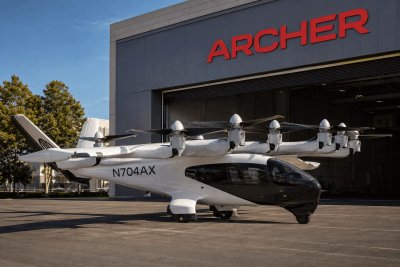
Archer is a pre-revenue aviation company focused on developing electric vertical takeoff and landing (eVTOL) aircraft, specifically the Midnight model, which is designed to carry four passengers plus a pilot on short routes without needing runways. The company's stock price is closely tied to its progress in achieving Federal Aviation Administration (FAA) certification, launching initial flight services, and scaling production before its cash reserves are exhausted.
Last month, Archer announced it became the first eVTOL developer to complete Phase 3 of the FAA's four-phase type certification process for the Midnight aircraft. The company is now moving into Phase 4, which requires extensive testing and analysis to demonstrate the aircraft's airworthiness. CEO Adam Goldstein described the quarter as a "banner quarter" and noted that progress on defense and AI software is "advancing quickly."
Regulatory developments support the bullish narrative. In March, the FAA selected eight projects for its Advanced Air Mobility and eVTOL Integration Pilot Program (eIPP), which aims to test new aircraft models in real-world settings and gather data for future regulations. Archer is a partner on projects in New York/New Jersey, Texas, and Florida.
However, the financial picture remains challenging. Archer ended the first quarter with $1.78 billion in cash, cash equivalents, and short-term investments, along with $7.3 million in restricted cash. Revenue for the period was just $1.6 million, while the net loss widened to $217.7 million. Cash used in operations and capital expenditures totaled approximately $181.7 million, underscoring the high burn rate.
Wall Street analysts have adjusted their outlooks but remain cautiously optimistic. Cantor Fitzgerald lowered its price target to $11 from $13 but maintained an Overweight rating, indicating expectations of outperformance. Canaccord Genuity reduced its target to $12 from $13 while keeping a Buy rating, citing the company's spending and Q1 results.
Peer activity highlighted broader sector trends. Joby Aviation (JOBY) rose about 1% to $9.65, giving it a market cap near $9.1 billion, while Vertical Aerospace (EVTL) gained roughly 1.9% to $2.20. Archer's stronger move reflects its higher risk profile; it is smaller than Joby by valuation and more sensitive to changes in certification expectations.
Risks remain significant. A slower FAA process, delays in piloted transition flights, weak demand for early air-taxi services, or the need for additional capital could weigh on the stock. Archer expects an adjusted EBITDA loss of $170 million to $200 million in the second quarter. Adjusted EBITDA, which excludes interest, taxes, depreciation, and amortization, is used to gauge core operating performance before profitability.
For now, traders view Archer less as a transportation company and more as a speculative bet on the future of aviation. Monday's rebound provided some relief after Friday's drop, but the company still faces substantial technical, regulatory, and funding hurdles that will determine its trajectory.