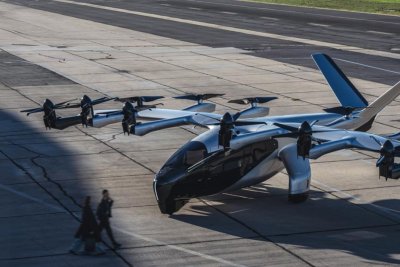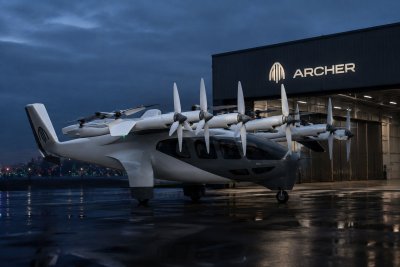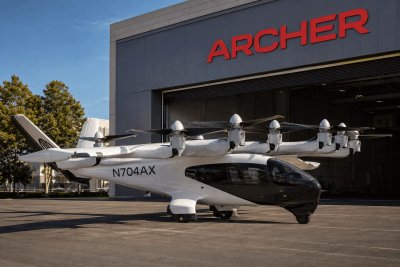
Archer Aviation (NYSE: ACHR) announced on Monday that it has selected Japan's Marubeni Corporation as the strategic launch partner for its Halo autonomous commercial aircraft. The announcement came after a sharp 20% rise in Archer's share price, but the company did not disclose the value of the order or specific details regarding aircraft numbers, pricing, deposits, or delivery timelines.
The stock surged 19.6% on Monday, adding approximately $661 million to Archer's market capitalization based on its most recently disclosed share count of 759.6 million shares. Shares traded steady around $5.26 ahead of Wednesday's session. The enterprise value increased by about 39% after accounting for net cash, highlighting the significant impact of Archer's cash-rich balance sheet on valuation fluctuations.
Marubeni Aerospace Corporation will collaborate with Archer on market analysis, exploration of use cases, and potential deployment of the Halo aircraft. The release noted that the referenced agreements remain subject to conditions, and final contracts and additional requirements must be met before any firm commitments are made.
Financial Context and Market Reaction
Archer reported liquidity of $1.776 billion and total debt of $80.2 million as of March 31. Operating cash consumption for the first quarter was $149.1 million, while revenue stood at just $1.6 million. The company projects an adjusted EBITDA loss between $170 million and $200 million for the second quarter, with the midpoint exceeding the first-quarter loss of $172.5 million.
Monday's market action may have been amplified by trading dynamics, as roughly 20% of available shares were shorted, according to Barron's. The S&P 500 declined 0.2% on the same day, underscoring the stock-specific nature of the move.
Halo and Thunder Platforms
Halo shares the same airframe, hybrid powertrain, and principal systems as Archer's Thunder defense model, but with payload configurations tailored for different missions. Archer is positioning Halo for use in freight, offshore energy, humanitarian supply, and maritime sectors. The Thunder model is scheduled for its initial flight in 2027, with multiple tests already conducted using full-size surrogate aircraft.
Chief Executive Adam Goldstein stated, "They identified a need, and we built a very specific aircraft for that need." Monday's announcement did not specify any contract value, leaving investors to focus on firm orders, deposit commitments, and progress on delivery milestones as key metrics going forward.
Risks and Outlook
Halo and Thunder remain in the development stage, with risks including delays in testing, certification, or procurement, as well as potential dilution. Gains from short covering could also quickly unwind. As a result, while Halo expands market access, it does not yet contribute to booked economics. Investors will be watching for concrete orders and delivery progress to validate Monday's revaluation.