Argentina's benchmark S&P Merval stock index extended its recent rally on Friday, closing higher as investors reacted to legislative progress on a key economic reform package and positive trade data. The index gained 1.2% to settle at 2,873,248 points, building on a 4.26% surge from the previous session. The combined two-day advance totaled approximately 5.5%, reflecting heightened market volatility amid shifting political and economic currents.
Legislative Milestone and Market Reaction
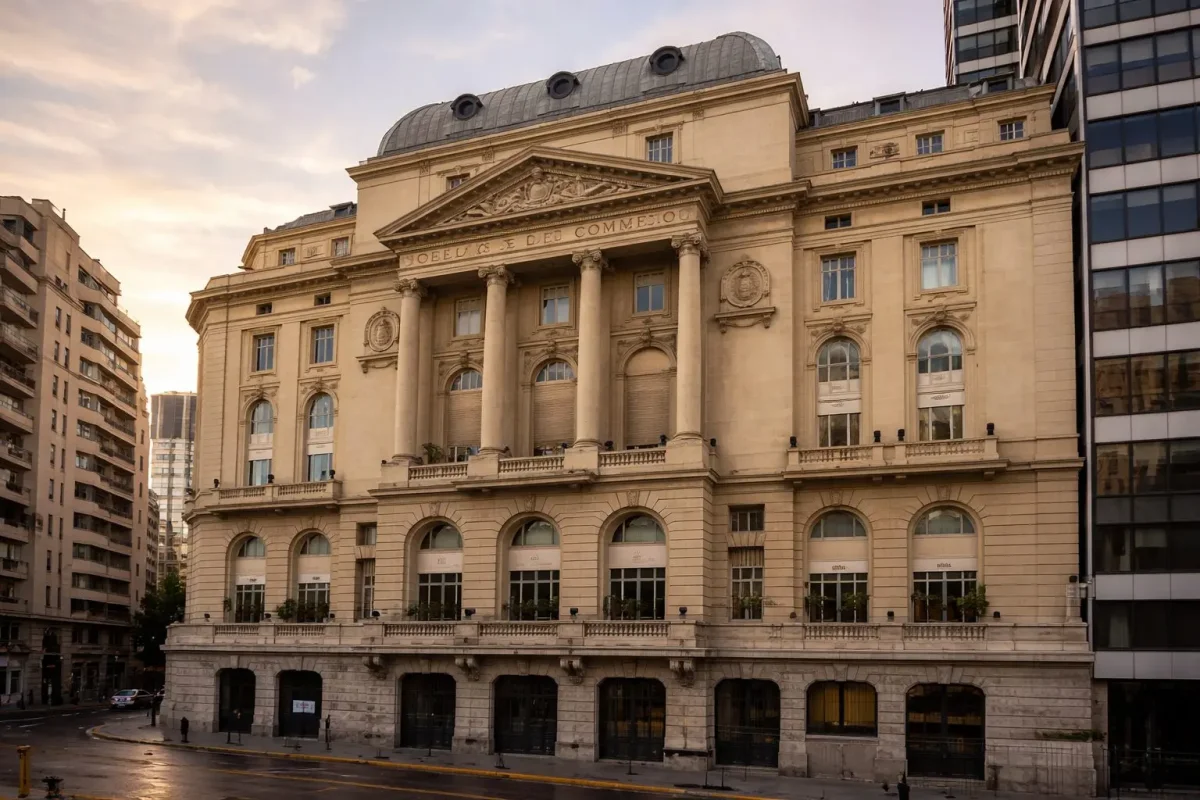
The lower house of Argentina's Congress delivered a significant victory for President Javier Milei's administration, approving a contentious labor reform bill by a vote of 135 to 115. The legislation, which now moves to the Senate for a final vote, proposes a new severance fund that analysts at Portfolio Personal Inversiones have characterized as a potential new long-term domestic savings vehicle. The market's positive response was led by financial stocks, with the Buenos Aires Stock Exchange itself, Bolsas y Mercados Argentinos (BYMA), surging 8.22% to 326 pesos per share. Other notable gainers included Grupo Financiero Galicia, up 4.67%, and BBVA Argentina, which advanced 2.81%.
Economic Data Provides Support
Supporting the bullish sentiment, Argentina's national statistics agency, INDEC, reported a January trade surplus of $1.987 billion. This result was driven by a 19.3% year-on-year increase in exports, which reached $7.057 billion, coupled with an 11.9% decline in imports to $5.070 billion. This marks the 26th consecutive month the country has recorded a trade surplus. In a separate development, the International Monetary Fund expressed encouragement regarding Argentina's economic trajectory, specifically noting the country's purchase of over $2 billion in foreign currency so far this year as a sign of strengthening its fragile dollar reserves.
Resistance and Upcoming Catalysts
The reform push continues to face substantial opposition. In the lead-up to the legislative vote, labor unions staged a 24-hour nationwide strike, which reportedly led to the cancellation of roughly 255 flights by Aerolineas Argentinas and estimated losses of $300 million. Attention now turns to the Senate, which is debating when to schedule the pivotal final vote on the labor bill. Furthermore, traders are bracing for a batch of upcoming economic data from INDEC, including the January wage index on February 25 and the January economic activity (EMAE) figures on February 26.
Market Context and Outlook
The S&P Merval index, which tracks the most liquid stocks traded on the BYMA exchange, serves as a key barometer of local investor risk appetite. The recent swings underscore the market's sensitivity to political developments and hard currency flows. As markets prepare to reopen on Monday, February 23, the central question is whether the current rally can be sustained. The outcome rests heavily on the Senate's handling of the labor reform bill, which lawmakers could still amend or delay. The measure requires final Senate approval before it can be signed into law, keeping political risk a primary focus for investors in the Buenos Aires stock exchange.