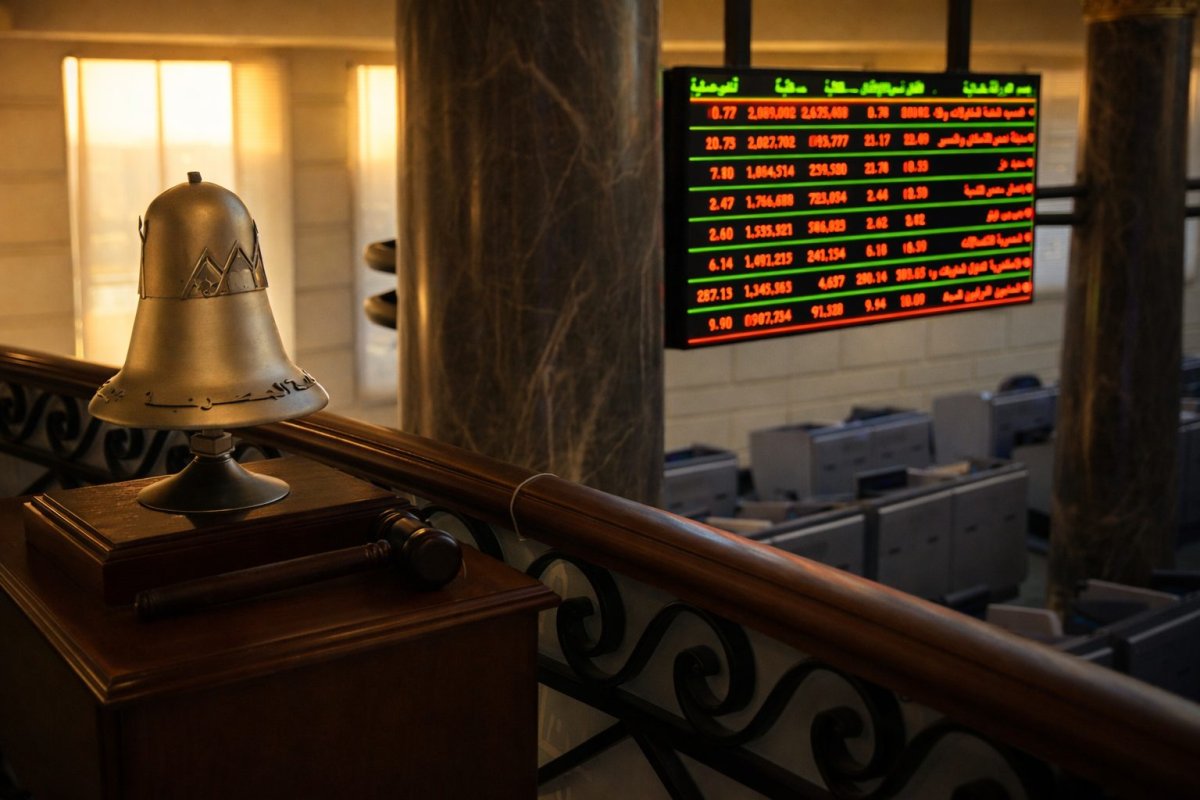
Egypt's primary equity benchmark, the EGX30, concluded Thursday's session with a significant decline of 2.98%, settling at 50,667.67 points. Trading activity for the day approached 5.6 billion Egyptian pounds, marking the most pronounced single-day retreat for the index since June of the previous year. The downturn was not isolated to large-cap stocks, as indices tracking small- and mid-capitalization companies also registered losses of approximately 3% each.
Geopolitical Headwinds Drive Risk-Off Sentiment
The sell-off was primarily attributed to a broader shift toward risk aversion across the region, fueled by escalating diplomatic and military friction between the United States and Iran. Market participants reacted to reports of limited progress in international talks and increased military posturing in the area. Analysts noted that the geopolitical uncertainty has begun to overshadow recent positive corporate earnings, prompting a withdrawal of capital.
"Markets that had been buoyed by strong financial results are now grappling with the return of geopolitical risk," commented Milad Azar, a market analyst at XTB MENA. The EGX30, which monitors the 30 most liquid and freely floated stocks on the Egyptian Exchange, experienced a volatile session, opening at 52,222.34, briefly climbing to 52,399.65, before plunging to an intraday low of 50,651.96.
Domestic Policy Context and Inflation Data
The recent market movement occurs against a backdrop of shifting domestic monetary policy. Earlier this month, the Central Bank of Egypt implemented a 100-basis-point reduction in its key interest rates, lowering the overnight deposit rate to 19% and the overnight lending rate to 20%. Concurrently, the required reserve ratio for commercial banks was decreased to 16%. These measures were designed to stimulate credit growth and bolster risk appetite among investors.
However, the efficacy of these looser policies is balanced against persistent inflation. Data for January showed headline inflation at 11.9%, with core inflation—which excludes volatile items—registering 11.2%. This inflationary environment creates a complex dynamic for policymakers and market participants alike, as lower interest rates can compress bank net interest margins if funding costs do not adjust accordingly.
Focus on Commercial International Bank
Attention is now sharply focused on Commercial International Bank (CIB), a heavyweight constituent that comprises nearly one-third of the EGX30's weighting. The bank's stock declined close to 2% in Thursday's trading, closing at 137.5 Egyptian pounds. CIB has formally called an ordinary general assembly meeting for March 15.
The agenda for this shareholder meeting includes the review and approval of the bank's financial statements for 2025, a proposal for profit appropriation and dividend distribution, and a planned capital increase linked to an employee stock ownership plan. The outcomes of this meeting are anticipated to provide significant direction for the broader Egyptian equity market.
Market Outlook and Key Questions
As trading is set to resume on Sunday following the market's closure on Saturday, traders are monitoring several critical factors. A primary concern is whether foreign investor participation will be sustained following Thursday's substantial decline. Another pivotal question is whether the recent reduction in policy rates will successfully stimulate demand for sectors such as banking, real estate, and consumer discretionary stocks.
The weekly performance shows the EGX30 closed down 3.1% from its previous Friday's close of 52,308.32 points. Trading volume for Thursday's session reached roughly 344.6 million shares.
Balancing Act Between Policy and Geopolitics
The immediate future for Egyptian equities presents a delicate balancing act. On one hand, accommodative monetary policy aims to support economic activity and equity valuations. On the other, the looming specter of regional geopolitical instability represents a potent external threat. A significant escalation in U.S.-Iran tensions could trigger a renewed wave of de-risking across regional portfolios, potentially draining liquidity from the Egyptian market irrespective of favorable domestic policy settings.
Investors will be closely watching the market's reopening for signals of resilience or continued pressure, with CIB's developments serving as a crucial barometer for institutional sentiment in the week ahead.
