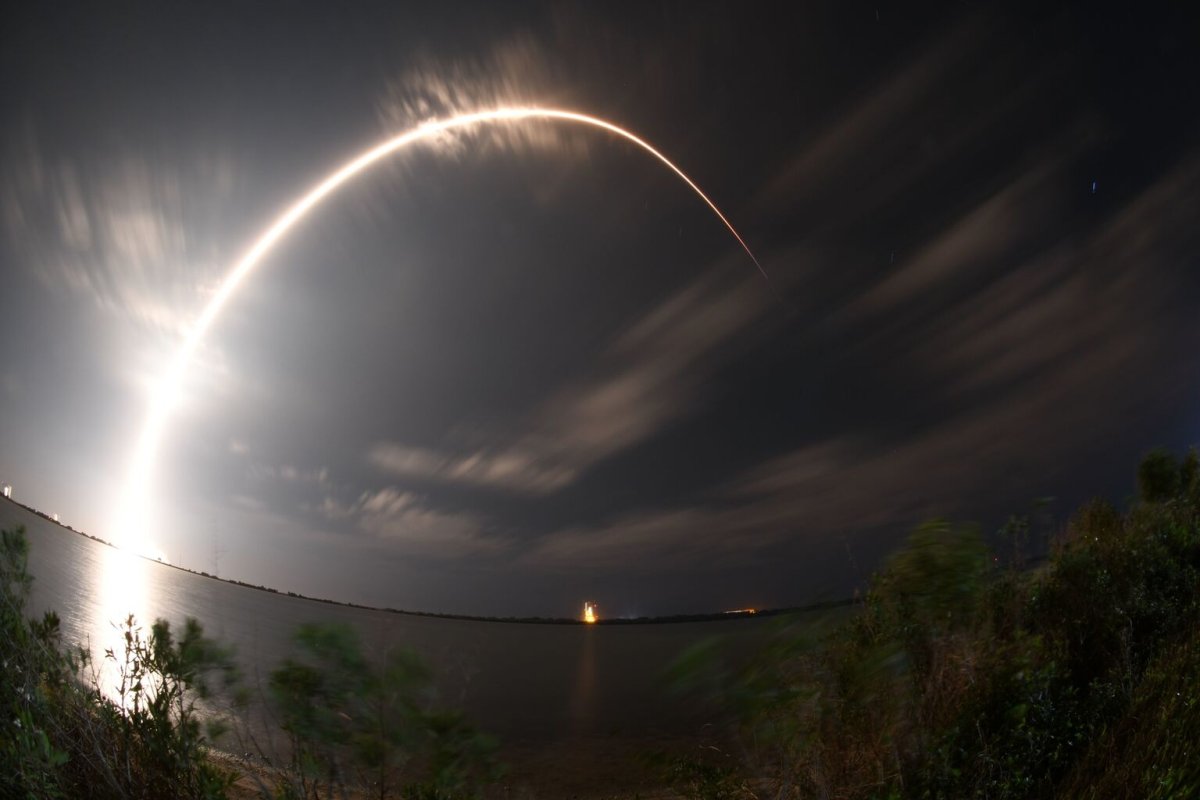
Astranis, a San Francisco-based satellite manufacturer, announced on Monday that it has secured a dedicated SpaceX Falcon 9 launch for six of its broadband satellites. The mission, designated Block 4, is targeted for 2028 and will utilize an Impulse Space Helios upper stage to transport the spacecraft to geostationary orbit (GEO). This move marks a significant step in Astranis's plan to expand its orbital infrastructure and deliver high-throughput connectivity services.
The six satellites represent 60% of the ten spacecraft built across Astranis's first three production blocks. Once deployed, they will constitute 37.5% of a planned 16-satellite constellation, according to calculations based on the company's figures. It is important to note that these numbers reflect hardware volume, not a direct increase in broadband capacity, as the actual throughput will depend on the satellites' final configuration and operational efficiency.
Faster Orbit Raising with Helios
The key operational difference in this mission is the method of orbit raising. Traditionally, satellites use electric propulsion to gradually raise their orbit over several months. Astranis and Impulse Space have previously described this slower process. However, the Helios stage, powered by the 67-kilonewton Deneb engine, aims to deliver the satellites from low Earth orbit (LEO) to GEO in less than 24 hours. This rapid transfer could significantly reduce the time to revenue, although customer service will still require post-arrival commissioning.
The partnership's earlier agreement, signed in September 2025, targeted a 2027 launch and allowed for possible secondary payloads. The new amendment, whose financial terms were not disclosed, secures the full payload capacity of the Falcon 9 for Astranis's entire Block 4 production run. The shift in target year from 2027 to 2028 was not explained in the announcement.
Production and Deployment Milestones
Astranis's spacecraft page lists five satellites already launched, while the latest release counts ten built across Blocks 1–3. This discrepancy highlights the different stages of deployment—some are operational, others may be in testing or storage. The company is also preparing Block 3 for launch in the first quarter of 2027, as reported by Via Satellite, which corroborates the dedicated six-satellite flight and the 2028 target.
CEO John Gedmark emphasized the strategic importance of the launch: "This launch means we can accelerate the critical infrastructure we're building for customers in GEO and other higher orbits." The faster Helios transfer also reduces exposure to Earth's radiation belts, a benefit mentioned by the partners, though they did not quantify the reduction or provide a commissioning timetable.
Risks and Outlook
All six satellites will share a single launch and Helios transfer, meaning a failure in either segment could jeopardize the entire batch. The 2028 target also depends on spacecraft readiness and successful integration. Astranis has signed its initial Block 4 customers but has not yet disclosed their names, nor has it provided throughput or coverage footprints for the new batch. Investors and industry watchers will be keen to see which regions will benefit from the additional bandwidth and when it will be activated.
The announcement reflects a broader trend in the satellite industry toward faster and more flexible launch options, as companies like Astranis seek to reduce the time between manufacturing and operational service. With the Falcon 9's proven reliability and Helios's ambitious performance goals, this mission could set a new benchmark for rapid GEO deployment.