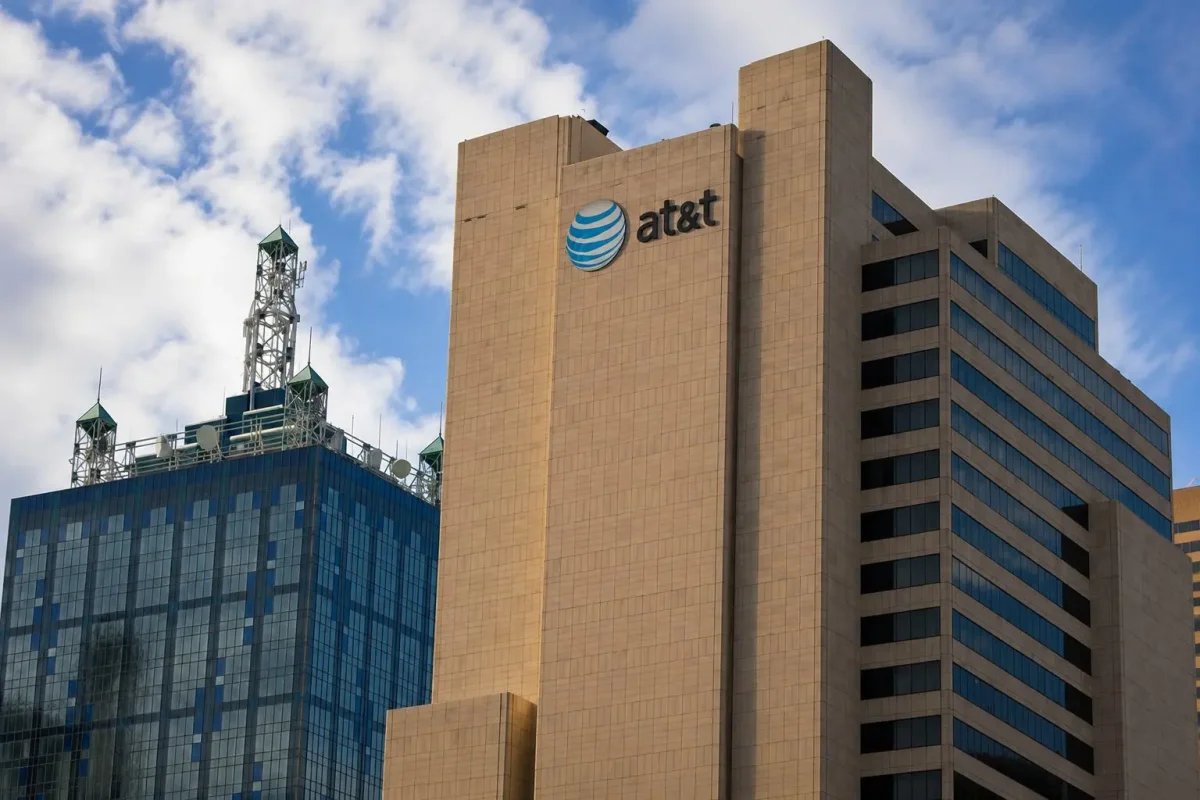
AT&T Inc. (T) saw its stock edge lower on Wednesday, with shares falling 0.3% to $24.91, even as the broader market rallied on strength in semiconductor stocks. The telecom giant's modest decline came as investors scrutinized its fiber expansion strategy, cash flow commitments, and a newly announced satellite joint venture.
Cash Flow and Capital Returns
During a presentation at J.P. Morgan's technology, media, and communications conference on Tuesday, AT&T CEO John Stankey reiterated the company's second-quarter free cash flow target of $4.0 billion to $4.5 billion. He also reaffirmed plans to return more than $45 billion to shareholders through dividends and buybacks between 2026 and 2028. Stankey described the company's guidance as "sound" and expressed confidence that cash flow would improve in the second quarter.
Fiber Expansion Focus
Stankey emphasized that fiber expansion remains a core priority, with AT&T expecting to add 7 million new fiber passings this year. The company recently announced that its fiber service ranked first in the American Customer Satisfaction Index for fiber internet providers for the fourth consecutive year. Jenifer Robertson, executive vice president and general manager of AT&T Consumer, highlighted the "trust people place in AT&T Fiber."
Satellite Joint Venture
Last week, AT&T, T-Mobile US Inc. (TMUS), and Verizon Communications Inc. (VZ) announced an agreement in principle to form a joint venture aimed at improving connectivity in areas with weak or no cellular service. Stankey described satellite as a "great complement" to AT&T's existing network. However, regulatory approval for the venture remains uncertain, and Comcast's aggressive efforts to retain broadband subscribers pose additional competitive pressures.
First-Quarter Performance
AT&T reported first-quarter revenue of $31.5 billion and adjusted EBITDA of $11.8 billion. The company added 584,000 advanced connectivity internet customers and 294,000 postpaid phone lines. Despite these gains, the company's debt load remains a concern, with total debt of $138.4 billion and net debt of $126.4 billion as of the end of the first quarter.
AI and Fiber Demand
Stankey also highlighted the growing demand for fiber driven by artificial intelligence workloads, calling fiber the "lowest marginal cost" option for heavy data usage. AT&T has been partnering with hyperscale cloud providers to connect data-center access points using both dark and lit fiber.
Market Context
While AT&T's stock declined, the broader market advanced, with the SPDR S&P 500 ETF and Invesco QQQ Trust both trading higher. Verizon shares were flat, while T-Mobile slipped about 1.5%. The three major telecom companies are competing for broadband and wireless customers while collaborating on the satellite initiative.