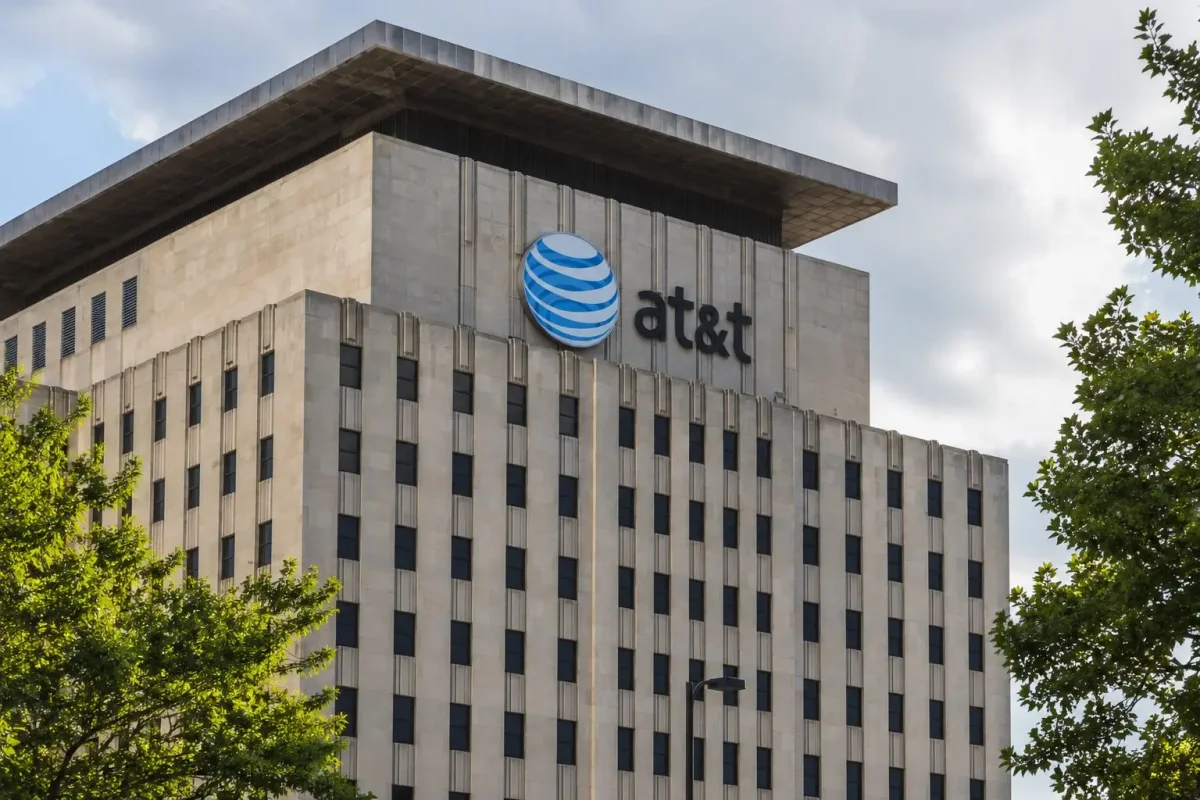
AT&T Inc. (NYSE:T) shares are trading near their lowest point in a year, as the telecommunications giant grapples with a regulatory dispute in California over its legacy copper phone lines, while investors look ahead to second-quarter earnings scheduled for July 22.
The stock closed Thursday at $22.01, just above its 52-week low of $21.99, and was indicated at $22.10 in premarket trading on Monday. The broader market resumes trading after the Juneteenth holiday closure.
The primary overhang is not competition in wireless but rather regulation. California's utility regulator is taking action to block AT&T's plan to stop offering copper-line phone service to new customers, according to Reuters. The state's "carrier of last resort" rules require AT&T to maintain old-school phone lines. AT&T has stated it spends approximately $1 billion annually to support a network that now serves only 3% of California households.
This dispute strikes at the heart of AT&T's equity narrative. The company is actively reducing its legacy copper infrastructure and shifting capital toward advanced connectivity, including 5G wireless and fiber broadband. A recent filing shows legacy revenue fell 25.3% in the first quarter, while the advanced connectivity segment now encompasses domestic 5G and fiber services for both consumer and business customers.
Growth is not yet firing on all cylinders. AT&T reported a 2.9% increase in first-quarter revenue to $31.5 billion, adding 294,000 postpaid phone customers and 584,000 advanced-connectivity internet net adds. Postpaid subscribers remain the stronger segment compared to prepaid. However, free cash flow dropped to $2.5 billion as the company accelerated fiber buildout spending.
Peer dynamics are mixed. Verizon and T-Mobile are both pursuing bundled wireless-broadband customers, while AT&T, like T-Mobile, has pushed out device subsidies in the first quarter. "Data is going to be the revenue of the future," Brian Mulberry, chief market strategist at Zacks Investment Management, told Reuters regarding the industry's spending.
Dividend coverage is a key metric for investors. With AT&T trading at $22.01, the company has a market capitalization of $154.7 billion, implying roughly 7 billion shares outstanding. The annual dividend of $1.11 per share means AT&T pays out about $1.95 billion in common dividends each quarter. Management expects second-quarter free cash flow between $4.0 billion and $4.5 billion, which would cover the dividend by 2.1 to 2.3 times, excluding buybacks.
While this coverage ratio provides some comfort, it does not guarantee stock support. Risks include slower regulatory approval for copper retirement, higher promotional costs in wireless, weaker-than-expected second-quarter free cash flow, or elevated debt levels. Any of these factors could reduce investors' confidence in the dividend yield and buyback program.
AT&T faces its next major test on July 22, when it reports second-quarter earnings and hosts an 8:30 a.m. ET conference call. The market is not looking for drama; investors want evidence that the company can acquire new customers efficiently and demonstrate that exiting the copper network will not continue to drain cash from its legacy operations.