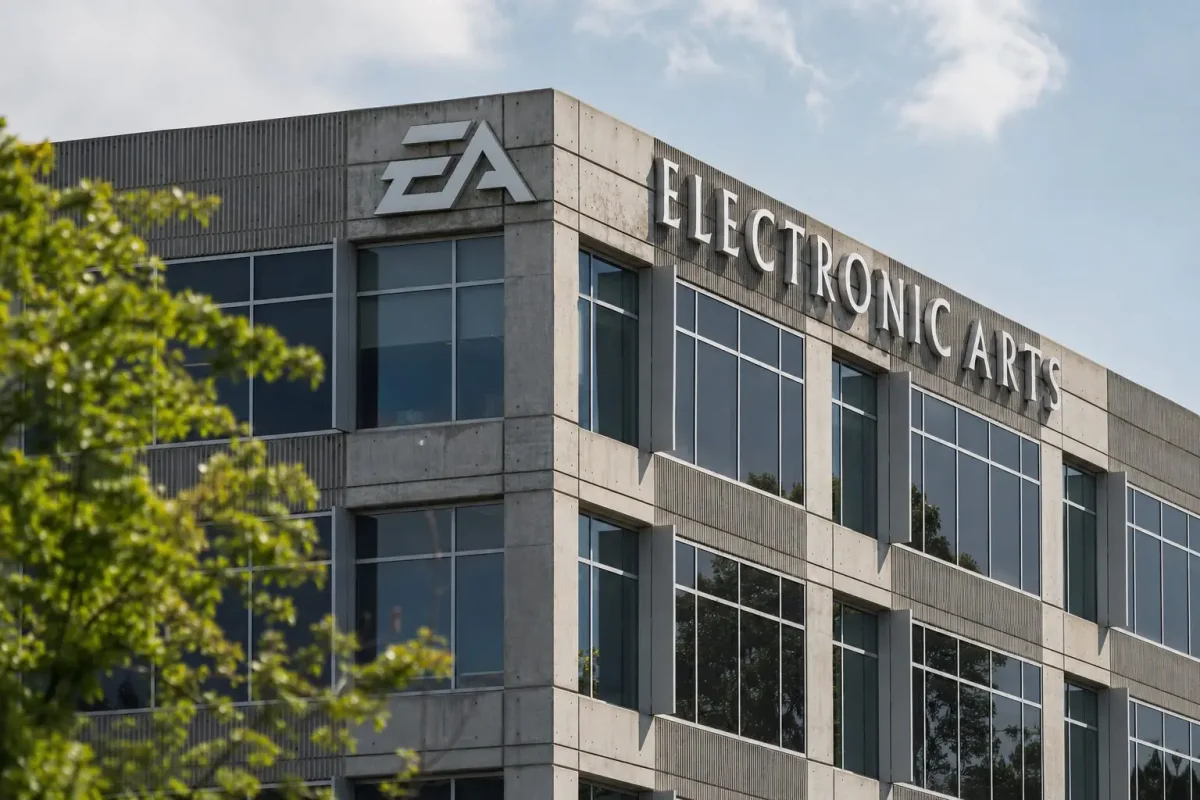
Electronic Arts (NASDAQ:EA) has officially exited public markets, with its shares ceasing to trade on the Nasdaq as of Wednesday morning. The move follows the completion of an approximately $55 billion acquisition on August 4, under which shareholders received $210 in cash for each share held. The final recorded trading price was $209.70, a marginal 30-cent (0.14%) decline from the buyout price, reflecting the minimal spread at close.
The delisting marks the end of EA's 30-plus-year run as a publicly traded entity. The deal was orchestrated by a consortium including the Public Investment Fund (PIF), Silver Lake, and Affinity Partners. Trading was halted before the market opened on Wednesday, and EA was also removed from the S&P 500 index, with Ferguson Enterprises (NYSE:FERG) taking its place, a transition that index funds had to mirror.
The timing of the delisting is notable: it came just one day after EA reported fiscal first-quarter results that missed analyst expectations. Net bookings, the company's key demand metric, totaled $1.35 billion, falling short of the $1.48 billion consensus by 8.8%, according to Reuters data. This disappointing update would have likely triggered fresh discussions about player engagement in the recently launched Battlefield 6, but public investors are now shielded from that volatility.
The acquisition price represented a 25% premium to EA's closing price before any deal-related speculation on September 25, 2025. However, the final session saw a nearly flat spread, with the close at $209.70 versus the $210 payout. The traded volume on the last day was 48.72 million shares, indicating significant investor activity as the delisting approached.
From a financial perspective, the deal's leverage is substantial. The consortium financed $20 billion of the purchase through debt. Based on EA's fiscal 2026 figures, this debt represents 7.8 times operating cash flow, 2.7 times revenue, and 2.5 times net bookings. The aggregate enterprise value of $55 billion equates to 6.9 times net bookings. These ratios illustrate the scale of the leverage that the new owners are taking on, though they are not covenant measures.
EA's latest quarterly earnings showed a divergence between revenue and profit growth. GAAP revenue increased by 18.9% to $1.986 billion, while net income nearly doubled to $397 million, with diluted EPS at $1.56. However, the bookings miss highlights underlying demand concerns. Live services accounted for $1.472 billion, or 74.1% of revenue, underscoring the critical importance of maintaining player engagement in titles like Battlefield 6, which reportedly saw a drop-off in participation after its initial launch.
For investors seeking exposure to the gaming sector, Take-Two Interactive Software (NASDAQ:TTWO) remains the most direct comparable, with the upcoming Grand Theft Auto VI launch expected to compete for player attention and spending. The delisting of EA removes a major pure-play from the public markets, potentially shifting investor focus to other gaming stocks.
CEO Andrew Wilson, who continues as chairman and CEO of the now-private company, stated that the partners plan to “invest boldly, accelerate innovation, and build the next generation of games and experiences." This suggests a long-term strategy away from quarterly earnings pressure, but also means that any future gains or losses will accrue to the consortium and its financiers, not public shareholders.
Wall Street analysts had largely maintained a Hold stance on EA prior to the delisting. On Public.com, 11 analysts rated the stock as Hold, with an average price target of $201.82, while Barchart reported a Hold recommendation from 24 analysts with a score of 3.13 out of 5. The WSJ Market Data average target was $209.08, just 0.4% below the final payout. These figures, collected before the delisting, reflect the market's view that the deal was fairly priced.
In summary, the EA case concludes with public shareholders receiving a fixed $210 per share, while the consortium assumes the risks associated with execution, leverage, and the challenges of maintaining player engagement in a competitive gaming landscape. The company's new owners must now navigate a heavy debt load, reliance on live services, and the need to sustain Battlefield's player base, all without the cushion of public market support.