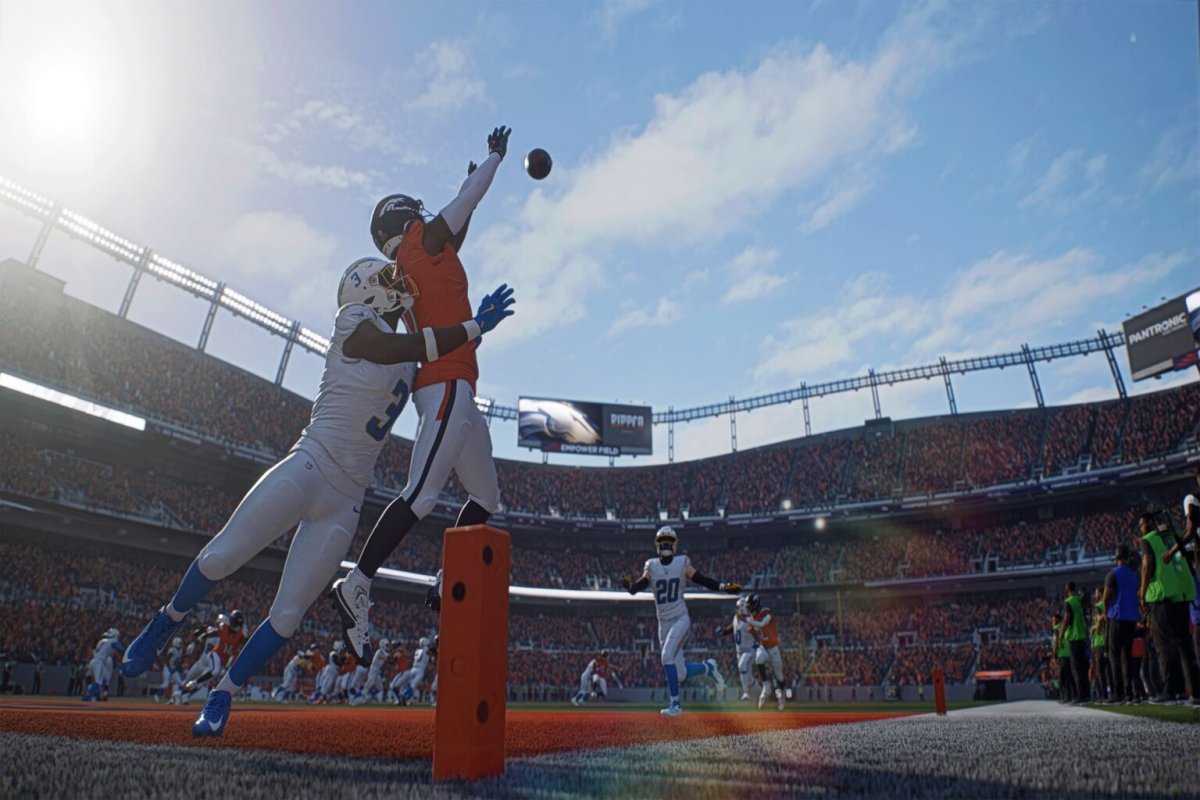
Electronic Arts Inc. has rolled out a significant update for its flagship Madden NFL 27 title, addressing a range of technical issues that had plagued the game since its launch 34 days ago. The September 16 patch goes beyond routine roster adjustments, focusing on the underlying systems that drive player engagement and in-game spending—a critical area for the company following its $55 billion take-private deal.
The update fixes errors in the Ultimate Team storefront, lineup creation, auction house functionality, franchise contracts, salary-cap logic, and online league access. These systems are central to the game's live-service model, which accounted for 74% of EA's revenue in the last reported quarter.
EA's reliance on live services has never been more pronounced. In Q1 FY2027, live services generated $1.47 billion, up 7% year-over-year, while full-game sales brought in $514 million, a 78% increase. Total revenue reached $1.99 billion, up 19% from the prior year. Bookings followed a similar pattern, with live services contributing $1.12 billion versus $233 million for full games.
The buyout, completed in August, has added significant financial obligations. EA issued $2.88 billion in 7.25% secured notes and $2.50 billion in 8.75% unsecured notes, together requiring approximately $427 million in annual interest. Additional debt includes €1.08 billion in secured notes at 6.25% and funded term loans totaling $9.38 billion and €1.73 billion, though their interest costs were not disclosed.
This debt load heightens the importance of recurring revenue from titles like Madden. The patch is seen as a proactive measure to ensure that player spending and retention remain robust, especially as the game enters its next content cycle. The Game Time Ultimate Team program, which ends September 24, will serve as a key test of whether the fixes can sustain engagement.
Investor sentiment toward EA's listed peers offers a mixed picture. Take-Two Interactive (NASDAQ:TTWO) enjoys a Moderate Buy consensus with an average target of $296.95, representing a 44.5% upside from its recent close. Roblox (NYSE:RBLX) holds a Hold rating with a target of $60.36, a 26.1% upside. These comparisons are imperfect given EA's delisting, but they provide a benchmark for the gaming sector's health.
Some analysts argue that post-launch patches are routine for annual sports titles and do not necessarily signal underlying weakness. EA has not disclosed any player decline, and the fixes may simply be standard maintenance. However, the timing—just weeks after the buyout—highlights the pressure on EA to demonstrate stable cash flows to its new creditors.
Looking ahead, the September 24 deadline for the Ultimate Team program will be a critical indicator. If the repaired reward and transaction flows keep players engaged, EA can reassure stakeholders that its live-service engine remains resilient. Conversely, any softening in engagement could raise concerns about the company's ability to service its debt.
For now, the market watches closely, but with EA no longer publicly traded, the visibility into its performance is limited. The next public checkpoint comes later this month, and the outcome will likely shape perceptions of EA's post-buyout strategy.