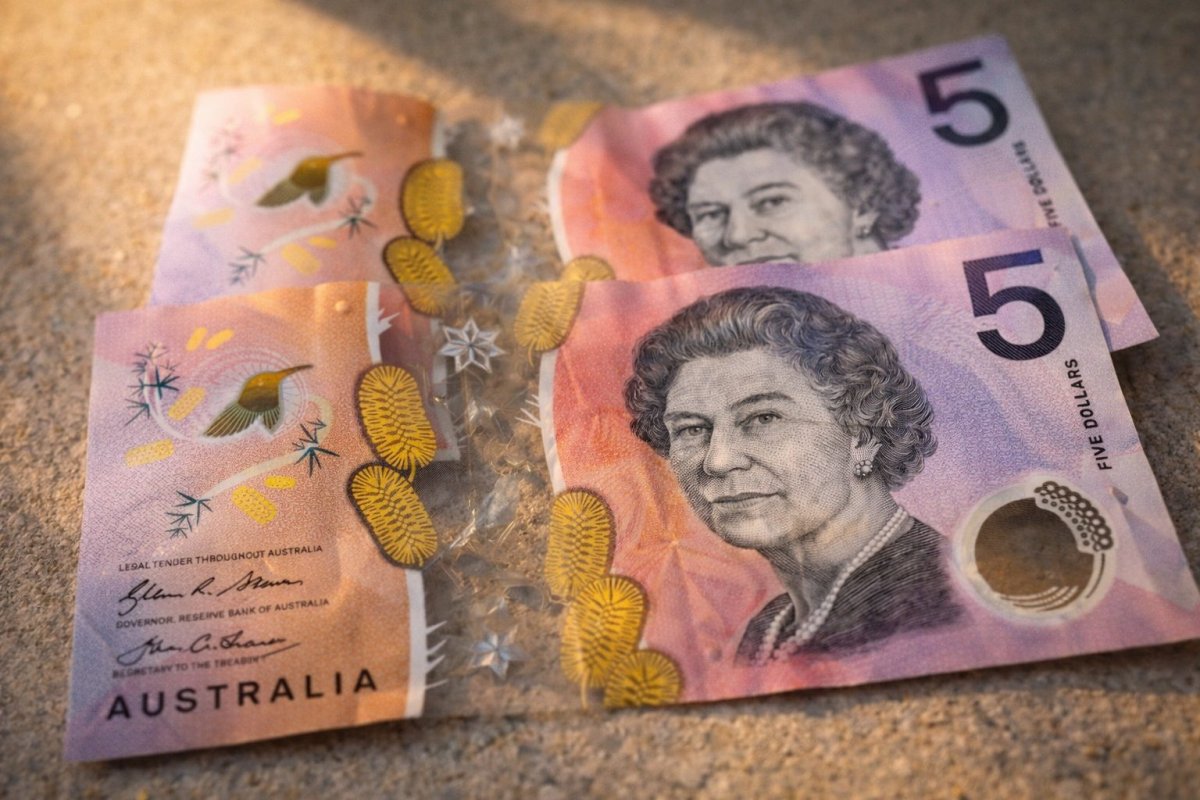
The Australian dollar has ascended to its strongest position in three years, breaching the psychologically significant 71 U.S. cent threshold. This surge is primarily fueled by intensifying market expectations that the Reserve Bank of Australia (RBA) will implement further monetary policy tightening in the coming months. The currency pair AUD/USD advanced 0.7% to trade at $0.7122, with technical analysts identifying the next key resistance levels at $0.7158 and subsequently $0.7282.
Economic Data Fuels Rate Hike Speculation
Underpinning the bullish sentiment for the Aussie dollar is robust domestic lending data. Mortgage borrowing experienced a substantial 9.5% increase during the fourth quarter, while investment loans reached record highs. This credit growth signals persistent economic activity and adds pressure on the central bank to continue its fight against inflation. The RBA recently increased its cash rate by 25 basis points to 3.85%, a direct response to underlying inflation holding at 3.4% in the previous quarter.
RBA Governor Michele Bullock reinforced this hawkish stance in recent parliamentary testimony, stating unequivocally that the board is prepared to raise rates again if inflationary pressures prove persistent. "If we need to go up further because inflation is entrenched, the board will do so," Bullock affirmed. Money markets are now pricing in a significant probability, approximately 75%, of an additional hike to 4.10% at the central bank's May policy meeting. This outlook remains contingent on the release of first-quarter inflation figures.
Technical Outlook and Analyst Caution
Despite the positive momentum, some analysts warn the rally may be overextended in the near term. Strategists at United Overseas Bank (UOB), including Quek Ser Leang and Peter Chia, noted that while AUD/USD could still test the 0.7150 level, upward momentum has not intensified substantially. They identified immediate resistance at 0.7175 and emphasized that maintaining support above 0.7055 is crucial for preserving a constructive broader outlook over the coming weeks.
Market speculation, as reported by the Australian Financial Review, suggests some strategists are forecasting a potential move for the Australian dollar into the mid-70 U.S. cent range, driven by continued bets on RBA tightening. However, the same report cautions that this ascent could encounter significant headwinds, creating a complex risk-reward scenario for traders.
Broader Market Context and Cross-Currency Movements
The U.S. dollar index (DXY) has shown limited movement, hovering near 96.93 as traders await key U.S. inflation data. This period of consolidation follows a batch of mixed economic indicators from the United States, leaving market participants in a holding pattern. Meanwhile, the New Zealand dollar (NZD/USD) traded near $0.6059 ahead of the Reserve Bank of New Zealand's (RBNZ) policy meeting next week. Consensus expects the RBNZ to hold its official cash rate steady at 2.25% following an extended easing cycle. Notably, economists like Westpac's Kelly Eckhold have revised their forecasts, now anticipating a faster pace of rate hikes from the RBNZ through 2027.
Hidden Drag for Australian Investors
The currency's appreciation presents a less obvious but meaningful headwind for Australian-based investors with international portfolios. When the Australian dollar strengthens, the returns from overseas assets—such as U.S. dollar-denominated global shares—can be materially diminished when converted back into the local currency. This currency translation effect acts as a silent drag on performance, unless investors have explicitly hedged their foreign exchange exposure.
The current rally faces two primary risks. First, should upcoming Australian inflation data surprise to the downside, it could rapidly cool market enthusiasm for another RBA rate increase, undermining the currency's fundamental support. Second, a sudden and robust rebound in the U.S. dollar, potentially driven by stronger-than-expected U.S. economic data or a more hawkish Federal Reserve, would exert downward pressure on the AUD/USD pair. From a technical perspective, the pair's approach to noted resistance levels also increases the near-term risk of a corrective pullback.
In summary, the Australian dollar's path is tightly linked to evolving inflation dynamics and central bank signaling. While the prospect of further RBA tightening provides a firm foundation for strength, investors and traders must navigate the dual challenges of potential data disappointment and broader global currency shifts, all while accounting for the hidden costs a stronger domestic currency imposes on unhedged international investments.