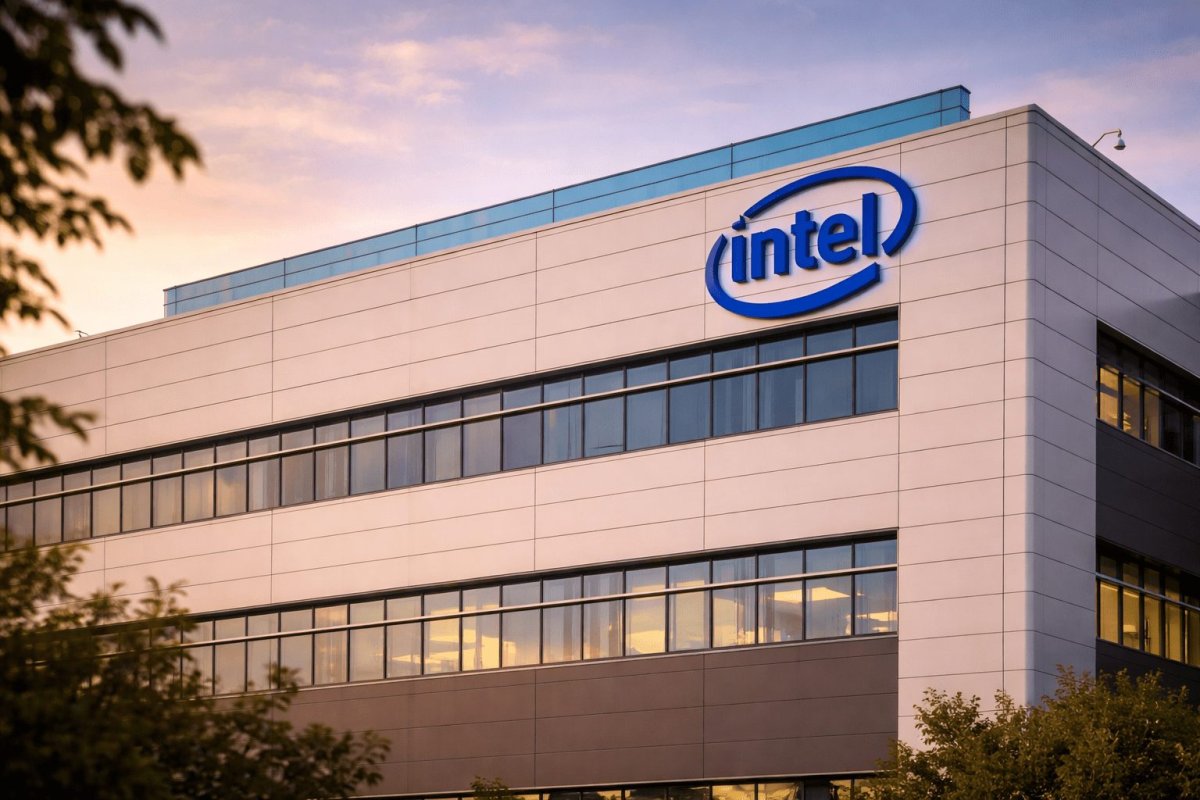
Intel Corporation's stock exhibited modest upward momentum during premarket activity on Thursday, February 12, 2026, advancing approximately 0.5% to trade around $48.54. This movement followed a notable gain of 2.46% in the previous regular session, which closed at $48.29. The premarket lift aligns with a broader, albeit cautious, rise in U.S. stock index futures as financial markets brace for the imminent release of the January Consumer Price Index (CPI) report, scheduled for 8:30 a.m. Eastern Time on Friday, February 13.
Macroeconomic Backdrop Drives Sentiment
The trading environment for technology and semiconductor equities remains heavily influenced by shifting interest rate expectations. Investors are actively recalibrating their positions following a surprisingly robust U.S. employment report, which presented a complex picture for Federal Reserve policy. Market strategists have interpreted the jobs data as sufficiently firm to warrant continued caution from the central bank regarding potential rate cuts, yet not so strong as to completely undermine risk appetite. This delicate balance has left the market in a state of anticipation, with the upcoming inflation data poised to be the next major catalyst.
Intel's Company-Specific Challenges
For Intel, this macroeconomic uncertainty overlays a corporate narrative currently dominated by supply-chain and execution hurdles rather than demand concerns. In late January, the company provided a current-quarter revenue forecast ranging between $11.7 billion and $12.7 billion. Notably, management highlighted ongoing struggles to meet demand for server central processing units (CPUs), particularly those used in conjunction with artificial intelligence accelerators. Chief Executive Officer Lip-Bu Tan expressed disappointment to analysts over the company's inability to fully satisfy this demand, underscoring a significant operational challenge.
Furthermore, pressures within the personal computer ecosystem are adding another layer of complexity. Chinese PC manufacturer Lenovo issued a warning on Thursday, citing a worsening shortage of memory chips that is exerting downward pressure on PC shipment volumes and forcing component price increases. Lenovo CEO Yang Yuanqing explicitly stated that the company expects PC unit sales to face ongoing pressure, a sentiment that reverberates across the industry and impacts key suppliers like Intel.
Volatile Trading Week and Investor Focus
Intel's share price has experienced significant volatility this week. Historical data shows the stock declined 6.19% on Tuesday, February 10, only to rebound with the 2.46% gain on Wednesday, February 11. This choppy action reflects the market's attempt to price in the competing narratives of macroeconomic headwinds and company-specific supply issues.
Chip sector investors are monitoring several critical fault lines: the timeline for easing server supply constraints, the sustainability of PC pricing in the face of rising component costs, and the potential for higher bond yields to once again pressure the valuations of growth-oriented technology stocks. The interplay between these factors will likely dictate near-term performance for the sector.
The CPI Report's Potential Impact
Friday's inflation data represents a pivotal event that could sway markets in either direction. A hotter-than-expected CPI reading could propel Treasury yields higher, potentially triggering a sell-off in rate-sensitive technology shares, including semiconductors. Conversely, a cooler inflation print could sustain investor interest in the chip sector, even in the absence of positive company-specific news, by reinforcing hopes for a more accommodative monetary policy path from the Federal Reserve. The premarket uptick, therefore, reflects a tentative optimism ahead of this key data release, set against a backdrop of persistent company-level challenges.