Aurora Innovation, Inc. (NASDAQ: AUR) shares regained ground in Friday's trading session, closing at $6.13, up 2.68% on the day. The autonomous trucking company's stock continued to climb in after-hours trading, reaching $6.24, a further 1.79% gain. Trading volume was robust at 41.87 million shares, exceeding the 34.45 million average, signaling renewed investor interest following a steep decline.
Recent Decline and Recovery
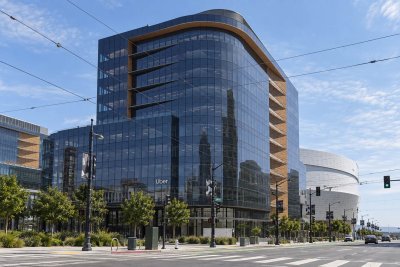
The bounce comes after a severe seven-day selloff that saw Aurora's stock drop approximately 23%, erasing nearly $3.4 billion in market capitalization. The decline was largely attributed to a block sale by Uber Technologies, which offloaded 67.5 million Class A shares at $7.10 each on June 2, as disclosed in a June 4 SEC filing. Despite the sale, Uber retains a substantial 258.47 million shares, representing 15.6% of Aurora's Class A stock.
The broader market provided a supportive backdrop, with the Nasdaq Composite rising 0.31%, the S&P 500 gaining 0.5%, and the Dow Jones Industrial Average adding 0.7% on Friday.
Key Catalysts Ahead
Investor attention now shifts to Aurora's upcoming second-generation hardware launch, scheduled for the second quarter. This new hardware kit, to be installed on International LT Series trucks, is a critical milestone as it will enable fully driverless operations without the need for a safety driver. The company has reiterated its target to deploy over 200 driverless trucks by the end of 2026.
During the first-quarter earnings call on May 6, CEO Chris Urmson stated, "We are hitting a new gear – we are on the cusp of launching a new platform and are on track to put hundreds of driverless trucks on the road this year." This bullish sentiment is supported by recent customer commitments, including McLane, a Berkshire Hathaway subsidiary, which has approved fully autonomous runs between Dallas and Houston after a test phase covering 280,000 self-driving miles and 1,400 loads.
Additionally, Volvo Autonomous Solutions and DSV have launched autonomous freight operations in Texas using the Volvo VNL equipped with the Aurora Driver system, though these currently still require a safety driver.
Financial Concerns and Valuation
Despite the optimistic outlook, Aurora remains pre-profit, with modest revenue relative to its market capitalization. In its first-quarter 10-Q filing, the company reported just $1 million in revenue, a net loss of $223 million, and net cash used in operating activities of $159 million. Aurora acknowledges that it expects to continue incurring operating losses and may need to raise additional capital as it scales commercialization.
The stock carries significant risk, reflected in its beta of 2.62, indicating volatility well above the broader market. With a market cap of $12.02 billion, the valuation is heavily reliant on future expectations rather than current earnings. However, Wall Street remains cautiously optimistic: of eight analysts tracked over the past three months, five rate the stock a buy, three a hold, and none a sell. The average 12-month price target stands at $10.43.
What to Watch
The next key catalysts for Aurora include the successful rollout of its second-generation hardware, the expansion of driverless routes, progress toward the 200-truck goal by year-end, and the conversion of customer intentions—such as Hirschbach's plan to deploy 500 Aurora Driver trucks starting in 2027—into firm orders. Execution on these fronts will be critical for the stock's future trajectory.