Aurora Innovation Inc. (AUR) enters the holiday-shortened week under pressure, with shares declining for five consecutive sessions. The stock closed Friday at $7.07, down 1.4% on the day and 8.3% below its May 15 close, bucking gains in major U.S. equity benchmarks.
The broader market ended the week in positive territory. The Nasdaq Composite rose 0.5% for the week, the S&P 500 gained 0.9%, and the Dow Jones Industrial Average climbed 2.1%, according to data from Associated Press. No trading occurred on Monday due to the Memorial Day holiday, with the next session set for Tuesday.
Aurora has no investor events scheduled, leaving shares to move on sentiment, new filings, and market perception of its autonomous trucking plans. The company's investor relations site confirms that the last event was the May 21 annual meeting, with nothing else on the calendar. Aurora is required to file voting results from that meeting in a Form 8-K within four business days, which, given the holiday, pushes the disclosure into the current short week.
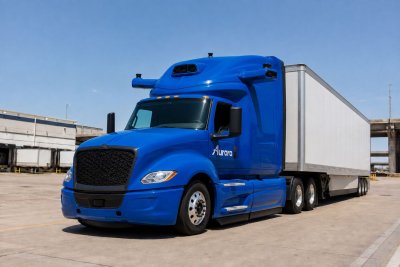
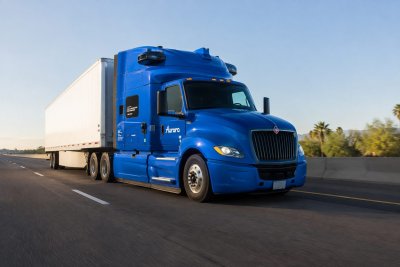
At the heart of the investment thesis is Aurora's Driver-as-a-Service (DaaS) model. Rather than operating a large fleet itself, Aurora charges customers subscription fees for its autonomous driving software and services, generating revenue on a fee-per-mile basis as commercial operations scale. This model underscores the company's path to profitability, but also highlights the risks inherent in its early-stage rollout.
Aurora's first-quarter financial results illustrate the challenge. The company reported revenue of just $1 million against an operating loss of $244 million, and burned through $159 million in cash from operations. Management has stated that it does not expect significant revenue until it reaches commercial scale, and has not ruled out raising additional capital.
CEO Chris Urmson urged investors to look beyond the initial spending, stating during the Q1 earnings call that the company is “on track to put hundreds of driverless trucks on the road this year.” Aurora expects to have more than 200 driverless trucks deployed by year-end, with partner Hirschbach planning to own and operate 500 trucks using Aurora Driver technology, with deliveries beginning in 2027.
Analyst sentiment remains mixed. According to StockAnalysis, there are 11 Buy ratings on the stock with an average price target of $10. Needham’s Chris Pierce set a $13 target as of May 7, while TD Cowen’s Itay Michaeli holds a Hold rating and raised his target to $7. The wide dispersion reflects the uncertainty surrounding the timeline for commercial deployment and revenue generation.
Competitive pressures are also mounting. In January, Kodiak AI partnered with Bosch to accelerate hardware and sensor development for autonomous trucks, a deal that puts pressure on Aurora to prove its system can reach the market faster than rivals. Aurora’s valuation hinges not just on being first to market, but on demonstrating the operational readiness of its technology.
As trading resumes Tuesday, the key question for investors is whether last week’s pullback represents a temporary pause in Aurora’s rollout narrative or a sign that the market is demanding revenue that autonomous trucks cannot yet deliver. With shares hovering near $7, the coming sessions will be critical for determining near-term direction.