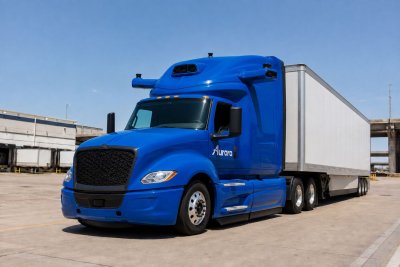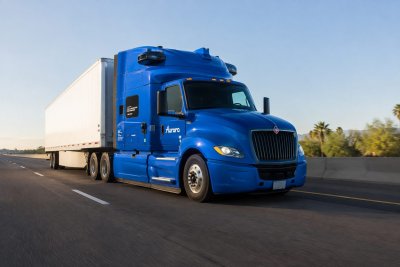
Aurora Innovation (NASDAQ: AUR) saw its shares climb approximately 15% on Wednesday following the announcement that Volvo Autonomous Solutions and logistics giant DSV have commenced commercial autonomous freight operations in Texas. The service utilizes a Volvo VNL Autonomous truck equipped with Aurora's self-driving system, operating between Dallas and Houston with a safety driver onboard.
The launch marks a significant milestone for Aurora, as it transitions from a long-term bet on autonomous technology to a company actively generating revenue from trucking services. The stock rise brought Aurora's market capitalization to around $16.2 billion, reflecting growing investor optimism about the company's commercial prospects.
Commercial Operations Underway
DSV Road CEO Helmut Schweighofer characterized the Texas initiative as "real-world operations" and described it as a "production, depot-to-depot setup." The route connects Aurora's hubs in Dallas and Houston, moving freight on a regular basis. While a safety driver remains behind the wheel for now, the service represents a concrete step toward full autonomy.
Aurora CEO Chris Urmson reiterated during a recent call that the company remains "on track to put hundreds of driverless trucks on the road this year." The company is targeting more than 200 driverless trucks deployed by year-end and has secured commitments from seven customers for its driverless group, including McLane, a Berkshire Hathaway-owned distributor.
Technology and Business Model
Aurora's Driver system is a full-stack solution encompassing software, hardware, and data that guides the truck on the road. The company positions Driver as a flexible platform designed to work across different vehicle types, but it is initially focusing on trucks. High-volume highway routes offer more standardization compared to the complexity of urban streets, making them an ideal starting point.
Aurora employs a Driver-as-a-Service (DaaS) subscription model. Freight carriers or truck manufacturers own the fleet and pay Aurora for the driving technology, typically on a per-mile basis. The company's revenue growth hinges on how many freight operators and truck builders sign up for the service.
Financial Reality Check
Despite the positive news, Aurora's financials highlight the challenges ahead. In the first quarter, the company reported revenue of just $1 million, overshadowed by a net loss of $223 million. Research and development expenses consumed $195 million during the period. As of March 31, Aurora held $273 million in cash and cash equivalents, along with $952 million in short-term investments.
The company burned through $159 million in cash from operations last quarter and does not anticipate meaningful revenue until it reaches commercial scale. Aurora continues to forecast ongoing operating losses and may need to seek additional funding. Investors are weighing these risks against the potential of the autonomous trucking market.
Industry Collaboration and Competition
Volvo's partnership with Aurora is not exclusive. The truck manufacturer's Autona freight system integrates autonomous driving technology from both Aurora and Waabi, indicating that major truck makers are diversifying their autonomy partnerships. This strategy reduces dependency on any single technology provider and could intensify competition in the space.
Aurora's deal with McLane adds to its food and retail distribution portfolio. The partners have accumulated over 280,000 autonomous miles across Texas, moving 1,400 loads before transitioning to targeted driverless runs linking Dallas and Houston.
Outlook
The launch of commercial autonomous freight runs in Texas is a tangible achievement for Aurora, but it is far from a definitive answer. The key questions remain: can these pilot operations scale into steady freight volumes, can hardware costs be reduced, and will the company generate enough paid miles to offset its high spending rate? Investors will be watching closely as Aurora navigates the path from prototype to profitability.