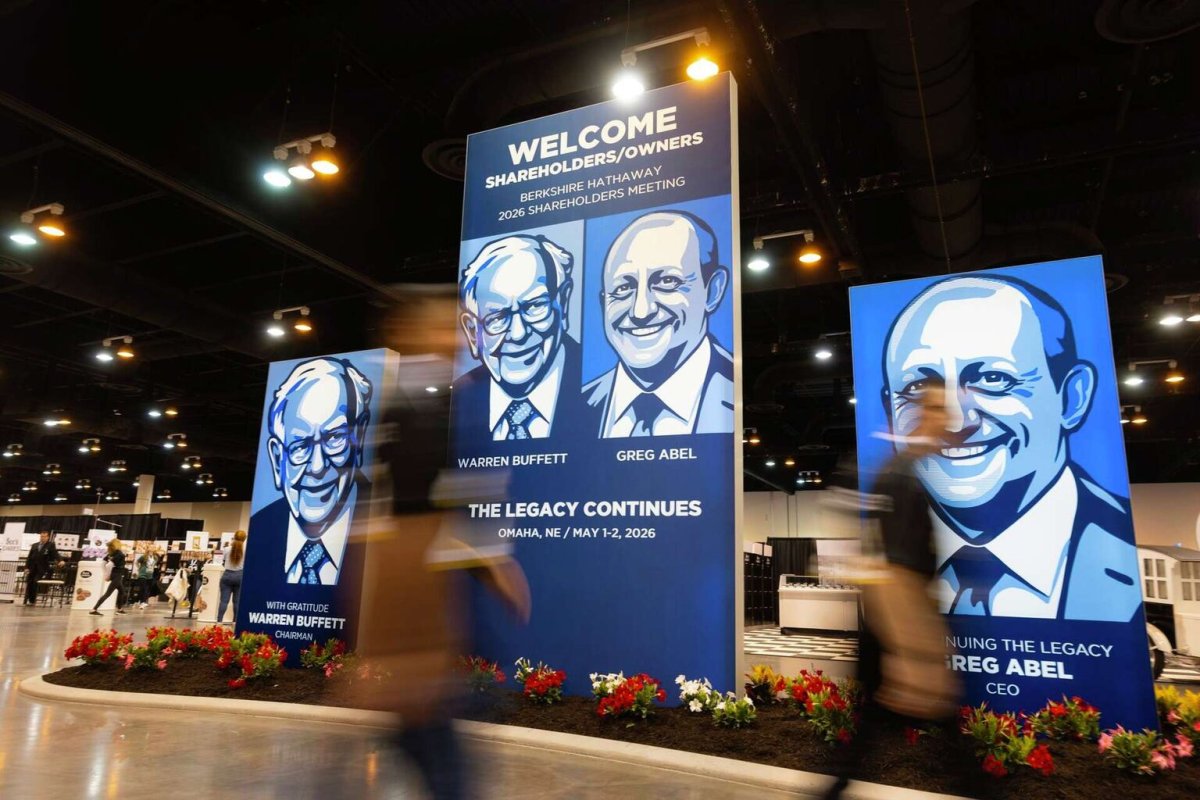
Berkshire Hathaway's recent repurchase of its own Class B shares at an average price of $487.98 in June provides a rare, concrete data point in the ongoing debate over the company's valuation. As of Friday, September 11, BRK.B closed at $510.37, representing a 4.6% premium to that buyback price. While this gap is not large enough to declare the stock overvalued, it does shift the central question from whether Berkshire is cheap enough to buy back shares to whether it can generate attractive returns on its enormous and growing cash pile.
The distinction is crucial. A disclosed buyback price is the closest investors get to an observable verdict from Berkshire's capital allocators, but it is neither a floor nor a fair-value target. The company's repurchase authorization permits buybacks only when CEO Warren Buffett, after consulting with Vice Chairman Charlie Munger, believes the shares are trading below their conservatively determined intrinsic value. It does not obligate Berkshire to purchase any specific amount.
Buyback Evidence, Not a Guarantee
Berkshire's second-quarter Form 10-Q reveals purchases of 7.14 million Class B shares at an average of $487.98 in June, along with 413 Class A shares at $733,775.06 each. In May, the company bought 1.46 million B shares at $476.01 and 65 A shares at $716,231.37. These transactions signal that management saw value in the high-$480s, but Friday's close suggests new buyers are paying slightly more than the company recently did. Intrinsic value may have risen since June, but the filing provides no formula to prove it.
Moreover, the repurchase authorization has no maximum size or expiration date, and Berkshire can simply stop buying. The only explicit liquidity constraint is that repurchases must not reduce consolidated cash, cash equivalents, and U.S. Treasury bills below $30 billion. Thus, the buyback is evidence of management's view, not a guarantee of future support.
What a 0 BRK.B Share Represents
At quarter-end, Berkshire's insurance and other businesses held $35.10 billion in cash and equivalents and $324.91 billion in short-term Treasury bills. Railroad, utilities, and energy businesses added another $5.51 billion, bringing the total to approximately $365.51 billion. Using the June 30 share count—501,101 Class A shares and 1.396 billion Class B shares—and the 1,500-to-one conversion ratio, Berkshire has roughly 2.148 billion B-equivalent shares outstanding. At $510.37, that implies an equity value near $1.10 trillion.
On the same basis, quarter-end shareholders' equity of $747.91 billion translates to about $348.26 per B-equivalent share, putting the stock at approximately 1.47 times book value. Cash and Treasury bills equal roughly $170.20 per share, while the $323.78 billion equity portfolio adds about $150.77 per share. However, these figures cannot be simply subtracted from the stock price. Berkshire's liquid assets support insurance obligations, taxes, acquisitions, and operating-company needs; its railroad and energy units also carry substantial debt. The pile is capacity, not spare change distributable tomorrow.
Operating Return: Respectable but Hurdle Is High
Adding the five after-tax business lines Berkshire reports before investment gains—insurance underwriting, insurance investment income, BNSF, Berkshire Hathaway Energy, and manufacturing, service, and retailing—produces $21.80 billion for the first half of 2026. Doubling that figure gives a simplified annualized run rate of $43.59 billion, equal to about 4.0% of the current implied market value. This is a lens, not a forecast. Insurance results can swing with catastrophe losses, and the filing notes first-half insurance investment income fell 8.3% as lower interest rates reduced interest income. At the same time, BNSF's first-half earnings rose 9.5%, Berkshire Hathaway Energy increased 11.5%, and manufacturing, service, and retailing climbed 15.1%. The operating mix is improving even as the yield on liquidity faces pressure.
A tempting shortcut is to subtract all $365.51 billion of cash and Treasury bills from market value, then value the operating earnings against the remainder. That produces a multiple near 16.8 times the annualized core run rate. But this is too generous because it assigns no required capital to insurance or other businesses and ignores the claims and liabilities across the balance sheet. The truth lies somewhere between that stripped-down multiple and the roughly 25 times implied by valuing the entire company against the same earnings run rate.
The Real Bet Is Deployment
Berkshire completed its Taylor Morrison acquisition on July 24 for approximately $6.8 billion in equity value and $8.5 billion in enterprise value. While sizable in homebuilding, the enterprise value is only about 2.3% of Berkshire's June cash-and-Treasury total. This illustrates the conglomerate's large-number problem: even a multibillion-dollar acquisition barely moves the liquidity ratio.
The bullish case is that patient deployment, improving controlled-business earnings, and occasional repurchases can compound value without requiring a heroic single deal. The bearish counterargument is that lower short-term rates reduce income earned while cash waits, and few acquisitions are large enough to matter or attractive enough to clear Berkshire's discipline.
For the next filing, the most informative signals will be whether Berkshire continues repurchasing shares near or above $510, whether liquidity falls for productive reasons rather than market losses, and whether the five core earnings lines keep growing after normalization for insurance volatility. Continued cash accumulation alongside declining interest income and no buybacks would weaken the case that Berkshire can earn an attractive return on its enormous pool of capital.