Tesla has set October 1 as the date for its next Roadster reveal, pairing a "Go for launch" post on X with a countdown on the Roadster product page. While the date generates buzz, what's missing is more critical for shareholders: a production start date, a first-customer delivery timeline, or even a venue for the event. This makes October 1 a product-event catalyst, not a revenue milestone.
Shares of Tesla (TSLA) closed Friday, September 11, at $365.44, up 0.5% for the session, before the weekend discussion gained traction. The reveal could move sentiment, but the harder question is whether it will provide enough evidence to change earnings models.
Prototype Claims Still Dominate
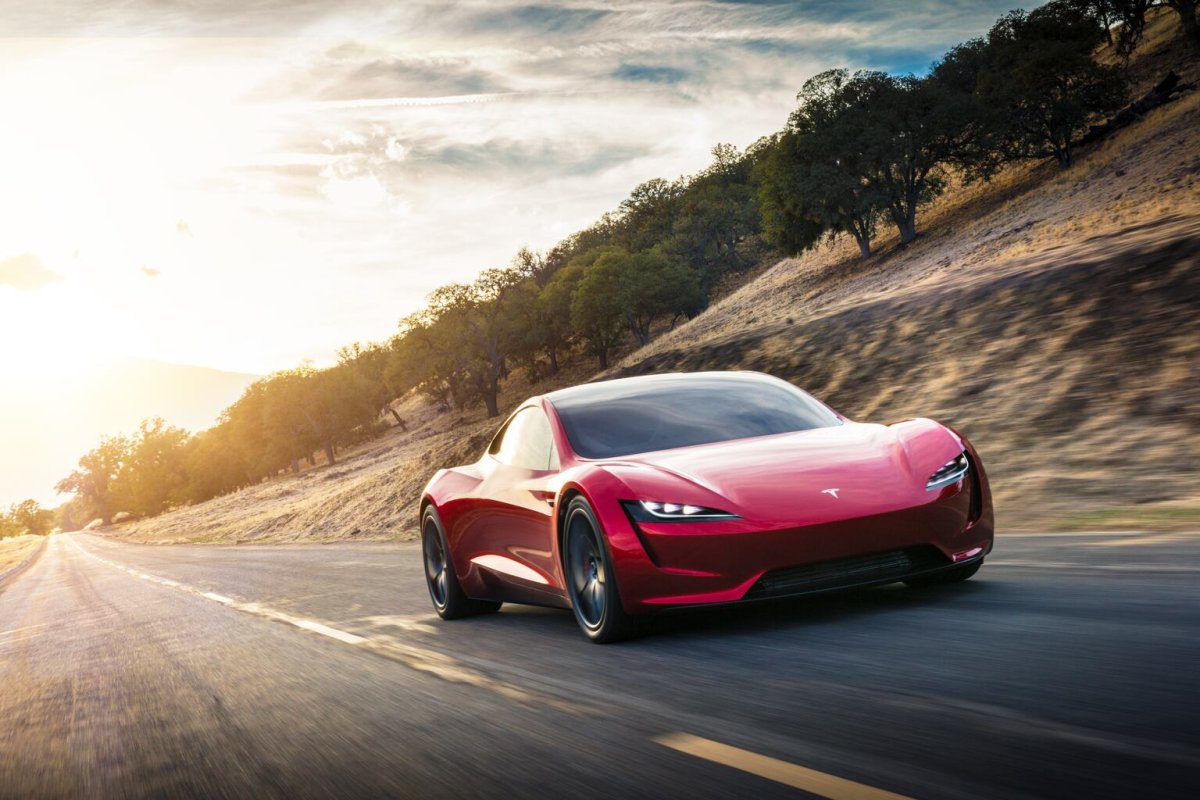
Tesla's current Roadster page advertises a 1.9-second 0-60 mph sprint, a top speed above 250 mph, and 620 miles of range. It describes four seats and a removable glass roof, and still offers a reservation link. However, these are company claims, not final production specifications or test standards. Tesla's U.S. reservation agreement is more explicit: the exact price cannot yet be confirmed, the car remains under development, and delivery timing is not guaranteed.
This distinction is not pedantic. Tesla first showed the second-generation Roadster prototype in November 2017 and originally aimed for production in 2020. That date passed, as did several later targets. An independent report on Saturday's teaser notes that a planned April 2026 demonstration and subsequent summer windows also slipped before the new October date appeared.
What October 1 Could Deliver
October 1 could range from a theatrical technology demonstration to a production-intent car. The teaser's launch imagery revives expectations for the SpaceX-linked thruster concept that has surrounded the program. A spectacle would prove that engineering work continues. It would not, by itself, prove that the system can be homologated, manufactured, warranted, and delivered to customers.
Financially, the Roadster is small relative to Tesla's scale. The company generated $28.24 billion in revenue in the second quarter of 2026, including $20.52 billion from automotive operations, according to its latest Form 10-Q. Quarterly operating income was $398 million. Against that scale, a low-volume supercar cannot be valued like a new mass-market platform without disclosed pricing, capacity, and margins.
Reservations: Not a Demand Proxy
The filing also shows why reservation anecdotes are a poor demand model. Tesla carried $1.94 billion of customer deposits at June 30, up from $1.31 billion at the end of 2025, but it reports that liability across the business and does not disclose a Roadster subtotal or reservation count. The increase therefore cannot be attributed to the sports car. Current terms, cancellations, and a conversion timetable would be genuinely new information on October 1.
The strongest bullish case is less direct. A credible Roadster could function as Tesla's halo car, restore performance leadership to the brand, and serve as a test bed for batteries, thermal management, power electronics, or control systems that migrate to higher-volume vehicles. Limited production can still have marketing and engineering value. But investors cannot credit that option fully until Tesla shows which technology is production-ready rather than event-ready.
The counterargument is execution history. A new reveal can reset attention without resolving the nine-year gap between the original prototype and a saleable vehicle. Because expectations are already high, another demonstration followed by an open-ended schedule could reinforce the discount investors place on distant product promises.
Investor Scorecard for October 1
- Hardware: Is Tesla showing a production-intent Roadster, and which acceleration, range, and top-speed claims apply to the version customers could actually buy?
- Commercial plan: Does the company disclose current pricing, reservation terms, a factory, production capacity, and a dated delivery sequence?
- Technology transfer: Does Tesla identify any Roadster engineering that can improve the economics or performance of its larger vehicle lines?
If Tesla answers only the first question, October 1 may be memorable without being financially material. If it also supplies a credible manufacturing and delivery plan, the Roadster becomes evidence that a long-delayed program is finally moving from promotion toward revenue. For TSLA investors, that conversion—not the countdown—is the event to watch.