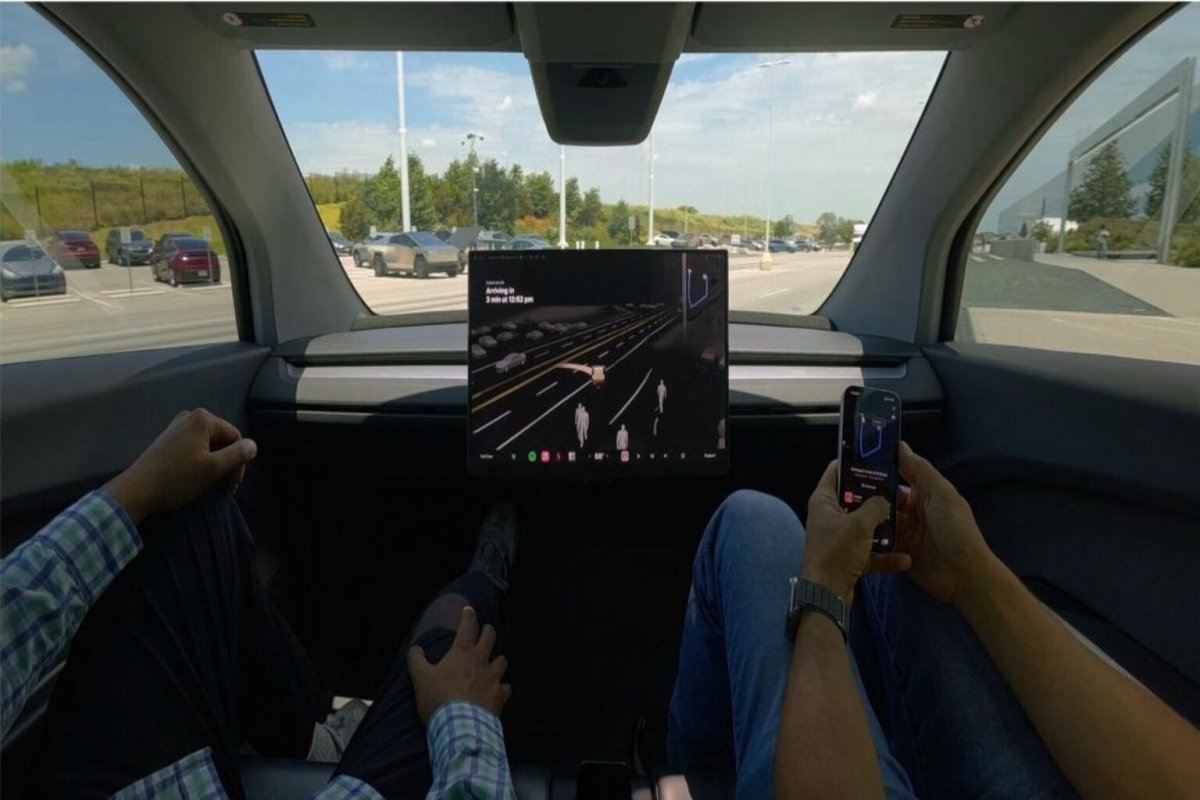
Tesla has quietly opened the door for businesses to express interest in purchasing fleets of its Cybercab robotaxis, a seemingly minor website update that carries significant implications for the financial structure of its autonomous ride-hailing ambitions. The move signals a potential shift toward a partner-funded model, where external operators would bear the capital costs of vehicles, charging infrastructure, and daily maintenance.
This approach could allow Tesla to expand its robotaxi network more rapidly while keeping its balance sheet relatively unencumbered. However, the company has yet to disclose crucial financial terms, such as the vehicle's purchase price, revenue-sharing arrangements, or any evidence that a third-party Cybercab operation could deliver acceptable returns. This lack of transparency is at the heart of investor skepticism.
Market Reaction and Stock Movement
Shares of Tesla (NASDAQ: TSLA) traded near $360.37 in delayed premarket data at 8:47 a.m. ET on Thursday, roughly 2% below Wednesday's close of $367.81, as broader U.S. technology futures weakened. Despite this dip, the stock remained about 1.8% above its September 4 close, following the Cybercab's commercial debut in Austin, Texas.
The Partner-Funded Model: A Double-Edged Sword
Tesla's current Cybercab FAQ now includes a form for prospective buyers—whether individuals or commercial entities—to submit their interest for a follow-up from a Tesla representative. The form also solicits interest in mobility hubs and supporting infrastructure. However, the economic terms remain undisclosed, leaving potential partners in the dark about the viability of such an investment.
For Tesla, the appeal is clear. A fleet buyer would finance the vehicles, lease parking spaces, cover electricity costs, handle cabin cleaning, and absorb idle time. Tesla would sell the hardware and potentially collect software or network fees. But this model also means surrendering a portion of ride revenue and possibly some control over the customer experience, unless the contract terms are heavily skewed in Tesla's favor.
Balance Sheet Pressures and Capital Expenditures
This potential shift comes at a time when Tesla's capital expenditures are soaring. The company spent $5.79 billion on capex in the second quarter, more than double the $2.39 billion spent a year earlier, and reported negative free cash flow of $1.09 billion. Despite this, Tesla ended June with a formidable $43.52 billion in cash, cash equivalents, and short-term investments.
Tesla's second-quarter update also highlighted more than 125,000 units of installed annual Cybercab capacity in Texas, though the company cautioned that installed capacity is not the current production rate. Production has begun, and employee rides in production vehicles started in July. Selling meaningful volumes to outside fleet owners would help convert factory capacity into cash without Tesla having to build every local operating layer itself.
Financial Reporting Complexity
The partner-funded model would also complicate Tesla's financial reporting. Hardware sales generate revenue upfront, while owned fleets generate revenue over years. Tesla's services and other segment produced a record $648 million of gross profit in the second quarter, with a 14% gross margin, but the company does not disclose Robotaxi revenue or profitability separately. Investors cannot yet determine whether the network is improving that segment or merely adding costs.
Regulatory Hurdles
The financing model is moot if the vehicle cannot be deployed. On September 4, the National Highway Traffic Safety Administration (NHTSA) opened an Audit Query into Tesla's self-certification that the Cybercab meets federal safety standards. The two-seat vehicle has no steering wheel or pedals, and NHTSA said existing rules remain in force while related standards are being rewritten.
An audit is not a finding of a rule violation, but it creates timing risk for a rollout whose valuation case depends on rapid scale. Prospective fleet owners need to know whether the vehicle can operate, where it can operate, and who bears the cost if software, permits, or federal compliance delays utilization.
What Investors Need to See
The next crucial disclosure is not another city on a map but a detailed contract: Cybercab's selling price, Tesla's platform take rate, required insurance, maintenance responsibilities, and restrictions on fleet owners. Investors also need data on paid miles per vehicle, ride revenue per mile, electricity and cleaning costs, empty repositioning miles, and the percentage of time each car carries a fare.
A strong partner offer could turn Cybercab into both a vehicle franchise and a software network, giving Tesla scale with less capital. Weak operator economics, however, would merely transfer the burden to buyers and could slow adoption once early enthusiasm fades. Until Tesla supplies those terms, the new purchase form is evidence of a distribution strategy—not proof of robotaxi profitability.