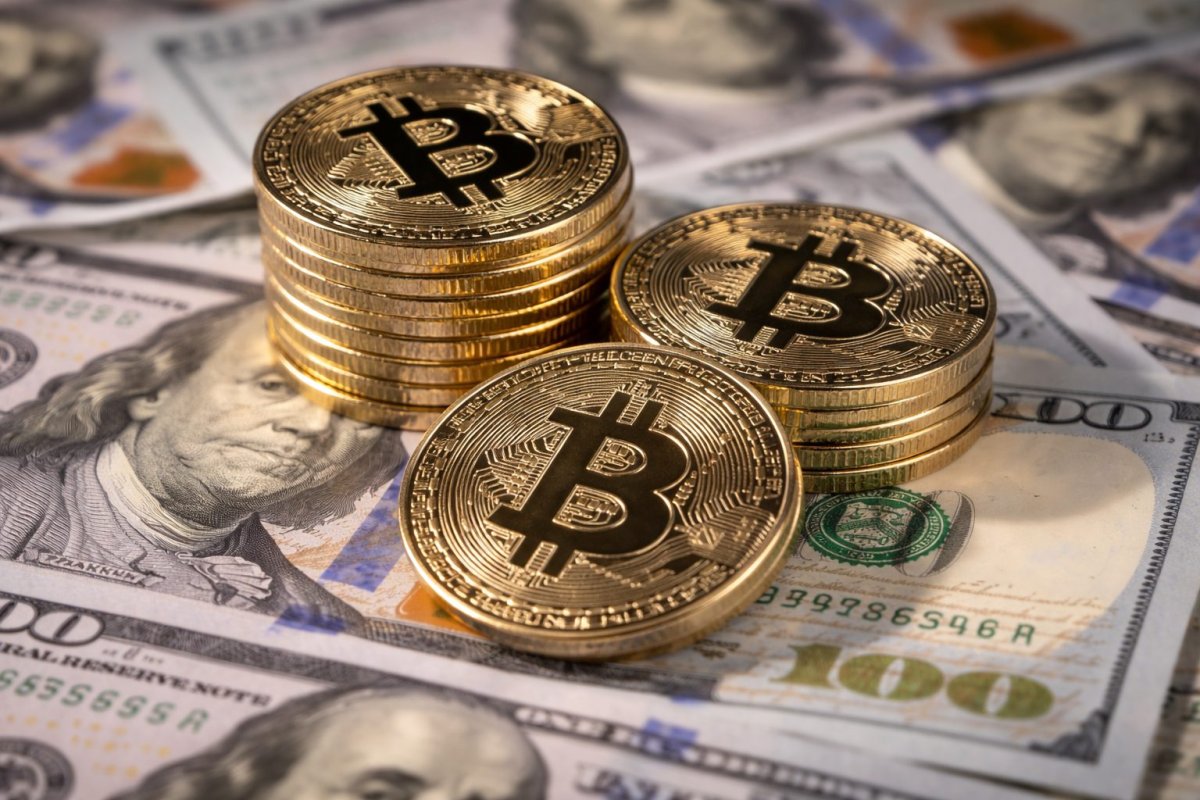
Bitcoin exhibited limited movement on Thursday, trading near the $72,000 level as conflicting forces of geopolitical uncertainty and shifting institutional demand created a stalemate for the leading cryptocurrency. The digital asset was last quoted at $72,021, reflecting a modest daily gain of 0.3%.
Institutional Demand Shows Volatility
Interest from major financial players remains inconsistent. U.S. spot bitcoin exchange-traded funds recorded a substantial inflow of $471.4 million on April 6, signaling robust appetite. However, this momentum reversed by April 8, with the same products experiencing $93.9 million in outflows. The landscape grew more competitive on that day with the debut of Morgan Stanley's MSBT fund, which attracted $30.6 million at launch. A key feature of the new offering is its sponsor fee of 0.14%, which undercuts the 0.25% charged by established rivals BlackRock's IBIT and Fidelity's FBTC.
Geopolitical Headlines Drive Intraday Swings
Macroeconomic developments continued to dictate short-term price action. Earlier on Thursday, Bitcoin dipped nearly 1% to approximately $70,680. This decline was attributed to market reactions to renewed military strikes in Lebanon and escalating tensions in the strategic Strait of Hormuz, which cast doubt on the durability of a recent U.S.-Iran ceasefire. The cryptocurrency subsequently recovered those losses during the U.S. trading session, climbing back above the $72,000 threshold.
This price behavior aligns with Bitcoin's established correlation to traditional risk assets in the current market cycle. "The entire ceasefire remains tenuous," noted Derek Halpenny, Head of Research for Global Markets EMEA at MUFG. Analysts observe that Bitcoin has largely mirrored the movements of equities and reacted to interest rate speculation this year, rather than performing as a traditional safe-haven asset.
Morgan Stanley's Strategic Push
Morgan Stanley framed its fund launch as a bridge connecting conventional investment portfolios with digital assets. Company executives highlighted the strategic rationale. Ben Huneke pointed to "long-term trends in financial innovation," while Ally Wallace described exchange-traded products as a "transparent and regulated framework." Amy Oldenburg emphasized that clients favor access through "structures they understand and trust," underscoring the importance of familiar investment vehicles.
Regulatory developments also returned to the forefront. U.S. Treasury Secretary Scott Bessent urged Congress to pass the Clarity Act, arguing that ambiguous domestic regulations have pushed cryptocurrency innovation and related business activities overseas. He contended that a coherent federal market-structure bill could help anchor digital-asset investment and development within the United States.
Broader Crypto Market Lacks Direction
The wider digital asset sector failed to establish a clear trend. Ether, the second-largest cryptocurrency, declined 0.9% to $2,210.56. While some altcoins like Strategy posted gains of around 2.3%, major industry player Coinbase saw its stock drop approximately 1.2%. This selective performance suggests investors are picking specific names rather than making broad-based bets on the sector.
Market observers caution that the current stability may be fleeting. Analysis noted that Asian equities and Wall Street futures had already given back some of the gains achieved on Wednesday. Furthermore, Federal Reserve officials have not signaled imminent interest rate cuts. This combination—persistent geopolitical risk supporting oil prices and a lack of urgent monetary easing—threatens to dampen overall risk appetite if ETF demand continues to show weakness.
Despite the recent uptick, Bitcoin's price remains significantly depressed from its all-time peak. The cryptocurrency is still trading roughly 43% below its record high of $126,223.18, which was set in early October 2025. Consequently, the $72,000 level is viewed less as a sign of an impending breakout and more as a critical test of whether committed buyers have the conviction to maintain their positions amid ongoing uncertainty.