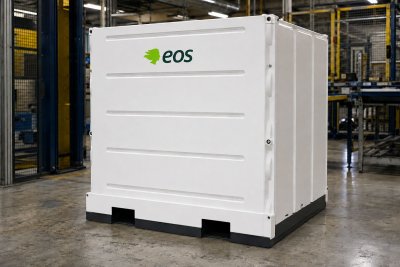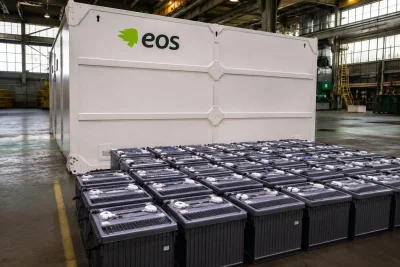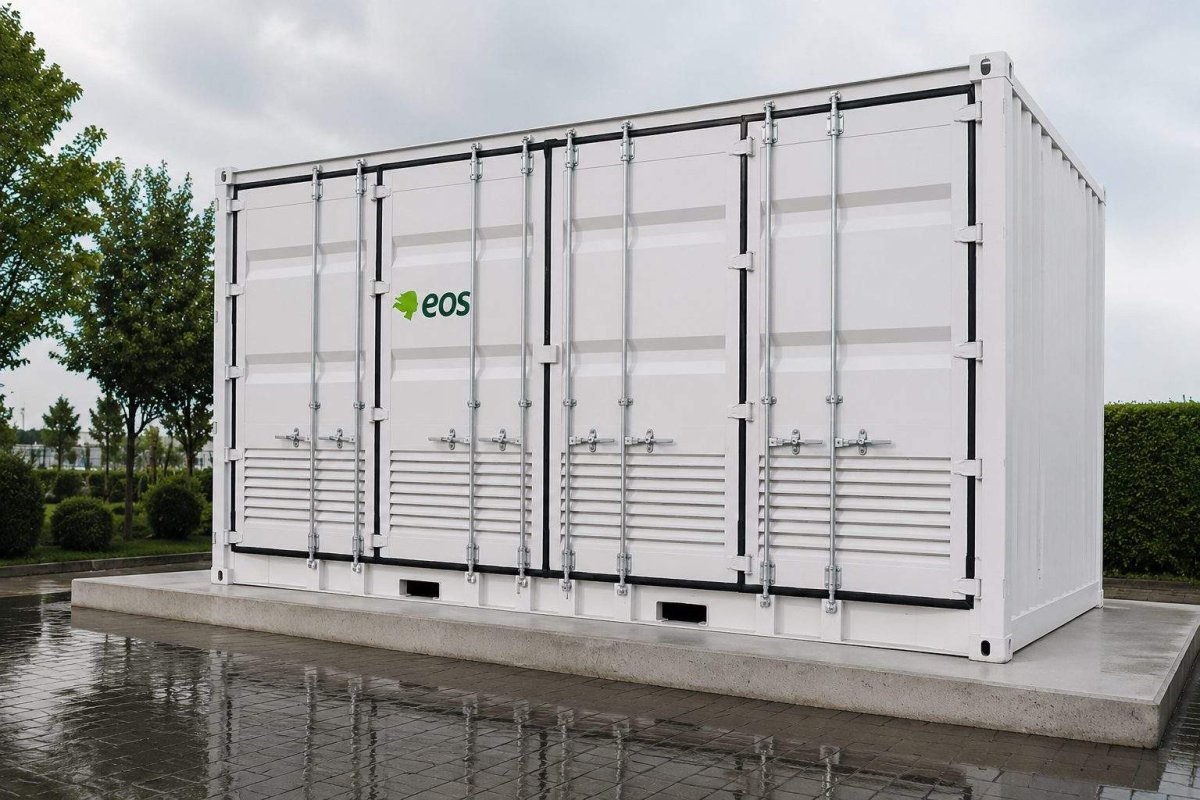
Eos Energy Enterprises (EOSE) saw its stock edge lower on Friday, closing at $8.06, a decline of 1.35%, following a significant jump of 14.9% the previous day. The move came as the company announced that Frontier Power USA has agreed to acquire 480 megawatt-hours of battery-storage projects in Texas, all of which will utilize Eos Z3 systems. This transaction represents the initial project under Frontier's broader 2 GWh capacity reservation with Eos.
U.S. stock markets are closed on Monday for the Memorial Day holiday, with Nasdaq-listed shares, including Eos, set to resume regular trading on Tuesday. The pause comes at a pivotal moment for the company, which is navigating the early stages of a major partnership.
Frontier Deal Takes Shape
Frontier Power USA, backed by Cerberus Capital Management and closely tied to Eos, has moved its plans from the financing phase into project testing. The 480 MWh portfolio represents about 24% of its total 2 GWh reservation with Eos. The portfolio encompasses three projects connected to ERCOT, Texas's primary power grid. One of these, a 100 MW/400 MWh installation, is expected to receive notices to proceed in mid-2026.
Under the agreement, Frontier will deploy Eos systems alongside technology performance insurance (TPI), which provides lenders with assurance that the battery systems will perform as promised. This structure gives investors a clearer way to track the partnership that was announced earlier this month.
Aaron Maczonis, managing director at Cerberus, described the Texas portfolio as an "important first step." Cole Johnson, co-CEO of Bimergen Energy, noted that the company can rotate assets while maintaining "an ongoing interest" in their long-term performance.
Financial Performance and Outlook
Eos is still in the scaling phase and has not yet achieved mature margins. For the first quarter, the company reported revenue of $57.0 million, a 445% increase compared to the same period last year. However, it posted a gross loss of $44.4 million and an adjusted EBITDA loss of $68.0 million. Adjusted EBITDA excludes interest, taxes, depreciation, amortization, and certain company-specific items, providing a view of operating performance before these costs.
Eos maintained its 2026 revenue outlook of $300 million to $400 million. CEO Joe Mastrangelo was candid about the challenges ahead, stating that the "work ahead is conversion." The company ended March with a commercial pipeline valued at $24.3 billion and a backlog of $644.6 million, though the company notes that pipeline does not equate to booked revenue.
Market and Competitive Landscape
Eos faces competition in the stationary storage market from technologies such as lithium-ion, lead-acid, sodium sulfur, and vanadium redox batteries. Market research firms identify Fluence Energy and ESS Inc. as key North American rivals.
Wall Street finished higher ahead of the long weekend. The Dow Jones Industrial Average closed at a new record on Friday, while the S&P 500 posted another week of gains. The Nasdaq Composite ended the day at 26,343.97, up 0.19%. Eos shares saw trading volume of approximately 24.6 million shares on Friday. The stock opened the week at $6.88 on Tuesday, rose to $7.11 on Wednesday, jumped to $8.17 on Thursday, before giving back some of those gains on Friday.
Upcoming Catalysts and Risks
Investors will have to wait until Tuesday for the next trading session. Eos's annual meeting is scheduled for June 3, which will be a key event for the company. Additionally, Eos has indicated that its second battery production line is expected to reach initial production by the end of the current quarter.
Several risks remain. The Frontier deal is contingent on a rights offering, shareholder approval for additional shares, Department of Energy approval, and final contracts. The warrants and rights offering associated with the deal could dilute existing shareholders. Eos also needs to demonstrate that ramping up production will reduce losses, not just boost revenue.