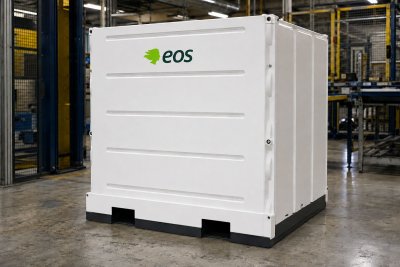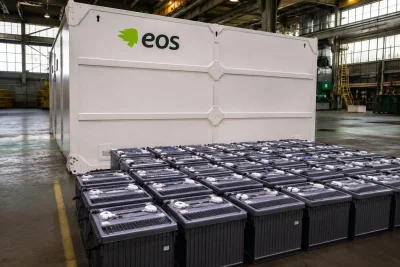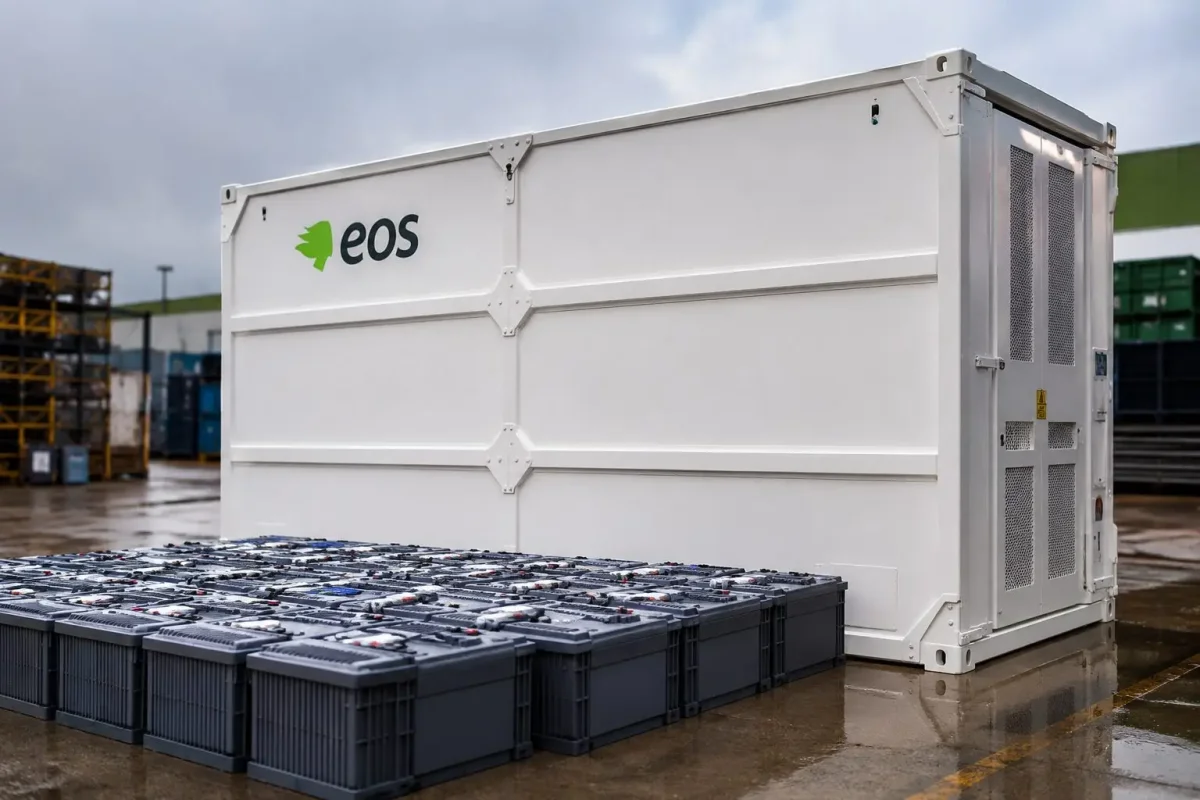
Eos Energy Enterprises (NASDAQ: EOSE) saw its stock climb approximately 10.9% to $7.08 in midday trading Tuesday, following the announcement that it has commenced commercial production at its second battery manufacturing facility in Marshall Township, Pennsylvania. The company confirmed that it successfully completed Site Acceptance Testing for Battery Line 2, a critical step that validates all equipment is ready for full-scale operations. Shares briefly surged as much as 13% intraday, reaching a high of $7.53 before settling back.
The activation of Battery Line 2 is a key milestone in Eos Energy's strategy to ramp up its annual manufacturing capacity to 4 gigawatt-hours (GWh) by the end of 2026. GWh is a unit of energy storage capacity, and scaling production is central to the company's investment thesis. Eos specializes in zinc-based long-duration energy storage systems (LDES), which can store electricity for extended periods and discharge it to grids, data centers, or industrial customers when needed.
Operationally, the company highlighted that output from Line 1 in the first 164 days of 2026 has already surpassed the total production for the entire year of 2025. With Line 2 now live, Eos expects subassemblies to begin in early Q3 2026, with full production targeted for Q4. “Battery Line 2 demonstrates our ability to continuously improve as we scale,” said John Mahaz, Chief Operating Officer of Eos Energy.
Financially, the company reported first-quarter 2026 revenue of $57.0 million, a staggering 445% increase year-over-year, and a backlog of $644.6 million. However, the company also posted a gross loss of $44.4 million and an adjusted EBITDA loss of $68.0 million. A gross loss indicates that the cost of production and delivery exceeded revenue, before accounting for operating expenses. Adjusted EBITDA strips out interest, taxes, depreciation, amortization, and certain non-cash charges. Investors are closely watching whether Eos can convert its substantial backlog into profitable sales while reducing manufacturing costs.
On the demand side, Eos has secured a 2 GWh capacity reservation from Frontier Power USA, a 480 MWh battery deal in Texas, and potential Scottish projects that could require approximately 2.8 GWh of Eos Z3 Indensity systems. However, the UK projects remain contingent on meeting milestones and final closing. Bulls argue that Line 2 alleviates a major production bottleneck just as demand is accelerating, while bears highlight persistent financing and dilution risks.
A key concern for shareholders is the upcoming rights offering, set for July. Eligible holders will have the opportunity to purchase new common stock and warrants at a 10% to 20% discount to the volume-weighted average price (VWAP). While this could raise much-needed capital, it will dilute existing shareholders who do not participate. The record date for the offering is July 1, with distribution on July 2. The company continues to burn cash and will likely require external funding to reach profitability, adding to the risk profile.
Despite the manufacturing progress, the stock remains a high-risk investment. Eos Energy has not yet demonstrated that higher production volumes will lead to improved margins. Risk-tolerant traders may see potential gains if the backlog converts into deliveries and losses narrow, but after Tuesday's jump, there is limited room for error. The next catalysts will be the ramp-up of Line 2 in Q3 and Q4, along with the outcome of the rights offering.