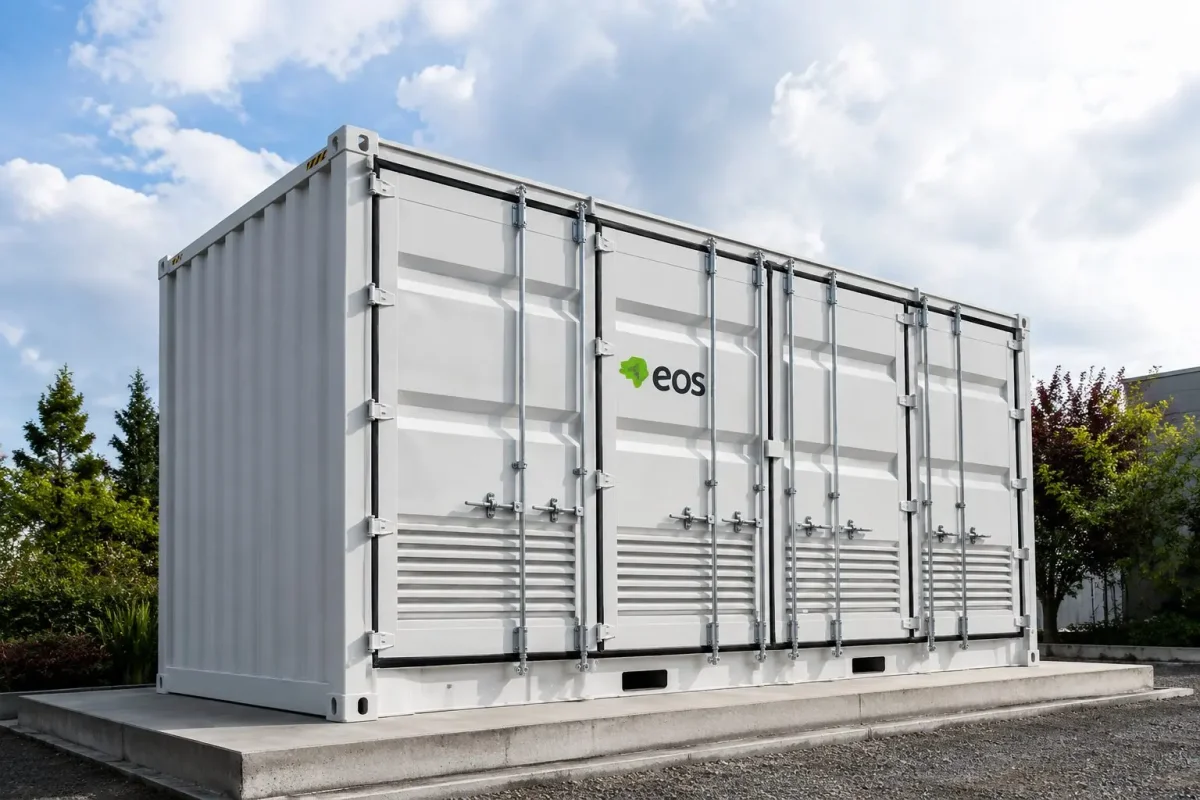
Eos Energy Enterprises Inc. saw its shares climb sharply in early trading Wednesday, following the announcement of a significant international partnership that marks the company's entry into the German market for long-duration energy storage. The stock rose 11.7% to $7.61 on heavy volume, reflecting investor optimism about the company's expanding commercial footprint.
The binding master supply agreement with CAPAC Energy, formerly known as Nala Energy GmbH, covers Germany, Austria, and Switzerland. The deal includes a firm commitment of 750 megawatt-hours (MWh) of battery storage capacity, with a pathway to scale deployments up to 2 gigawatt-hours (GWh) through 2031. A megawatt-hour is a unit of stored electricity; a gigawatt-hour equals 1,000 megawatt-hours.
CAPAC Energy is currently advancing its initial Eos projects in Germany, targeting commercial operations by late 2026. Nathan Kroeker, Eos's Chief Commercial Officer, described the partnership as an "entry into a critical international market." Benjamin Henecka, CEO of CAPAC Energy, noted that the framework supports growth across one of Europe's key storage markets.
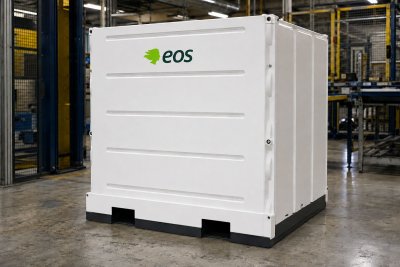
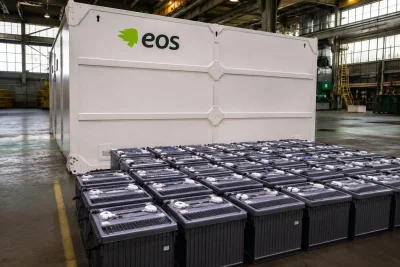
The German deal comes less than 24 hours after Eos announced that its second battery manufacturing line, Battery Line 2, had commenced commercial production at the company's Thorn Hill facility in Marshall Township, Pennsylvania. The new line is a critical component of Eos's strategy to reach 4 GWh of annual manufacturing capacity by the end of 2026. Chief Operating Officer John Mahaz emphasized that the second line demonstrates the company's ability to scale "with discipline." Production is expected to ramp throughout the year, with subassemblies anticipated early in the third quarter and full production targeted for the fourth quarter.
The market reaction to Eos's news stood out against a mixed performance among battery storage peers. Fluence Energy rose 1.0%, Stem Inc. gained 3.5%, and Energy Vault slipped 0.4% in early trading, suggesting that Eos's move was driven by company-specific catalysts rather than a broad sector rally.
Eos has previously guided for 2026 revenue between $300 million and $400 million. In the first quarter, the company reported revenue of $57.0 million, a backlog of $644.6 million, and a commercial opportunity pipeline valued at $24.3 billion. However, the company still posted an adjusted EBITDA loss, highlighting the challenges of transitioning from pipeline to profitable revenue.
Investors remain focused on the company's financing needs and execution risks. Eos has set a July 1 record date for a rights offering to help fund its Frontier Power USA joint venture. The subscription price is expected to be at a 10% to 20% discount to the average trading price, potentially diluting existing shareholders. The company also cautions that project financing, future orders, supply chain stability, and the conversion of backlog into revenue could deviate from plans.
As of March 31, Eos reported $410.7 million in unrestricted cash and $61.7 million in restricted cash, but operating activities consumed $119.7 million during the quarter. This cash position provides some buffer, but the company's path forward hinges on converting the German agreement into firm purchase orders, successfully ramping Battery Line 2, and managing the cost of capital for its next growth phase.