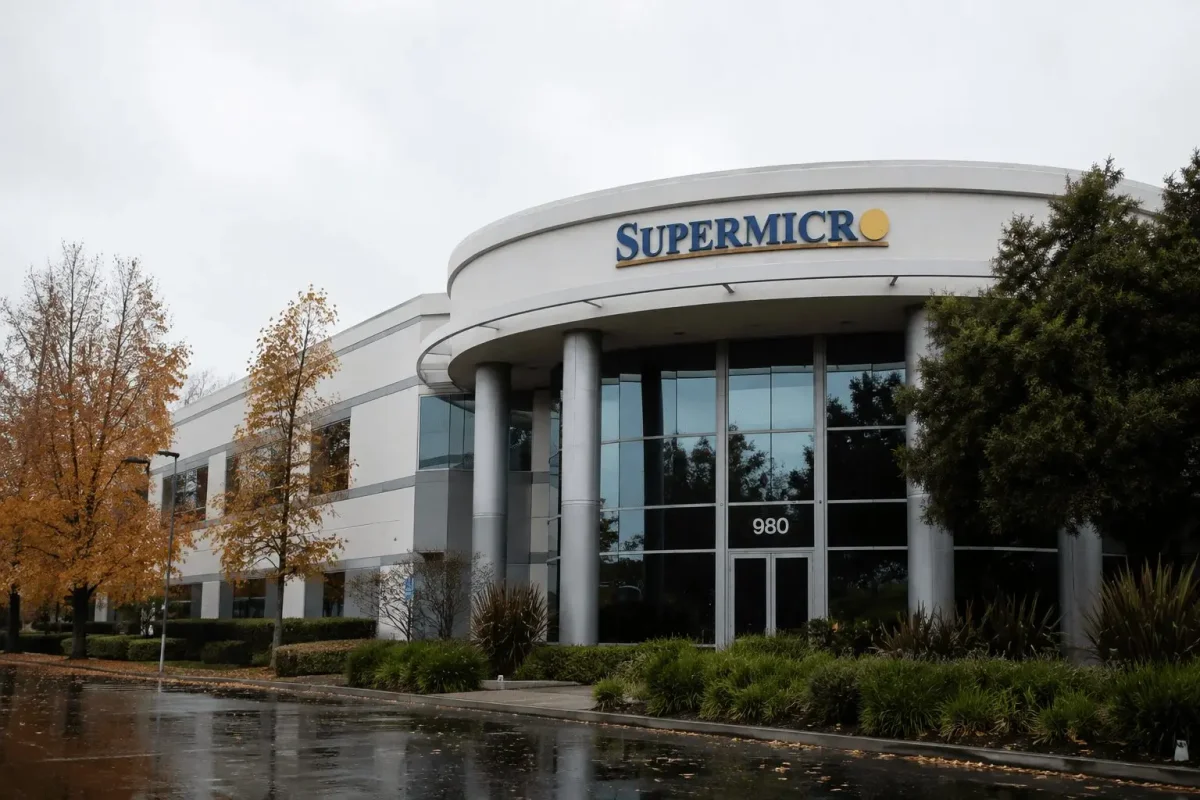
Super Micro Computer, Inc. (NASDAQ: SMCI) closed Friday's session at $28.40, up 2.42%, but the modest daily gain failed to offset a broader weekly slide of 5.65%. The stock's recent volatility reflects a market grappling with mixed signals: improving profitability projections versus mounting concerns over cash generation and balance sheet strain.
Margin Recovery vs. Cash Flow Concerns
Preliminary fourth-quarter figures indicate gross margin will land between 15% and 17%, with revenue approaching $11 billion. That would translate to gross profit of $1.65 billion to $1.87 billion, representing a year-over-year increase of 62% to 84%. While these numbers suggest a significant improvement from the third quarter's 9.9% GAAP gross margin, the company's cash flow situation tells a more cautionary tale.
In the previous quarter, Supermicro reported an operating cash outflow of $6.6 billion, a dramatic swing from the $24 million outflow in Q2. This cash burn, coupled with a 68.5% sequential decline in quarter-end cash reserves to $1.29 billion, has left investors questioning the sustainability of the company's growth trajectory.
Balance Sheet Stress
The balance sheet reveals increasing pressure. Inventory rose 4.8% sequentially to $11.1 billion, even as quarterly revenue fell 19.2%. Meanwhile, bank debt and convertible notes surged nearly 80% to $8.77 billion. These figures underscore the working-capital challenges Supermicro faces as it ramps up production to meet surging AI server demand.
To address these needs, the company announced a $7 billion equity and equity-linked financing package in June, aimed at supporting component purchases for approximately $39 billion in AI-server orders from over 20 customers. Management now reports that fourth-quarter orders have exceeded $60 billion, with shipments scheduled for upcoming quarters.
Product Launches and Capacity
On July 30, Supermicro unveiled ten new high-density AI rack models, featuring liquid cooling options and the ability to support racks weighing over 5,500 pounds. CEO Charles Liang stated, “Our manufacturing scale enables us to deliver up to 3,000 of these advanced racks per month,” with as many as 2,000 being liquid-cooled variants. This product expansion is critical to fulfilling the growing order backlog.
Market Reaction and Comparison
Despite the positive margin outlook, Supermicro's stock underperformed its peers last week. While Hewlett Packard Enterprise (NYSE: HPE) gained 0.44% and NVIDIA (NASDAQ: NVDA) fell 2.94%, Supermicro dropped 5.65%. Dell Technologies (NYSE: DELL) also declined, down 7.34%. The S&P 500 and Nasdaq Composite both rose over 1% during the same period, highlighting Supermicro's relative weakness.
Trading volume on Friday was notably light, with approximately 35 million shares changing hands, just 65% of the stock's 65-day average volume. This suggests that the recent price action may not be fully supported by conviction.
Upcoming Catalysts
Investors will be closely watching several key events in the coming days. Advanced Micro Devices (NASDAQ: AMD) is scheduled to report fiscal second-quarter earnings on Tuesday, which could provide insight into the AI accelerator market. Supermicro will release its full fourth-quarter results on August 11 at 5 p.m. EDT, where investors will scrutinize margin strength, cash flow, and order timing.
Analysts note that revenue near the lower end of guidance would be roughly 5.7% below the $11.67 billion consensus estimate, but an improved product and customer mix is expected to more than compensate at the gross profit level.
Risks and Outlook
However, risks remain. Portions of Supermicro's $60 billion order backlog may not be fully secured and could be subject to cancellation or postponement. Additionally, the board is investigating deals related to reported export-control concerns, which could impact future guidance or previously reported results.
As the market digests these mixed signals, the key question for Supermicro is whether it can convert its impressive order book into sustainable cash flow. The margin recovery is a positive step, but until the cash conversion improves, the stock may remain under pressure.