Helsinki-based startup SunBit has deployed 30 Bitcoin mining systems that double as building heaters, according to founder Elmeri Suomi in an interview with CoinDesk published Sunday. The company's dual-purpose rigs capture waste heat generated during cryptocurrency mining to warm residential and commercial spaces, a concept that has drawn attention as energy costs remain a key concern.
The Economic Equation
The viability of SunBit's approach hinges on a simple but critical calculation: mining revenue must offset electricity expenses. A comparison based on the company's published specifications reveals the threshold for competing with conventional heat pumps. At an assumed electricity price of €0.11 per kilowatt-hour, mining must generate at least 7.33 euro cents per kilowatt-hour to match a heat pump with a coefficient of performance (COP) of 3. This means mining receipts must cover roughly two-thirds of electricity spending before other costs are considered.
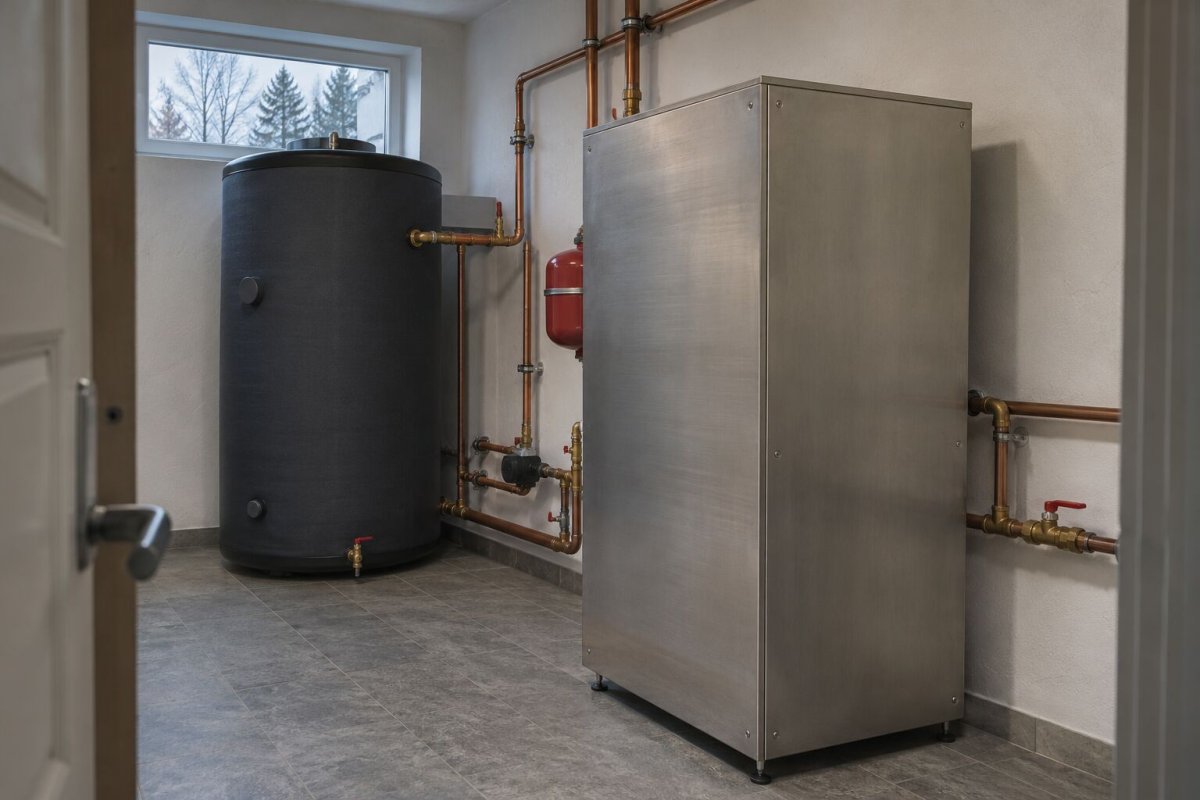
To fully cover the power bill, mining would need to produce 11 cents per kilowatt-hour under the same assumptions. Between these two thresholds, the mining system still costs money to operate but remains cheaper than the modeled heat pump. SunBit's specifications list heating outputs of 5.3 or 10.6 kilowatts, using liquid-cooled mining equipment and a three-phase electrical connection. The system heats water to 60°C, with an outdoor unit releasing excess heat.
Physical Comparison with Heat Pumps
The International Energy Agency's September Electrification report provides the physical basis for comparison. Heat pumps typically deliver three to five units of heat for every unit of electricity consumed because they transfer ambient heat rather than converting electricity directly. For 1,000 kilowatt-hours of useful heat, a heat pump with a COP of 3 requires 333.3 kilowatt-hours of input, while a COP of 4 requires 250, and a COP of 5 requires 200. In contrast, a mining system with ideal conversion would consume the full 1,000 kilowatt-hours.
Revenue Scenarios
SunBit advertises mining revenue of €0.13 per kilowatt-hour. At that rate, 1,000 kilowatt-hours consumed generates €130 in receipts, leaving €20 after electricity costs (€110). However, this calculation excludes equipment, taxes, fees, maintenance, and financing. Sensitivity analysis shows that if revenue drops to 9 cents per kilowatt-hour, the net energy cost rises to €20; at 7.33 cents, it reaches €36.67—the same as a heat pump with COP 3. Below that, the mining system becomes more expensive. At 6.5 cents, the net cost is €45, making mining 22.7% pricier than the heat pump.
These scenarios are based on the advertised revenue benchmark and do not predict Bitcoin prices or mining difficulty. They also exclude service charges, pool fees, taxes, maintenance, and financing. A household investment decision must account for these additional costs and actual heat demand.
Real-World Installations
SunBit's case studies show varied installations. A 200-square-meter home in Kotka retains an oil boiler as backup, while a 180-square-meter property in Nokia replaced district heating and added a separate hot-water tank. Suomi emphasized that "the heating itself works regardless of the market, and only the payback time moves."
Risks and Future Outlook
Bitcoin price volatility and mining difficulty changes can affect receipts during a heating season. Hardware failures and unused heat could raise costs. Electricity contracts and service fees also influence the crossover point. The next Bitcoin halving is scheduled for 2028 at block 1,050,000, reducing block rewards from 3.125 to 1.5625 BTC. Transaction fees remain separate, so total mining receipts need not halve. Whether household receipts then clear the heat-pump threshold depends on prices, competition, and fees.