Bitcoin prices declined on Thursday, surrendering a portion of the sharp gains achieved during the previous session's rally. The leading digital asset fell approximately 3.5% to trade around $70,764, retreating from a session high near $73,984. This pullback occurred as the U.S. dollar strengthened and traders assessed the fading prospects for imminent regulatory clarity for the cryptocurrency sector.
The downturn followed a robust 7.64% surge on Wednesday that pushed Bitcoin above $73,000. That advance was fueled by a broad improvement in risk appetite across financial markets, supported by stabilizing oil prices and gains in equity indices. "The confluence of these factors created a market environment that felt increasingly emboldened," noted Michael James, an equity sales trader at Rosenblatt Securities.
Regulatory Impasse Adds Pressure
Policy developments in Washington exerted significant influence on market sentiment. Negotiations surrounding the proposed Clarity Act, legislation designed to establish clear regulatory guidelines for cryptocurrency firms, hit another roadblock. According to sources familiar with the discussions, major banking institutions pushed back against a White House compromise proposal concerning stablecoin rewards. The stalemate drew sharp criticism from President Donald Trump, who accused the banks of attempting to "undermine" his administration's digital asset agenda.
Analysts highlighted the growing time pressure. "The legislative calendar is becoming the enemy of this bill," stated Brian Gardner, an analyst at Stifel. The ongoing delay challenges the narrative of a supportive policy tailwind that had contributed to the week's earlier price strength.
Macroeconomic Headwinds and Safe-Haven Flows
Broader macroeconomic anxieties also resurfaced, pressuring risk assets. The U.S. dollar index climbed as escalating conflict in the Middle East prompted a flight to traditional safe-haven assets. This dynamic weighed on both Bitcoin and Ether, which relinquished their recent advances. "This week demonstrates that during periods of heightened volatility and geopolitical risk, the dollar tends to rally," observed Elisabeth Colleran, co-head of emerging markets debt at Loomis Sayles.
The previous day's optimism, driven by President Trump's endorsement of the Clarity Act and hopes that a February downtrend was abating, proved short-lived. Some strategists viewed the rally with caution. Fundstrat's Head of Digital Asset Strategy, Sean Farrell, characterized the move as "likely a rally to rent rather than own," suggesting skepticism about its sustainability.
Traditional Finance Continues Crypto Foray
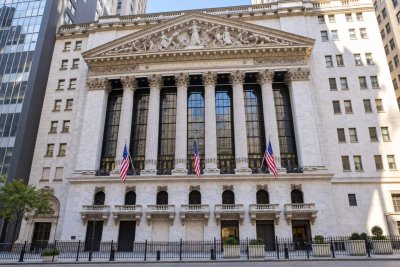
Despite regulatory uncertainty, traditional market infrastructure continues to integrate with the digital asset space at a rapid pace. In a significant deal, Intercontinental Exchange (ICE), the parent company of the New York Stock Exchange, acquired a minority stake in the crypto exchange OKX, valuing the firm at approximately $25 billion. ICE also plans to launch U.S.-regulated Bitcoin futures contracts and license OKX's spot crypto pricing data.
This move underscores institutional interest even as lawmakers debate the regulatory framework. "There was a time window to get Clarity done," commented Haider Rafique, Global Managing Partner at OKX, expressing a preference not to wait "six years" for regulatory progress.
Ether mirrored Bitcoin's decline, falling roughly 4.2% to $2,059.76 after briefly surpassing $2,190. Meanwhile, U.S. spot Bitcoin exchange-traded funds (ETFs) remained a focal point for capital flows, attracting over $680 million in net inflows over just the prior two days, according to Bloomberg data.
Jobs Report Looms as Key Catalyst
Interest rate expectations continued to command trader attention. Market summaries pointed to solid U.S. private payrolls data and an upbeat services sector reading. Investors are now anticipating Thursday's jobless claims figures and, more importantly, Friday's official nonfarm payrolls report from the Bureau of Labor Statistics, scheduled for release at 8:30 a.m. ET.
The employment data is poised to serve as the next major catalyst capable of shifting rate expectations, which would subsequently ripple through cryptocurrency risk appetite. The path forward is not considered one-directional; a renewed spike in oil prices, further dollar strength, or prolonged delays on the Clarity Act could pressure risk trades. A decisive break below the $70,000 level for Bitcoin would shift focus to whether the recent rally was merely a short-covering event.