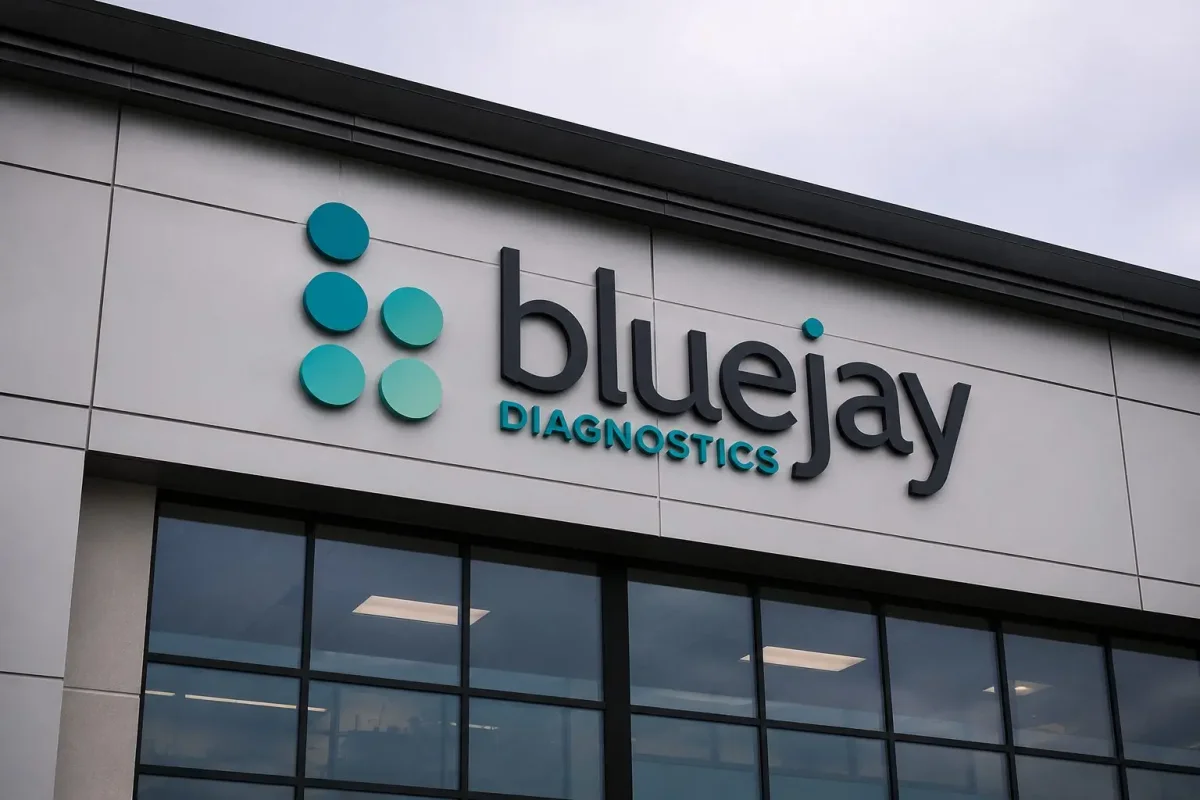
Bluejay Diagnostics Inc. saw its stock price more than double in Tuesday trading following the announcement of a new manufacturing partnership in the United States. The micro-cap diagnostics company revealed it has signed an agreement with Argonaut Manufacturing Services to produce components for its Symphony sepsis-testing platform. Shares jumped as much as 171% to $5.88, with a peak of $8.38, on volume exceeding 61 million shares, though the company's market capitalization remains small at approximately $5.8 million.
Strategic Shift to Domestic Production
The partnership with Argonaut represents a strategic move by Bluejay to bring more of its manufacturing operations onshore. This reduces reliance on overseas suppliers and mitigates exposure to import tariffs, which have been a growing concern for many medical device companies. Neil Dey, Bluejay's chief executive, stated that the collaboration aims to build a "scalable and quality-focused operational foundation." Rick Hancock, CEO of Argonaut, expressed enthusiasm for supporting "differentiated diagnostic technologies."
According to a regulatory filing, the agreement was signed on May 27 and covers a wide range of manufacturing activities for Bluejay's IL-6 products. These include planning, engineering, sourcing, supply chain management, formulation, filling, finishing, quality-control testing, capital equipment, storage, delivery, and distribution. Specific purchase orders will define the terms as work progresses.
Understanding the Technology
IL-6, or interleukin-6, is a protein associated with inflammation. Bluejay's lead product is a near-patient test designed for sepsis triage and disease monitoring, with a claimed sample-to-result time of about 20 minutes. The device is still investigational and has not received U.S. regulatory clearance.
The company is currently conducting its SYMON-II pivotal study, which aims to validate earlier research and support a 510(k) submission to the FDA. A 510(k) is a premarket filing that seeks clearance by demonstrating that the device is substantially equivalent to a legally marketed device. As of May 7, Bluejay had enrolled approximately 680 patients, targeting a total of 750, and was advancing cartridge manufacturing work with Sanyoseiko.
Competitive Landscape
Bluejay faces significant competition from larger, established players. Roche markets an Elecsys IL-6 immunoassay for use with its cobas analyzers, while bioMérieux offers the VIDAS B.R.A.H.M.S PCT test, which measures procalcitonin for sepsis risk assessment and antibiotic management. Bluejay's potential edge lies in its speed and point-of-care placement, but only if it can secure FDA clearance.
Risks Remain
Despite the positive market reaction, the manufacturing agreement does not eliminate the company's core risks. Bluejay's most recent 10-Q filing highlights its dependence on raising capital, its status as a going concern, and the need to produce a product capable of validation. Cash resources are expected to fund operations only through the third quarter of 2026, meaning additional capital will be required. Any delays in cartridge verification, weak clinical data, an FDA setback, or a dilutive capital raise could quickly reverse Tuesday's gains.
For now, investors are viewing the manufacturing deal as a significant milestone. The next critical steps include purchase orders, completed patient enrollment, verified cartridges, and a credible path to an FDA submission.
