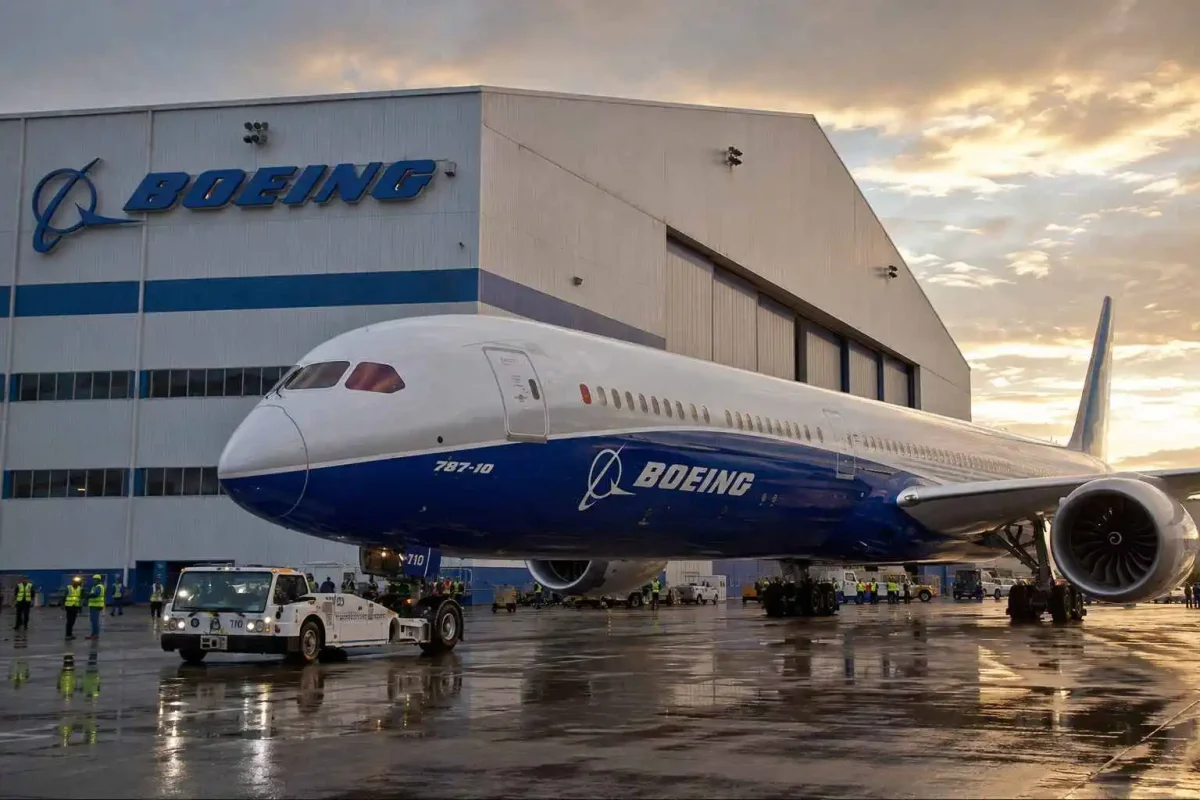
The Federal Aviation Administration (FAA) is set to restore Boeing's (NYSE:BA) authority to issue airworthiness certificates for all 737 MAX and 787 Dreamliner aircraft as early as next week, marking a significant milestone for the aerospace giant. This decision effectively ends an eight-month suspension that began in September 2025, following a series of quality reviews. The restored powers will cover the two programs that accounted for 90.1% of Boeing's preliminary commercial deliveries in the second quarter of 2026 — a total of 154 out of 171 aircraft.
Market Reaction and Delivery Trends
Boeing shares closed at $214.03 on Friday, slipping 0.14% on the session and roughly 3.7% below the previous Friday's close. The stock's modest decline reflects cautious investor sentiment as the company approaches its second-quarter earnings report on July 28. Preliminary delivery data shows a 19.6% quarter-over-quarter increase in commercial deliveries, with the average monthly production rate rising to 57 jets from 47.7 in the first quarter.
The 737 program delivered 129 units in Q2 2026, up 13.2% from 114 in Q1, while the 787 program surged 66.7% to 25 units from 15. Combined, these two programs maintained a consistent 90% share of total deliveries, underscoring their critical role in Boeing's recovery. The FAA's restoration of certification authority is expected to streamline handovers and reduce delivery delays, directly benefiting cash flow.
FAA Oversight and Quality Assurance
FAA Administrator Bryan Bedford confirmed that the agency's reviews over the past eight months revealed similar quality results to previous audits, leading to the decision to reinstate Boeing's certification privileges. "Boeing is doing much better," Bedford stated, emphasizing that there has been no relaxation of compliance standards. Federal audits will continue to ensure ongoing adherence to safety protocols. However, the FAA clarified that this is not an approval to raise production rates. Boeing is currently moving 737 production from 42 planes per month toward 47, a pace that will require fewer certification handovers going forward.
Cash Flow and Investor Focus
Investor attention remains squarely on Boeing's cash flow performance. The company reported a non-GAAP free cash flow outflow of $1.45 billion in the first quarter of 2026. With the restored certification authority expected to accelerate deliveries, analysts anticipate a reduction in cash burn in the second half of the year. The first major financial update will come with the Q2 earnings release on July 28, 2026.
Boeing's long-term outlook remains bullish. The company projects industry demand for 43,625 aircraft deliveries by 2045, with a shortfall of 2,000 planes heading into 2026. This demand backdrop supports Boeing's efforts to ramp up production and secure new orders.
Competitive Landscape and Production Milestones
Airbus (EPA:AIR) continues to lead in production, handing over 351 aircraft in the first half of 2026, compared to Boeing's 314. Boeing's delivery total reached 89.5% of Airbus's, with Airbus shipments rising 15% year-over-year and Boeing's increasing 12%. The gap underscores the competitive pressure Boeing faces as it works to stabilize its supply chain and certification processes.
Additional inventory may soon become available as the 737 MAX 10 reached 98% completion in flight testing on Thursday. Boeing executive Chris Payne stated, "We have two flight tests left." Approximately 39 MAX 7 and MAX 10 aircraft have already been produced, awaiting certification. The Farnborough International Airshow, running from Monday through July 24, is expected to feature limited major order announcements, with updates on production and certification taking center stage.
Risks and Outlook
Despite the positive development, risks remain. FAA oversight continues, and handovers could face delays due to fresh quality issues, supplier setbacks, or unsuccessful tests. The MAX 7, MAX 10, and 777X are not yet certified, adding uncertainty to Boeing's future delivery pipeline. Nonetheless, the improved certificate flow should boost deliveries and curb cash burn, with the first financial update due on July 28. Investors will be watching closely for signs of sustained recovery in Boeing's core commercial aviation business.